


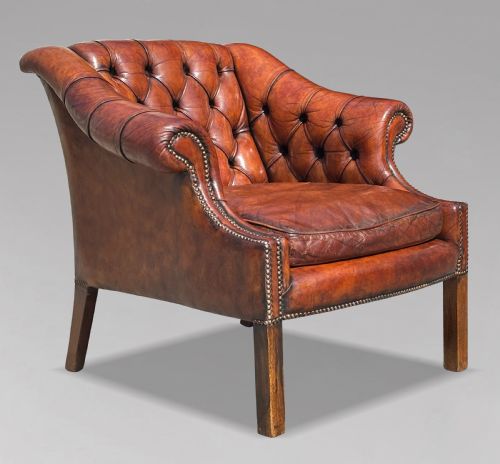
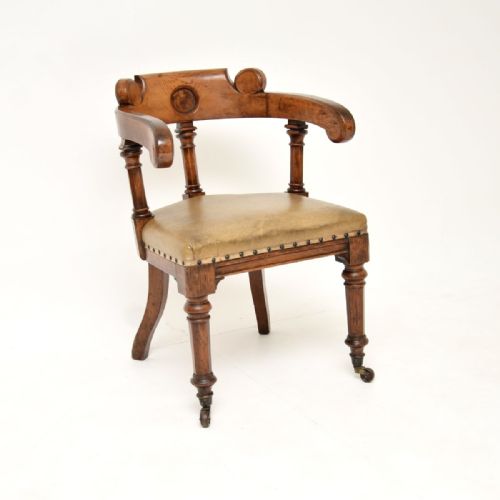
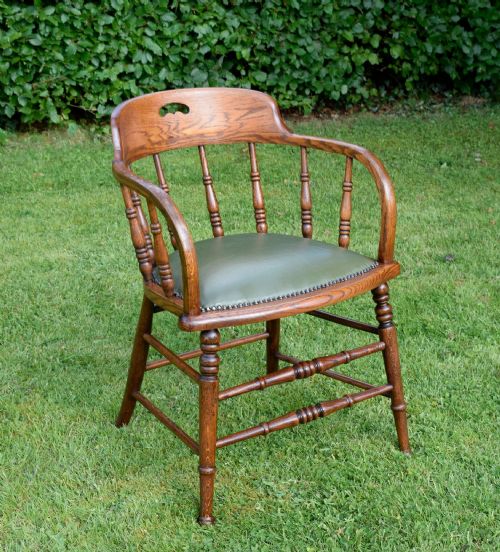
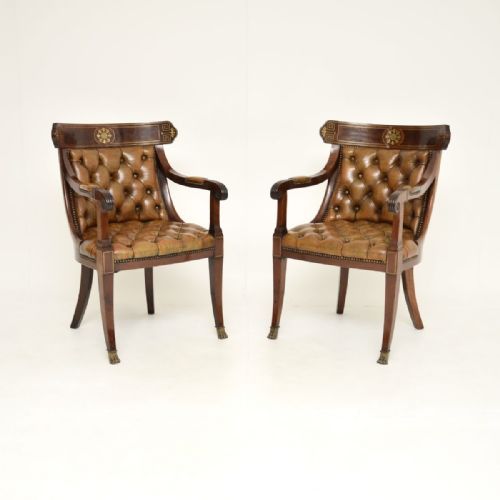

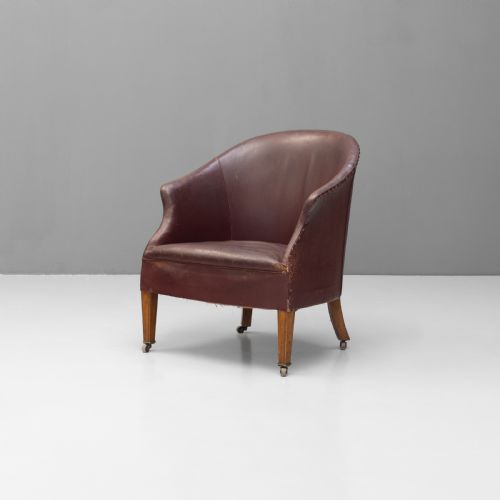
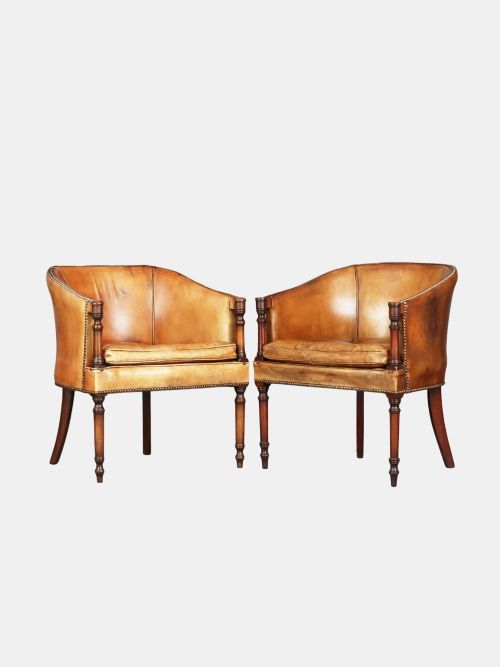


Brown Leather Tub Chair
A brown leather tub chair offers deep, curved seating built for long hours at a desk or by a fire.
Brown Leather Tub Chair
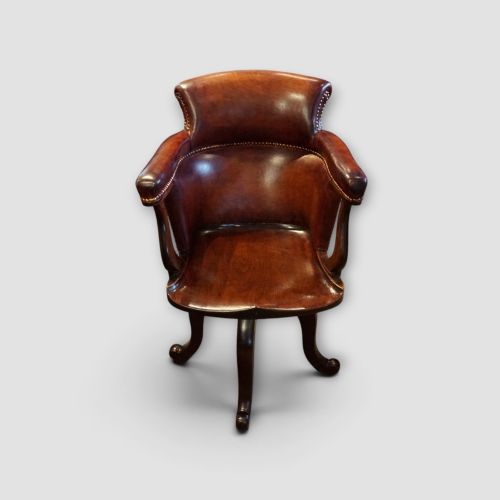
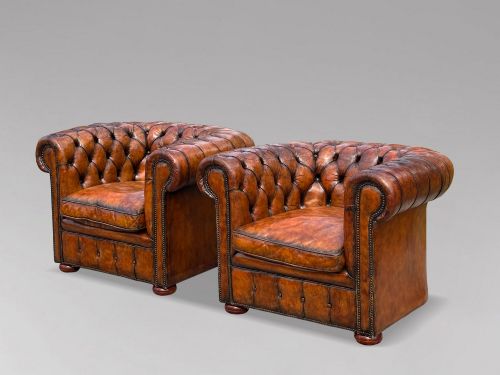
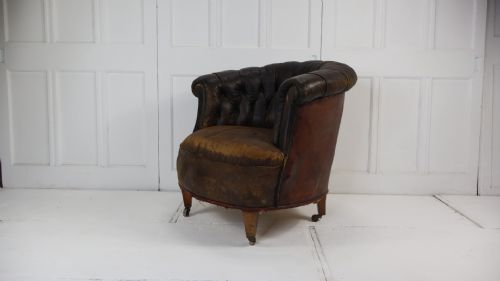
A brown leather tub chair combines a rounded, enveloping backrest with a supportive upholstered seat, designed to wrap comfortably around the sitter. These pieces frequently appear in nineteenth and early twentieth-century forms, spanning Victorian, Edwardian, and Regency periods alongside later Art Deco designs.
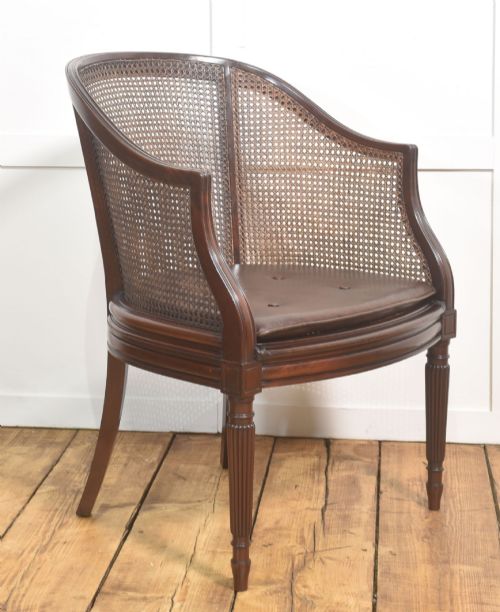
The selection ranges from sturdy oak and mahogany desk chairs to low club armchairs upholstered in rich leather. Many examples incorporate caning, brass details, or hardwood frames that reflect the utility and elegance of traditional library and office seating.
Materials and construction
Frames rely upon durable hardwoods such as mahogany, oak, and walnut, often shaped to form the signature curved back of the tub profile. Joinery is traditionally robust, designed to withstand daily weight and movement in studies and libraries.
Upholstery combines supple leather with supportive internal padding, occasionally complemented by cane panels inserted into the wooden framework. Metal elements like brass tacks, inlays, or swivel mechanisms add functional strength and understated detail.
Some nineteenth-century desk chairs include hidden swivel mechanisms designed to let busy writers pivot swiftly between inkwell and bookshelf.
Judging quality and finish
The integrity of the timber frame and the depth of grain in the mahogany or oak set the foundation for a superior piece. Hand-finished leather patination develops a rich character over decades, distinguishing well-kept originals from more utilitarian builds.
Attention to detail in the joinery, the tightness of the cane work, and the original brass hardware indicate the level of craftsmanship invested by the maker.
Gillows
The Brown Leather Tub Chair Glossary
- Tub chair
- An armchair featuring a continuous curved back and arms that form a single rounded enclosure. This shape provides enclosed comfort and supportive posture.
- Bergère
- An enclosed upholstered armchair with wooden framing exposed around the sides and back. Cane panels are frequently integrated into the construction.
- Captain's chair
- A sturdy wooden armchair, often swivel-mounted, designed for use at a desk or office table. These typically feature low, rounded backs suitable for prolonged seating.
- Chesterfield
- A style of upholstered seating characterised by deep buttoning and rolled arms. It is traditionally finished in dark leather.
- Ormolu
- Gilded bronze mountings applied to furniture for decorative effect. This technique appears on fine revival pieces.
Brown Leather Tub Chair: Frequently Asked Questions
What is a brown leather tub chair?
A brown leather tub chair is an armchair characterised by a rounded, enclosing backrest that merges into the arms. It provides a compact and supportive seat designed for reading or desk work.
These chairs appear across various nineteenth and twentieth-century styles, combining wooden frames with durable leather upholstery.
How do I date a leather tub chair?
Dating relies on examining the timber species, joinery techniques, and the style of the frame. Victorian and Edwardian examples often feature turned mahogany or oak legs, while later twentieth-century pieces lean towards Art Deco forms.
Hardware such as brass castors and the method of leather tanning also offer clues to the period of manufacture.
Where were these chairs used?
These chairs were primarily placed in studies, libraries, and offices as comfortable seating for desks or reading areas. Their enclosed shape made them suitable for long hours of work.
They also served as occasional seating in Victorian and Edwardian sitting rooms and smoking rooms.
How do I care for antique leather?
Antique leather benefits from regular dusting and occasional treatment with appropriate conditioning balms to prevent drying and cracking. Keeping the leather away from direct heat sources preserves its supple texture.
Gentle cleaning maintains the natural patina accumulated over decades of use.