




Brown Leather Travel Trunk
A brown leather travel trunk brings tactile history into a room, offering robust storage built for journeys across centuries.
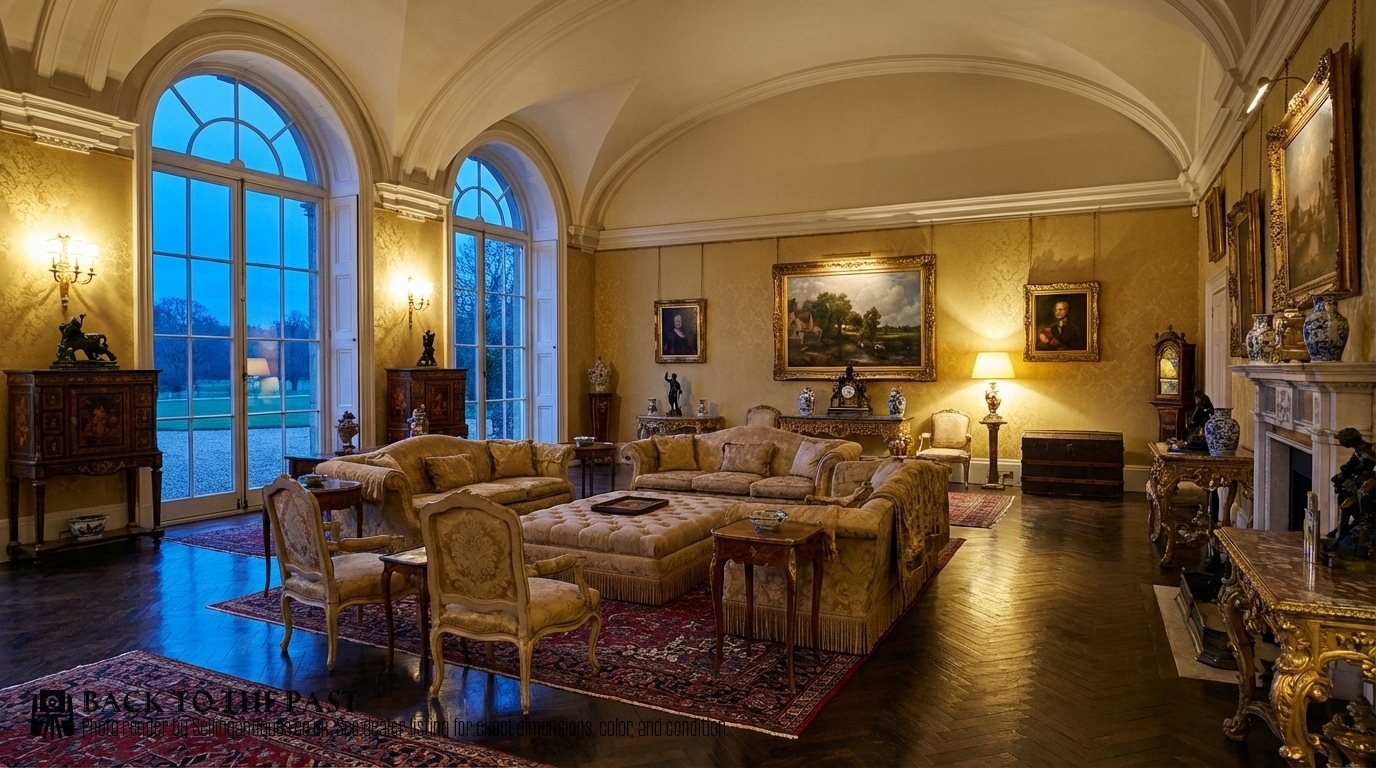
Brown Leather Travel Trunk
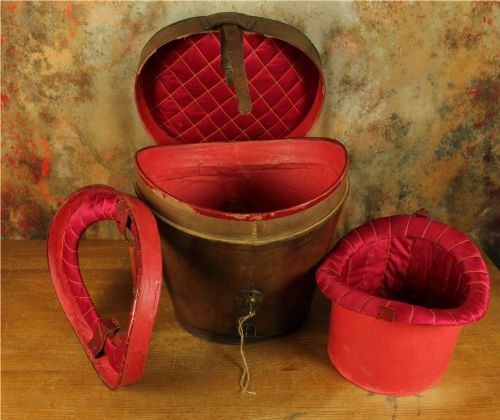
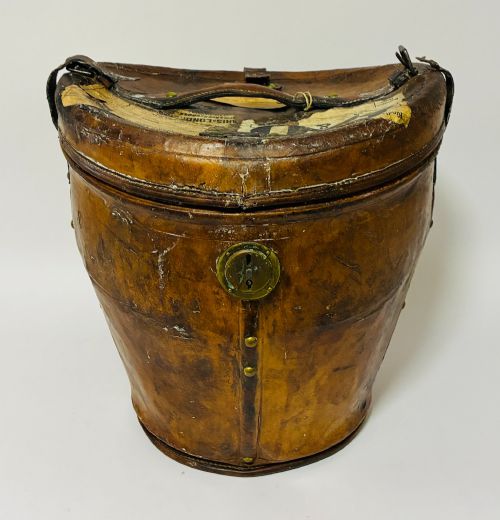
When searching for a brown leather travel trunk, buyers encounter a diverse range of sturdy luggage, storage chests, and fitted cases designed for transit. The selection spans compact hat boxes and weekend picnic cases to massive dome top trunks and gentleman's valets.
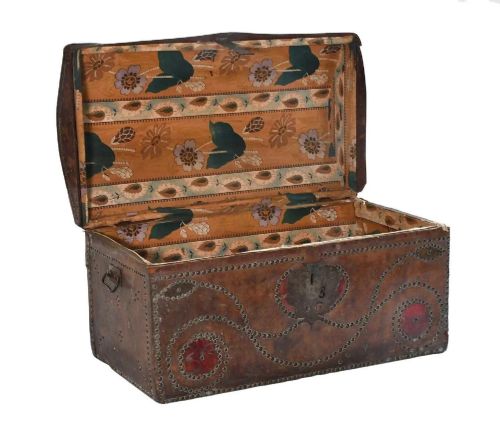
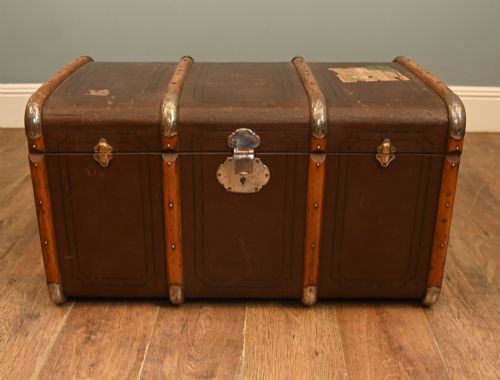
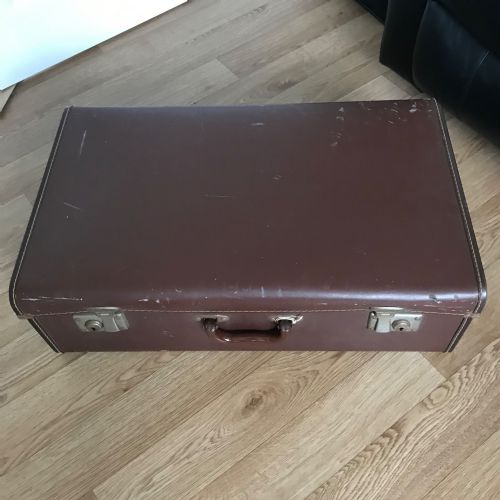
Dating from the seventeenth century through the early twentieth century, these pieces originate from English, French, Spanish, Dutch, and Chinese makers. The most common forms on this page include Victorian and Edwardian leather-clad chests, campaign cases, and twentieth-century steamer trunks.
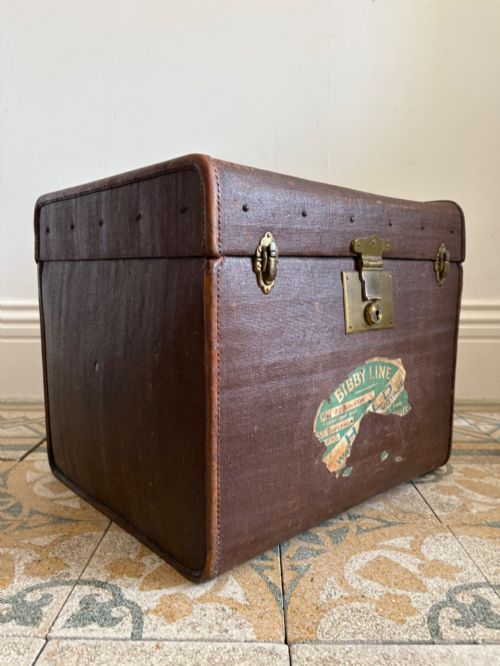
Constructed for actual travel, many bear the marks of transit, including original labels, monograms, and brass hardware. They function today as practical storage chests and characterful display pieces in domestic interiors.
How They Were Made
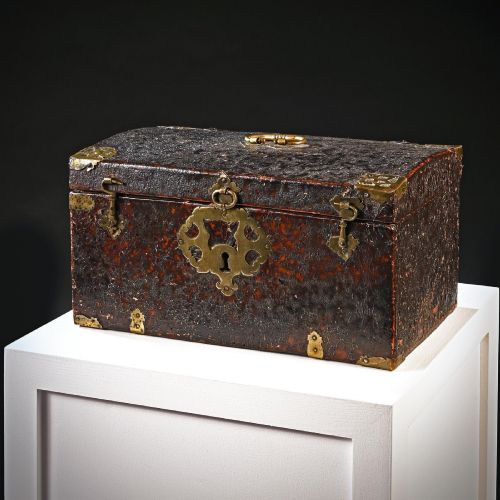
The construction of these pieces relies on a robust combination of wood, metal, and animal hide. Heavy timber frames provide the structural core, clad in leather, hide, or canvas and secured with brass or iron studs and banding.
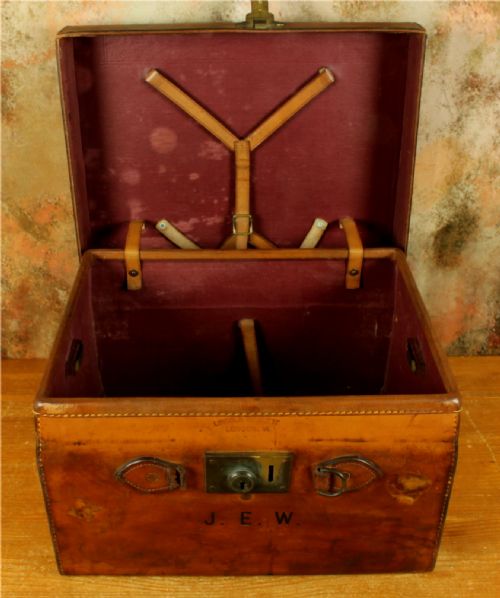
Craftsmen utilised durable materials to withstand rigorous journeys, reinforcing corners and edges with metal brackets and straps. Interiors often incorporated fitted compartments lined with paper, fabric, or polished oak to protect garments and accessories.
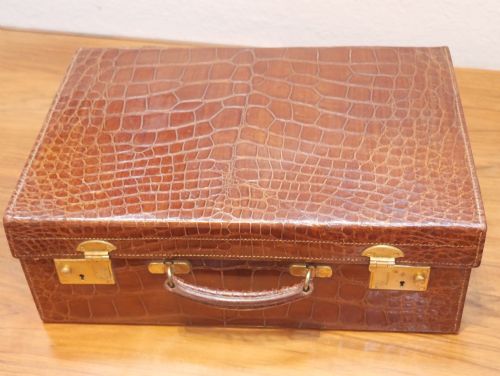
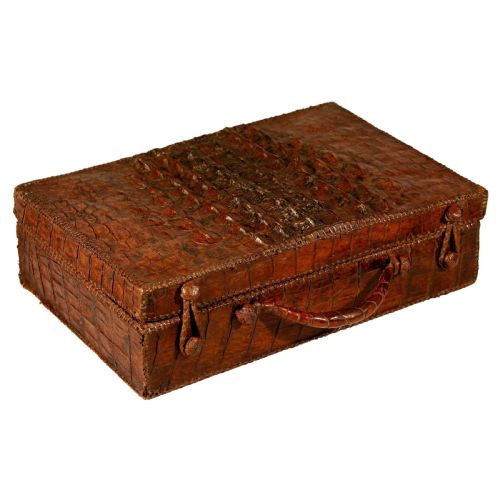
Listings span from the 17th century to the 1930s, featuring materials such as brass, canvas, iron, and crocodile leather.
What Varies in Quality
The distinction between ordinary utility items and exceptional pieces lies in the sophistication of the internal fittings and the caliber of the maker. Fitted interiors with specialised compartments for hats, bottles, or suits indicate higher workshop standards.
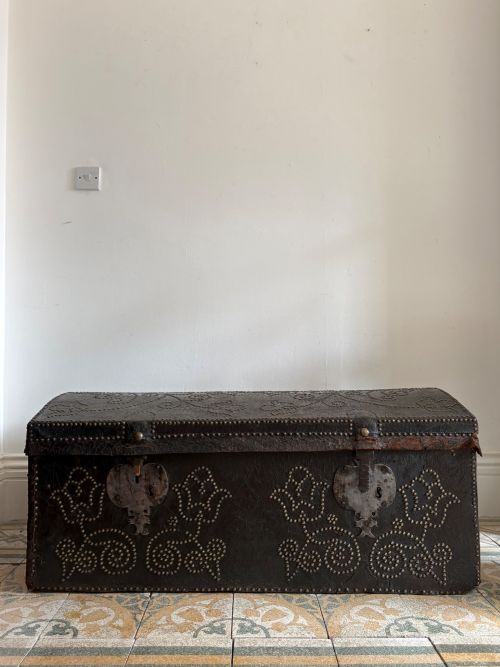
Materials and decorative detailing also set pieces apart, from simple hide-covered coffers to elaborate brass-studded Dutch dome tops and pieces bearing the stamps of renowned luggage makers. The integrity of the original hardware and structural framework defines the durability of each survival.
Samuel Pratt·Lincoln Bennett·Pioneer·Army and Navy·Drew and Sons·Louis Vuitton·John Pound·C. Antrobus·Finnegans of Bond Street·W Insall
The Brown Leather Travel Trunk Glossary
- Dome top
- A trunk style featuring a rounded lid designed to shed water during travel. This shape often provides extra vertical clearance for garments.
- Campaign case
- Portable furniture and luggage built for officers and travellers on military or colonial expeditions. These pieces typically incorporate robust handles and reinforced brass corners.
- Steamer trunk
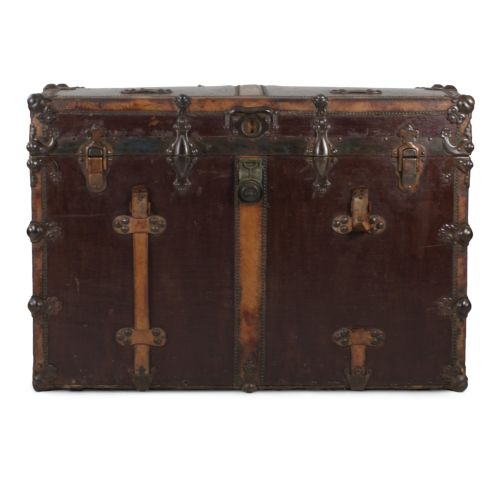
- A lower-profile luggage piece developed to fit beneath cabin berths on ocean liners. They emerged strongly in the late nineteenth and early twentieth centuries.
- Coffer
- A heavy wooden chest, frequently leather-clad and studded, used for storage over centuries. Early examples often rest on stands or feature domed lids.
- Valet case
- A fitted gentleman's suitcase designed to organise suits, accessories, and grooming items for travel. Interiors often include dedicated trays and compartments.
Brown Leather Travel Trunk: Frequently Asked Questions
How do I use a trunk at home?
These trunks serve as practical storage chests for blankets, winter garments, and household items. Placed at the foot of a bed or used as a coffee table, they add texture to a room.
Their sturdy construction allows them to function as surface space while keeping clutter hidden away inside.
Were these trunks meant for ships?
Many pieces, particularly the low steamer trunks from the early twentieth century, were built specifically for ocean travel and cabin storage. Other forms, such as dome top chests and campaign cases, originated for carriage and horse-drawn transit.
Makers designed each style to withstand the specific rigours of contemporary transport methods.
How can I date an old trunk?
Dating relies on construction methods, materials, and stylistic cues visible in the hardware and framing. Pieces from the seventeenth and eighteenth centuries often feature heavy hand-wrought ironwork and simple wood cores, while Victorian and Edwardian examples utilise brass bands, canvas linings, and maker stamps.
Travel labels and railway stickers can also pinpoint the operational era of a piece.
What is the difference between hide and leather?
In historical luggage descriptions, hide generally refers to thicker, heavier unbleached animal skins used for rugged exterior cladding on early coffers and trunks. Leather often denotes more processed, finer-grained material utilised on later suitcases and fitted cases.
Both materials provide exceptional durability when properly maintained.