






Brown Leather Slant Desk
A brown leather slant desk provides a compact writing surface over drawers, combining sturdy practicality with handsome cabinet work.

Brown Leather Slant Desk
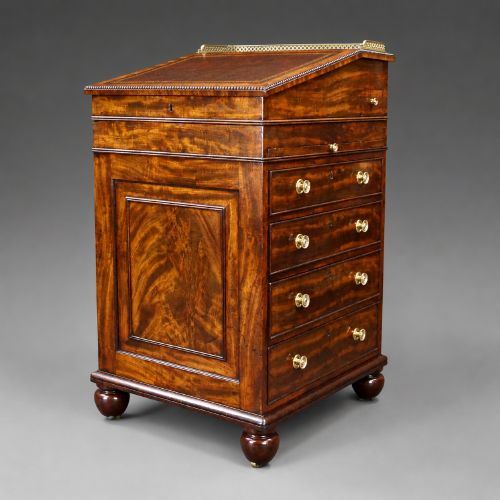
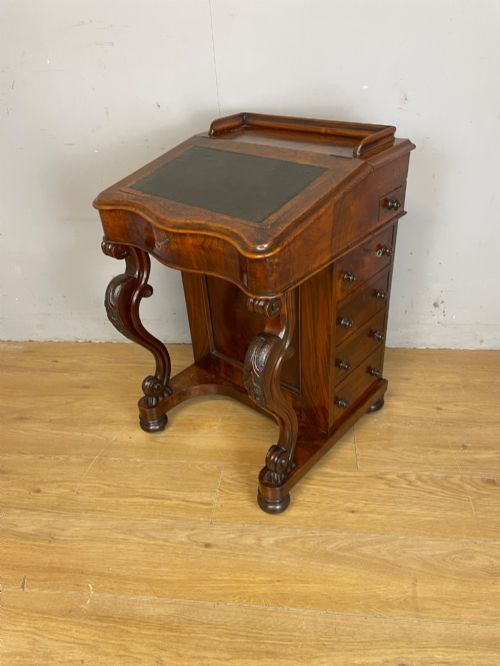
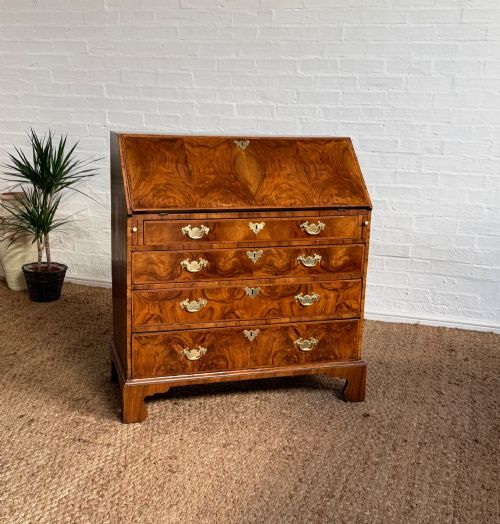
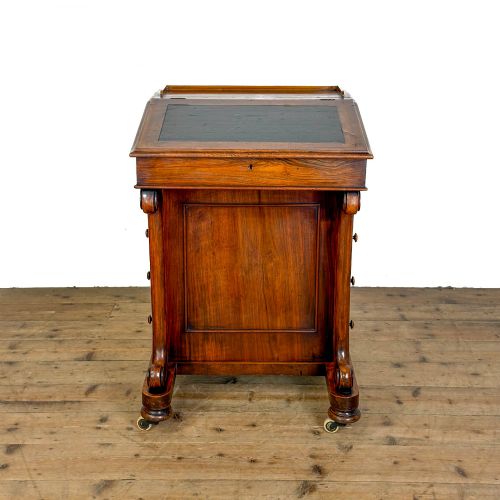
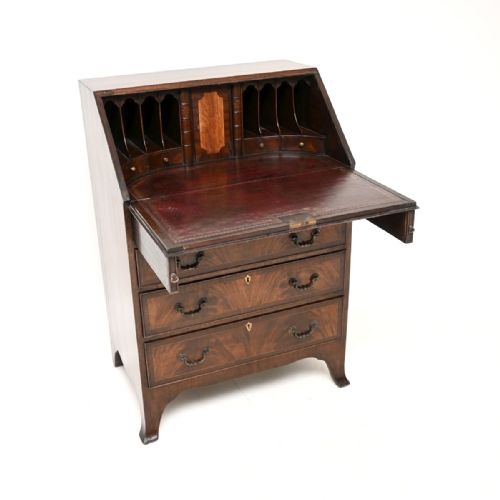
A brown leather slant desk typically takes the form of a Davenport or a bureau, offering a sloping top for correspondence and storage beneath. These pieces span Georgian, Regency, and Victorian periods, reflecting shifting domestic tastes for organised writing spaces.
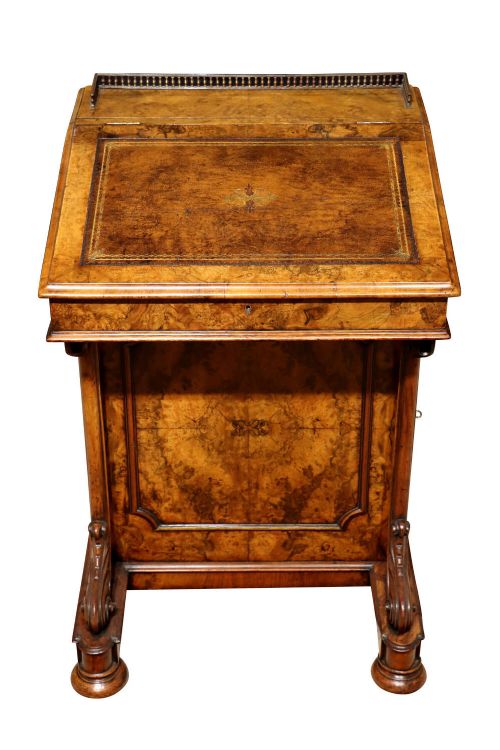
The most common version met on this page is the Victorian walnut Davenport, often fitted with drawers to one side and a stationary compartment above. Other iterations include mahogany, oak, rosewood, and pollard oak, showing varied regional cabinet-making traditions from the eighteenth and nineteenth centuries.
Makers and workshops utilised sloping forms to save floor space while maintaining a proper writing angle. The integration of leather inserts provided a smooth, durable surface for quill and pen work.
Materials and construction
Cabinet makers relied on solid and veneered timbers including mahogany, walnut, burr walnut, rosewood, and oak over robust secondary woods. Selected timbers like flame mahogany and burr walnut provided rich figuring on the sloping lids and drawer fronts.
Writing surfaces incorporated worked leather panels, frequently edged with gold tooling, inset into the wood of the slant top. Brass hardware, handles, and casters furnished structural support and operational movement to drawers and sliding mechanisms.
Listings feature walnut, mahogany, oak, rosewood, and pollard oak across Georgian, Regency, and Victorian periods.
Distinctions in quality
The standard of a brown leather slant desk rests on the choice of timber figure, such as burr walnut or flame mahogany, and the precision of its cabinet joints. Superior examples display careful matching of wood grain across drawer fronts and harmonious proportions.
Internal arrangements demonstrate craftsmanship through fitted satinwood pigeonholes, secret compartments, and smoothly operating slides. Fine brass fittings and original locking mechanisms further separate standard production pieces from workshop masterworks.
Gillows
The Brown Leather Slant Desk Glossary
- Davenport
- A compact pedestal desk featuring a sloping, leather-lined desktop and drawers opening to the side. It gained popularity during the Regency and Victorian eras.
- Bureau
- A desk with a hinged sloping flap that covers a fitted interior of pigeonholes and small drawers. They appear in Georgian and later periods.
- Burr walnut
- Timber taken from the warted growths of walnut trees, yielding intricate, swirling grain patterns. Cabinet makers prized it for decorative veneering.
- Satinwood
- A durable, yellowish-gold timber native to India and Ceylon, utilised for contrasting interior veneers and inlay work.
- Campaign
- Furniture designed to dismantle or fold for military transport, often constructed in teak or mahogany with brass reinforcement.
Brown Leather Slant Desk: Frequently Asked Questions
How do I date a slant desk?
Dating relies on identifying the prevailing style, timber choices, and construction methods characteristic of periods like Georgian, Regency, or Victorian. Cabinet hardware and secondary woods also offer clues to the decade of manufacture.
Later Victorian examples often use burr walnut and heavy internal mechanisms, whereas Georgian pieces tend towards simpler mahogany frames.
Were these desks used standing or sitting?
Most slant desks were paired with a low chair or stool, allowing the writer to sit comfortably at the angled surface. The sloped lid brought paperwork closer to eye level while writing.
Some variations, such as Dickens desks, provided larger pedestals and flat surfaces suited for extended office work.
How do I care for the leather?
Leather writing surfaces benefit from gentle dusting and occasional conditioning with appropriate balms to prevent drying and cracking. Avoid harsh chemical cleaners and excessive moisture.
Keeping the desk out of direct sunlight preserves both the leather insert and the polished wood surrounding it.