

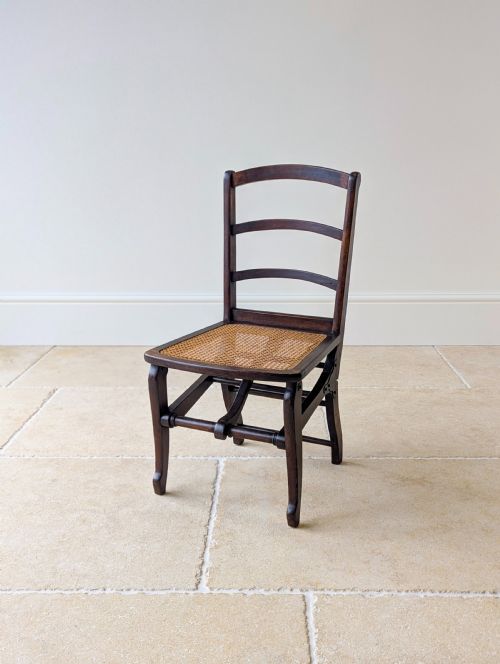


Brown Ladder Back Chair
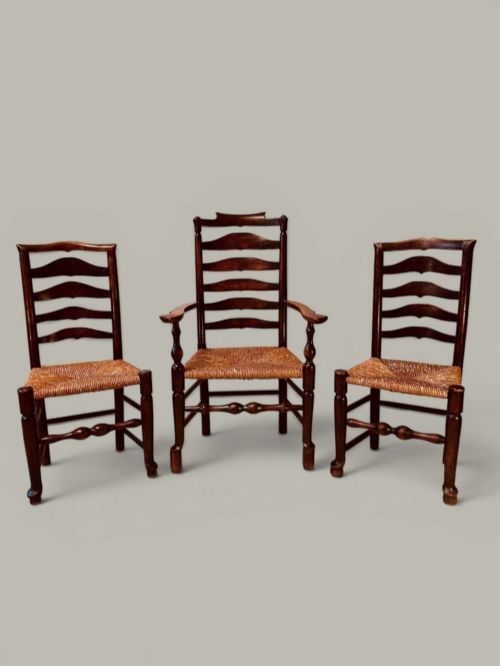
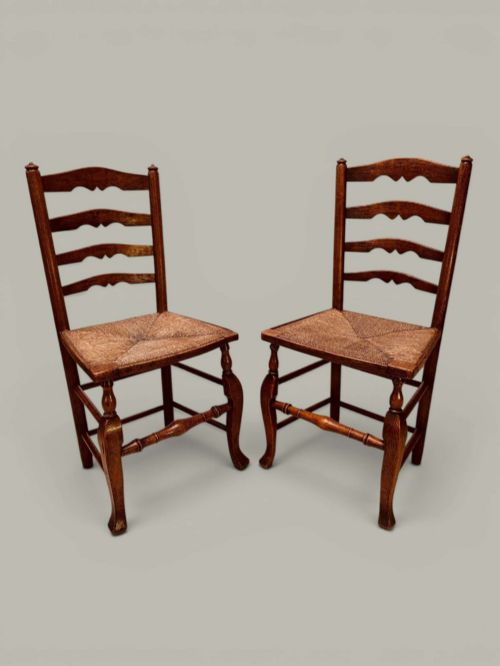
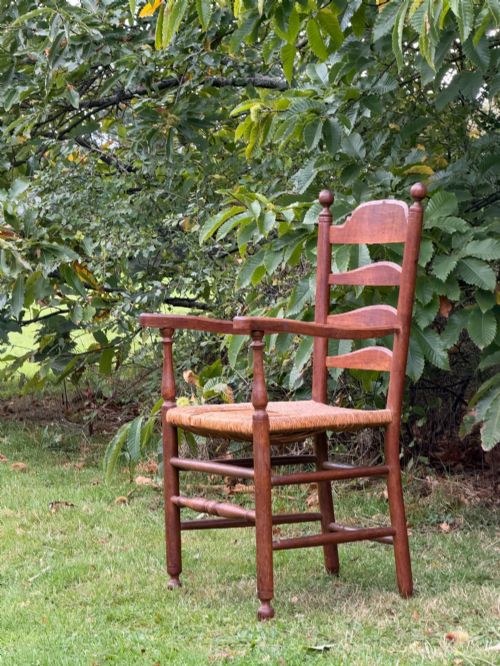
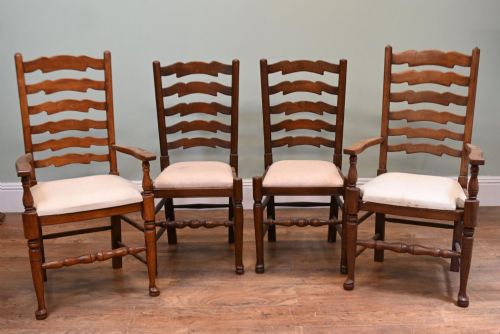
A brown ladder back chair brings domestic utility and honest craftsmanship into a room through horizontal wooden slats and woven seating.
Brown Ladder Back Chair
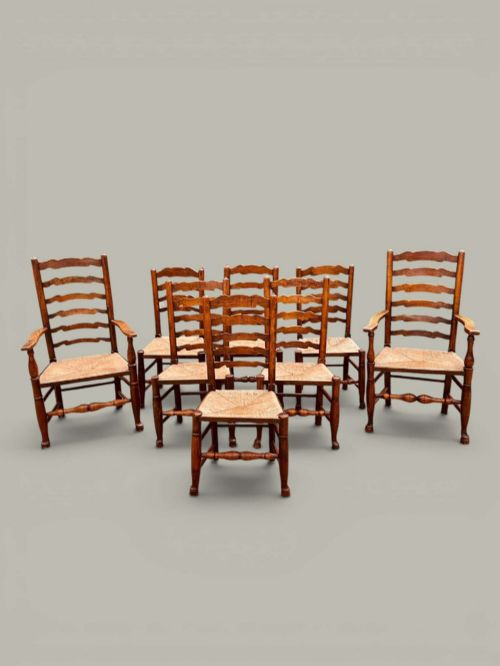
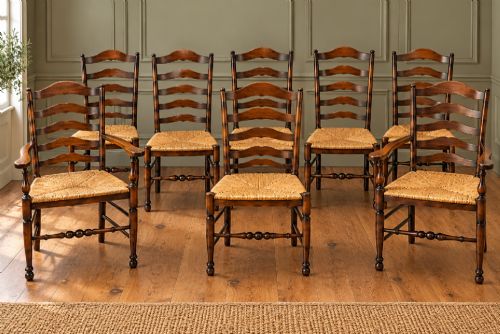
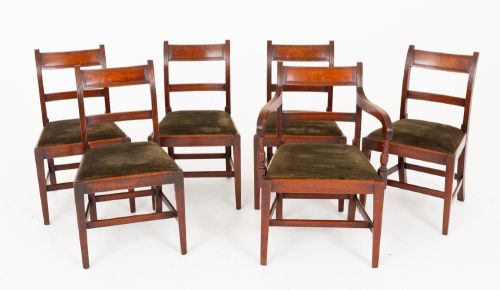
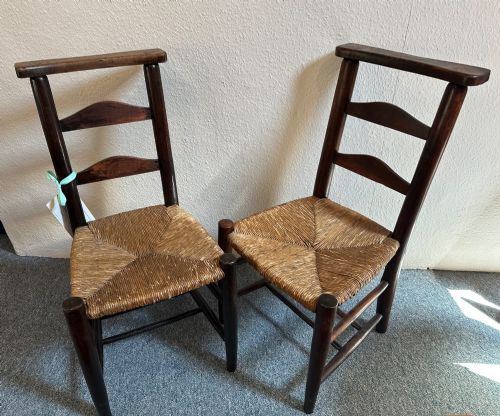
A brown ladder back chair represents a durable tradition of seating found across English country, Georgian, Victorian, and French provincial interiors. These pieces appear as single side chairs, carvers, rocking chairs, and expansive dining sets spanning from the eighteenth century into the early twentieth century.
The materials visible in these listings centre upon robust timbers such as oak, ash, elm, and mahogany, frequently paired with traditional rush seating or fabric. Makers utilised sturdy domestic woods to construct upright frames designed for everyday dining, kitchen use, and fireside relaxation.
Buyers encounter variations ranging from vernacular farmhouse forms to formal Georgian mahogany dining sets and French Louis XV style rush seated chairs. Each example relies on tiered horizontal back rails to provide ergonomic support and visual rhythm.
Materials and Technique
Cabinetmakers and rural joiners constructed these frames using solid hardwoods like oak, ash, elm, and mahogany, shaping uprights and horizontal slats with hand tools. Turned supports and spindles frequently reinforce the legs and stretchers, relying on traditional pegged or mortise and tenon joinery.
Seats are frequently woven from natural rush, providing a resilient and flexible platform within the wooden frame. Where timber or fabric replaces rush, drop-in pads or solid planks complete the construction without altering the fundamental ladder back silhouette.
Brown Ladder Back Chair Retail Price Guide 2026
Typical asking prices for brown ladder back chair among the pieces listed under this phrase on Sellingantiques today, from the lower quarter to the upper quarter. They describe what is for sale here now, not the wider market.
The listings span periods from the eighteenth century through the Edwardian era, incorporating oak, mahogany, ash, elm, and rush.
Gradations of Quality
The distinction between standard utility seating and finer workshop production rests in timber selection and the precision of the turning. Dense heartwoods like mahogany and quarter-sawn oak retain structural integrity and crisp carved details better than softer secondary woods.
Consistency across a assembled set dictates value, particularly when matching turned spindles, upright heights, and uniform rush or timber seats. Refined examples display careful proportion in the graduation of the horizontal slats, whereas simpler vernacular versions prioritise utilitarian sturdiness.
Heals
The Brown Ladder Back Chair Glossary
- Ladder back
- A chair featuring a backrest composed of several horizontal wooden rails or slats stacked vertically between two upright posts. This traditional form dates back centuries and remains common in vernacular furniture.
- Rush seat
- A seating surface woven from dried marsh grass or reeds twisted around a timber frame. It creates a springy, durable pad characteristic of country and provincial chairs.
- Carver chair
- An armchair, often designed for the head of a dining table or as a companion to a set of side chairs. It usually incorporates supportive wooden arms.
- Spindle back
- A chair design utilising thin, turned vertical rods rather than solid slats to form the backrest. Makers often combined spindle elements with ladder rails in nineteenth century farmhouse seating.
- Vernacular furniture
- Domestic objects made by local craftsmen for everyday use rather than high style design. These pieces utilise regional timber and practical construction methods.
Brown Ladder Back Chair: Frequently Asked Questions
How do I date a ladder back chair?
Dating relies on identifying timber species, turning profiles, and construction methods like hand-cut joinery versus machine-made components. Earlier examples often feature Ash or Oak with hand-woven rush, while later nineteenth-century pieces introduce varied hardwoods and factory-turned spindles.
Examining wear patterns around the footings and stretchers also helps establish age. Regional vernacular styles often persist across long periods, making timber patination a primary indicator.
Are rush seats durable for daily dining?
Natural rush seating is remarkably tough and flexible when treated with reasonable care. Regular use actually polishes the fibres, though placing them in overly damp environments can weaken the material.
Protecting the weave from direct moisture and sharp objects ensures longevity. Many historic chairs retain their original rush or have undergone sympathetic rewoven restoration over time.
Can I mix these chairs with modern tables?
The neutral tones of oak, ash, elm, and mahogany pair naturally with contemporary dining tables. Their clean horizontal slats provide a contrasting architectural line against smooth wooden or glass surfaces.
Using a harlequin set or a matched group adds character to a modern dining space. The varied patination of older timbers brings warmth to minimal or industrial interiors.
What is the difference between a side chair and a carver?
Side chairs are compact, armless seats intended primarily for dining tables and general room placement. Carver chairs include integrated armrests, making them wider and more suitable for the head of a table or fireside lounging.
Sets frequently combine multiple side chairs with one or two matching carvers. Both share the characteristic horizontal slat backrest but serve distinct functional roles in historic room layouts.