



Brown Kingwood China Cabinet
A brown kingwood china cabinet brings French revival elegance and glass-panelled display space into a room.
Brown Kingwood China Cabinet
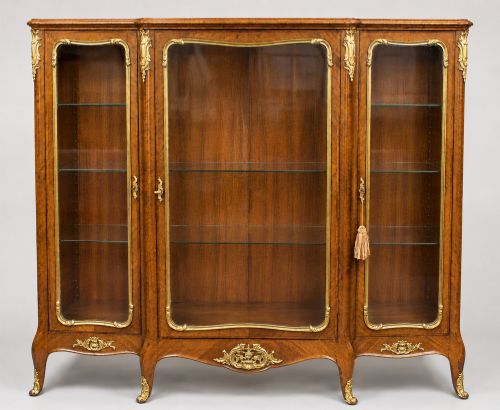
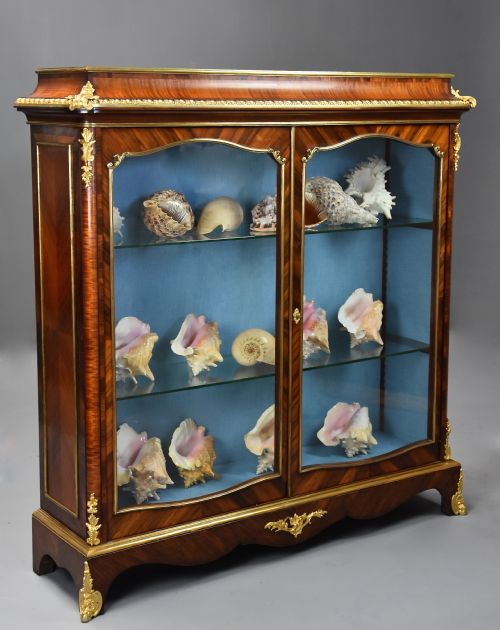
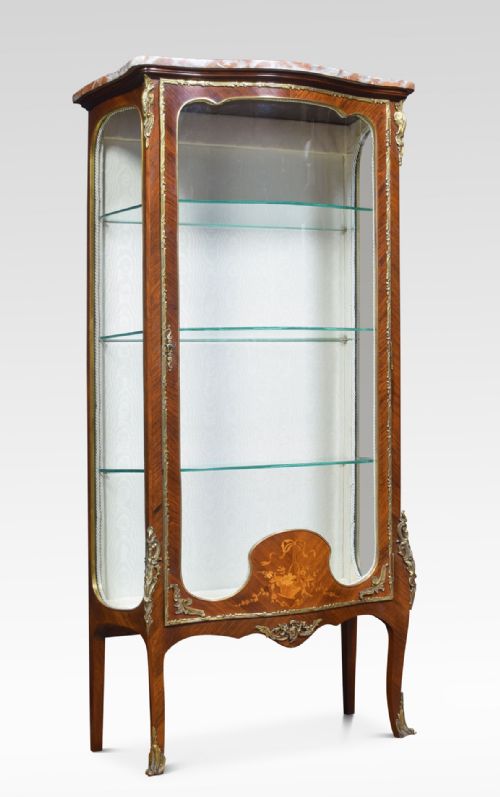
A brown kingwood china cabinet primarily takes the form of a French vitrine or display cabinet dating from the nineteenth century. These pieces serve to showcase porcelain and decorative objects behind glass doors.
Most examples originate from the Victorian and Edwardian eras, spanning periods such as 1860, 1880, 1890, and 1900. French Rococo Revival and Louis XV and XVI styles dominate the selection.
Makers and workshops of the period construct these cabinets as serpentine, bombe, or transitional shapes. Buyers encounter variations including marble tops and fitted fabric interiors.
How they were made
Cabinetmakers veneer solid carcasses in kingwood, frequently arranging the grain in parquetry or marquetry patterns. They incorporate walnut and exotic timbers alongside the primary kingwood surface.
Workers mount cast ormolu mounts to the corners, feet, and friezes of the cabinets. Glass panels fit into doors and sides to enclose the display space.
Selected pieces feature painted Vernis Martin panels depicting figures or landscapes on the lower sections. Marble slabs often form the upper surface of the cabinet.
Listings feature nineteen-century dates extensively, alongside Edwardian examples from 1900 and 1910.
What varies in quality
The precision of the kingwood parquetry and marquetry inlay separates standard production from finer examples. Hand-chiselled ormolu mounts display greater crispness and depth than simpler cast hardware.
The complexity of the carcass shape, such as a pronounced bombe front or serpentine curves, indicates higher workshop skill. Painted Vernis Martin panels executed with artistic detail elevate the standing of a cabinet.
François Linke
The Brown Kingwood China Cabinet Glossary
- Kingwood
- A dense, richly figured timber native to Brazil, prized for its deep brown tones and dark grain lines. Cabinetmakers utilise it extensively for veneering fine French furniture.
- Ormolu
- Gilt bronze mounts applied to the exterior of furniture to accent corners and frames. The technique involves coating cast bronze in a layer of gold.
- Vitrine
- A glass-fronted display cabinet designed to show ceramics and ornaments. The form gained popularity in nineteenth-century French revival interiors.
- Vernis Martin
- A form of decorative varnish imitating Japanese lacquerwork, developed in eighteenth-century France. Nineteenth-century cabinetmakers revive the technique on display cabinet panels.
- Parquetry
- Geometric patterns formed by fitting small pieces of veneer together on a surface. This technique showcases the varied grain of kingwood and walnut.
Brown Kingwood China Cabinet: Frequently Asked Questions
What is a brown kingwood china cabinet used for?
These cabinets serve to display porcelain, glassware, and decorative objects behind protective glass doors. The enclosed shelving keeps dust away while maintaining visibility from all angles.
Historically, households placed them in drawing rooms and salons to showcase valuable collections to guests.
How do I identify a Louis XV style cabinet?
Louis XV style cabinets typically feature curved lines, cabriole legs, and elaborate ormolu mounts. The woodwork often incorporates asymmetrical marquetry and floral motifs.
Later revival pieces from the nineteenth century adopt these exact decorative conventions.
What is Vernis Martin decoration?
Vernis Martin is a decorative lacquer technique applied to lower cabinet panels. It depicts pastoral scenes or figures in a distinct eighteenth-century manner.
Nineteenth-century makers frequently used this finish on kingwood vitrines to emulate earlier French royal furniture.
Where were these cabinets made?
The majority of these cabinets originate from France, reflecting popular revival styles of the nineteenth century. British makers also produced Edwardian examples inspired by these French designs.
Workshops in Paris created many of the highly ornamented ormolu-mounted pieces.