



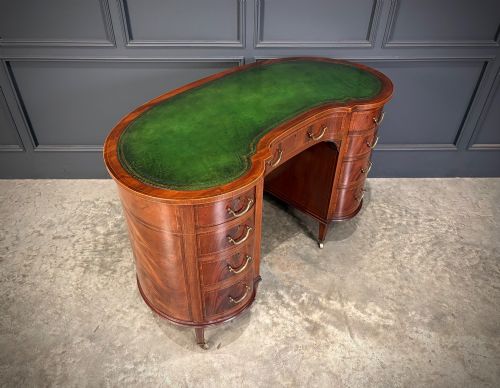

Brown Kidney Shaped Desk
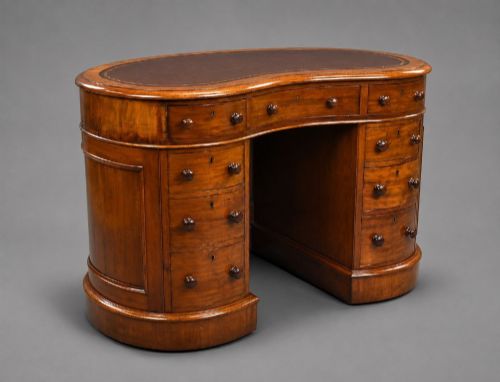
A brown kidney shaped desk offers a distinct sweeping curve designed to sit comfortably against the writer while making efficient use of interior space.
Brown Kidney Shaped Desk
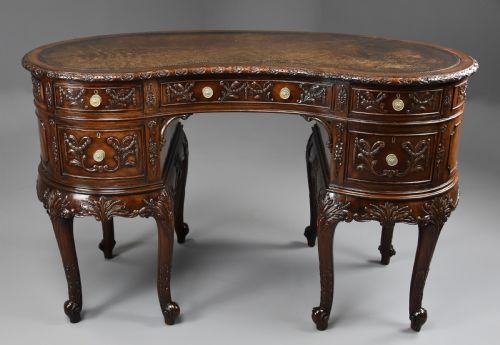
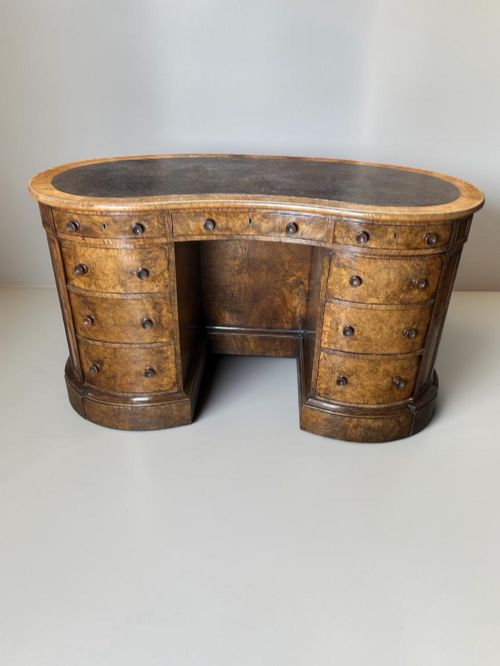
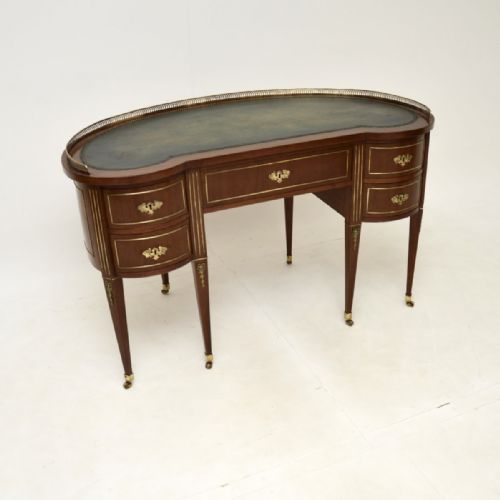
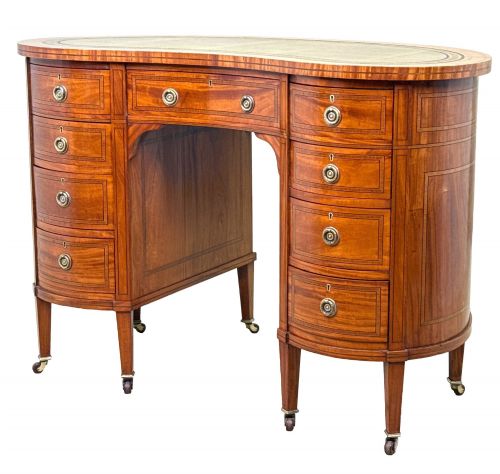
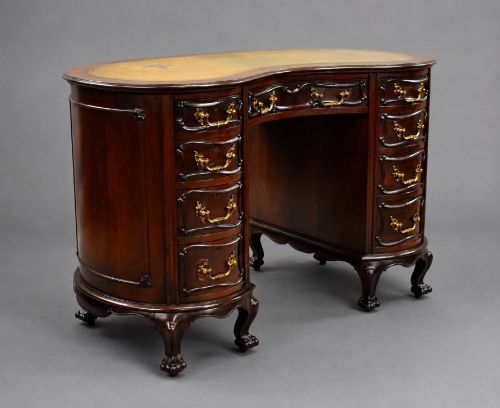
A brown kidney shaped desk provides a characteristic curved writing surface that defines its silhouette across various historical periods. The examples found on this page span from the mid nineteenth century through the Edwardian era, encompassing distinct stylistic revivals.
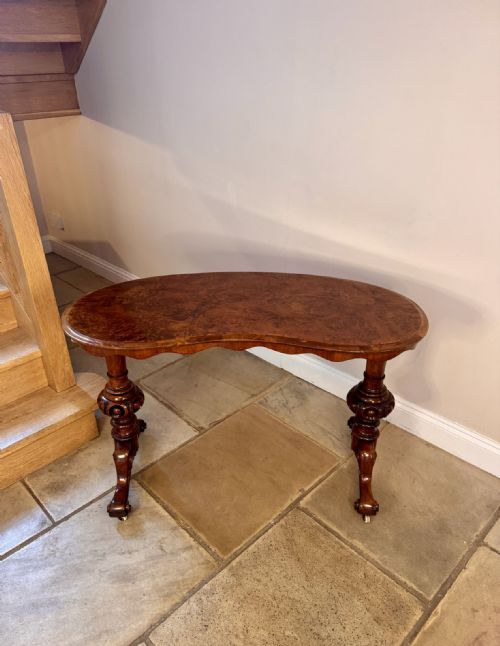
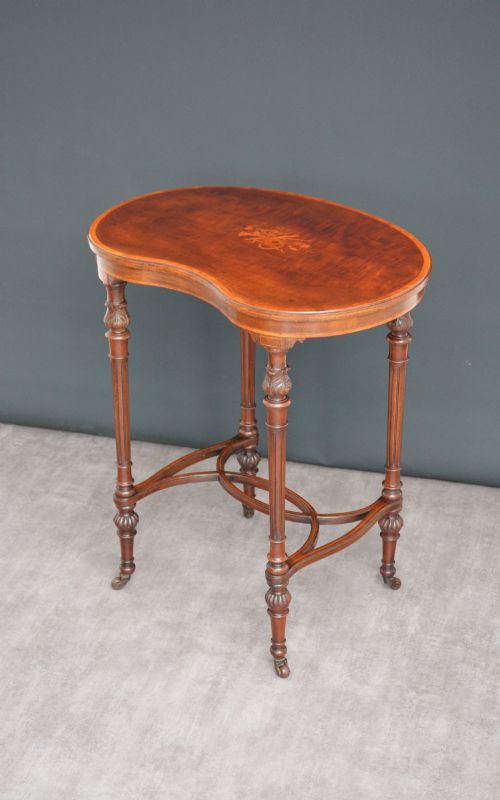
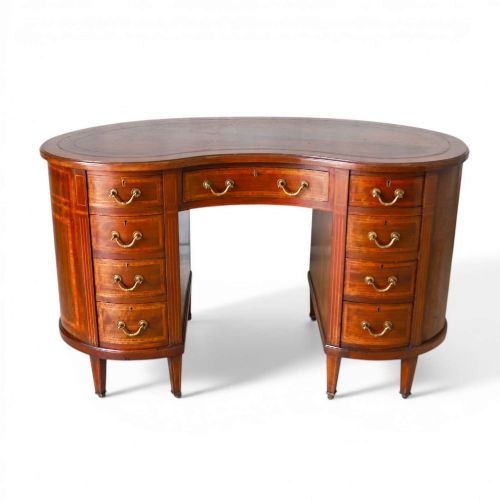
Makers produced these writing surfaces in forms ranging from compact side tables and occasional pieces to larger freestanding desks and dressing tables. Mahogany and walnut dominate the selection, frequently enhanced by contrasting inlaid timbers and leather writing inserts.
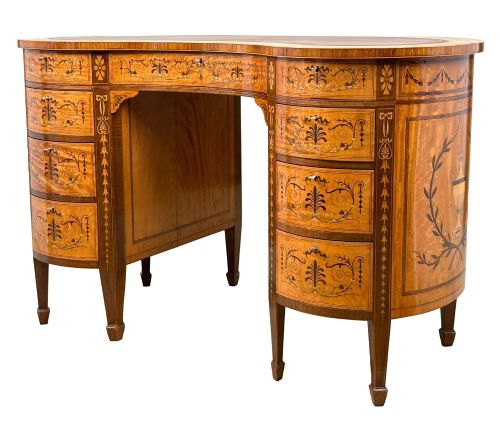
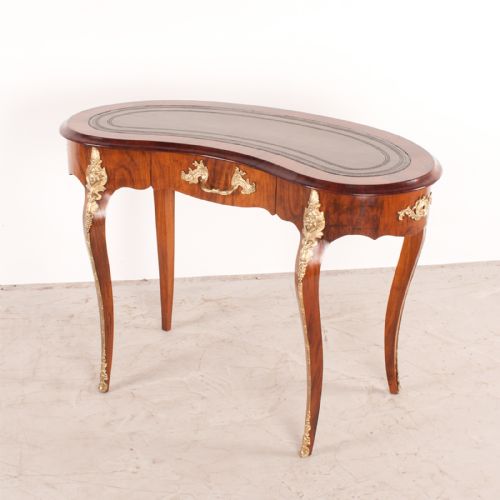
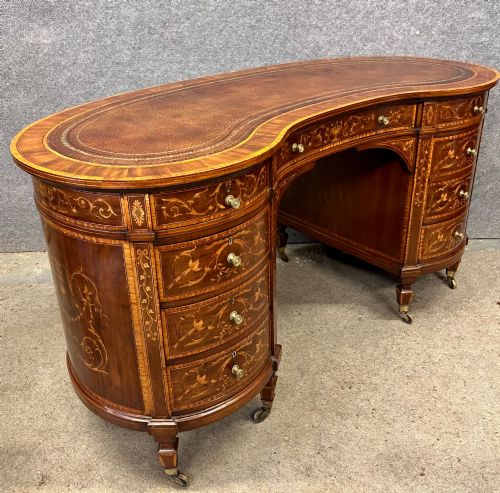
Victorian and Edwardian workshops supplied the majority of these pieces, often drawing on Sheraton Revival or French design idioms. Buyers regularly encounter pieces finished with detailed marquetry, ormolu mounts, and fitted drawers following the signature concave curve.
Materials and Technique
Cabinetmakers utilised solid timbers and selected veneers such as mahogany, satinwood, burr walnut, and rosewood to construct the curved frames of these desks. Bending wood to achieve the precise kidney profile required careful steaming and laminated construction methods in the workshop.
Surfaces were frequently inlaid with contrasting decorative woods using marquetry techniques, and many incorporated tooled leather writing panels inset into the top. Skilled metalworkers added brass handles, locks, and cast ormolu mounts to complete the structural composition.
Brown Kidney Shaped Desk Retail Price Guide 2026
Typical asking prices for brown kidney shaped desk among the pieces listed under this phrase on Sellingantiques today, from the lower quarter to the upper quarter. They describe what is for sale here now, not the wider market.
Listings feature pieces spanning from the mid nineteenth century through the Edwardian period, constructed in mahogany, walnut, satinwood, and rosewood.
Craftsmanship and Detail
The degree of refinement in the timber selection and inlay work marks the distinction between standard production pieces and exhibition quality examples. Finer desks display intricate marquetry and carefully chosen burr veneers that follow the complex curve without interruption.
Structural integrity depends on the precision of the joinery along the curved apron and the quality of the internal drawer construction. Pieces bearing attribution to notable makers or featuring original ormolu mounts and leather inserts demonstrate superior original craftsmanship.
Edwards & Roberts·Shapland & Petter·Maurice Adams
The Brown Kidney Shaped Desk Glossary
- Kidney shaped
- A curved furniture design featuring a concave front and convex back, resembling a bean, which allows the user to sit closer to the centre.
- Marquetry
- Decorative patterns formed by fitting together small pieces of tinted wood veneer onto a structural carcase.
- Ormolu
- Gilded bronze ornamentation applied to furniture, popular in French revival and nineteenth century cabinet making.
- Sheraton Revival
- A late nineteenth century design movement inspired by the lighter neoclassical furniture of George Sheraton.
- Burr walnut
- Timber taken from the gnarled growth of a walnut tree, prized for its swirling, decorative grain patterns.
Brown Kidney Shaped Desk: Frequently Asked Questions
Where should a kidney shaped desk go?
Many of these pieces feature finished backs, allowing them to stand freestanding in the middle of a room rather than pushed against a wall.
The curved front provides comfortable knee space when placed away from architectural boundaries.
How do I identify a Victorian example?
Victorian pieces often utilise rich mahogany or burr walnut timbers paired with heavy brass hardware and traditional hand cut dovetails in the drawer construction.
Stylistic cues include nineteenth century revival motifs and deep, dark patination built up over decades of use.
What is a Sheraton Revival desk?
Sheraton Revival pieces date from the late nineteenth or early twentieth century and imitate the lighter, elegant proportions promoted by eighteenth century designer George Sheraton.
These desks frequently display delicate satinwood crossbanding and fine floral marquetry.
Can these desks be used for writing?
The curved surface provides a compact writing area, traditionally fitted with an inset leather or skiver panel to supply a smooth working texture.
Smaller examples double effectively as dressing tables or decorative side pieces depending on the drawer configuration.