




Brown Inlaid Games Table
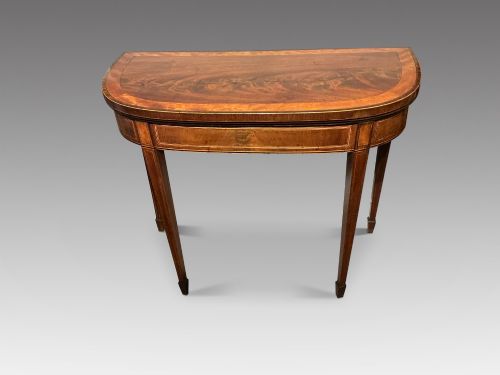
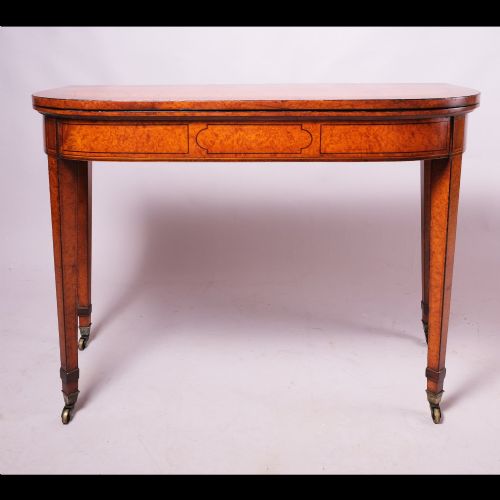
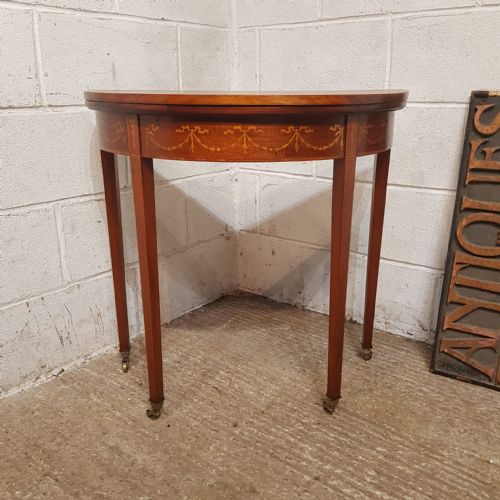
A brown inlaid games table brings centuries of social play into a room, offering fold-over leaves and detailed wood marquetry for the discerning collector.
Brown Inlaid Games Table
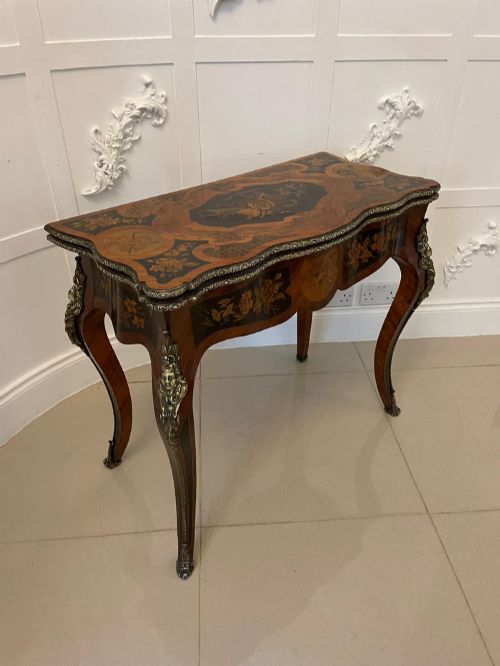
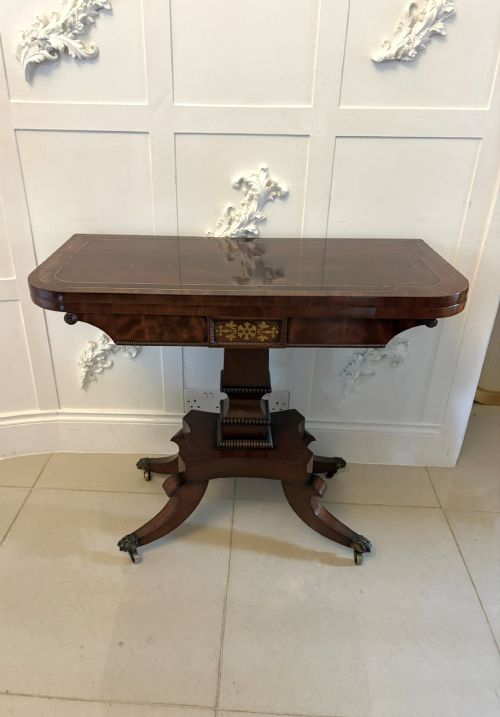
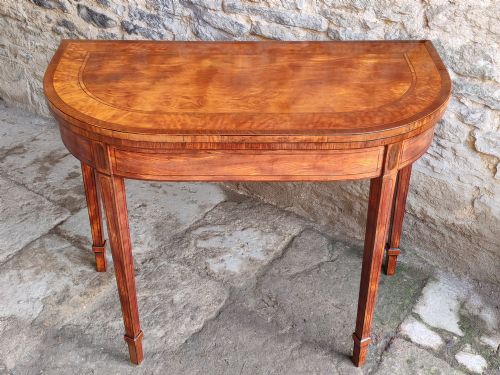
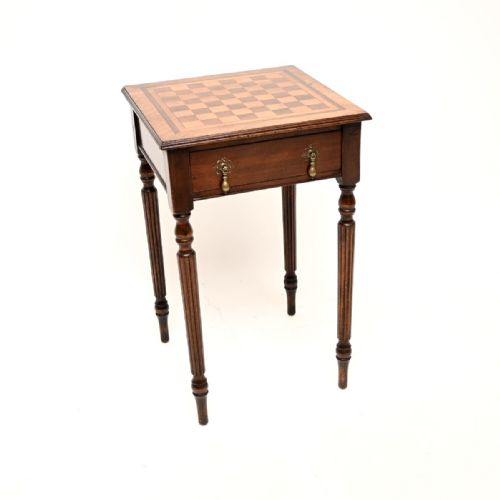
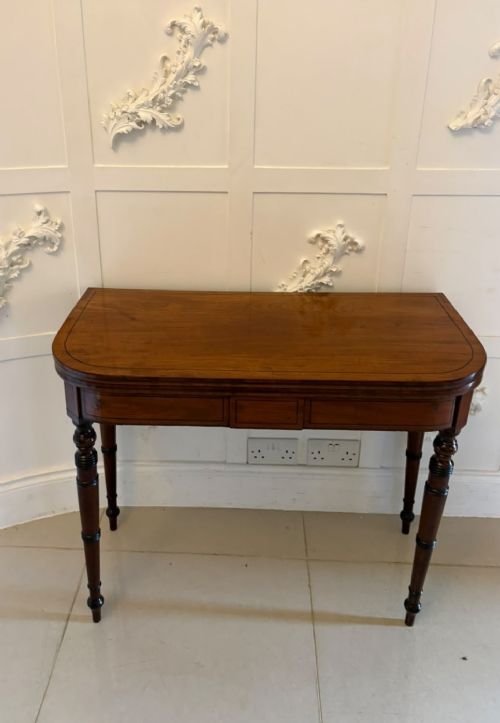
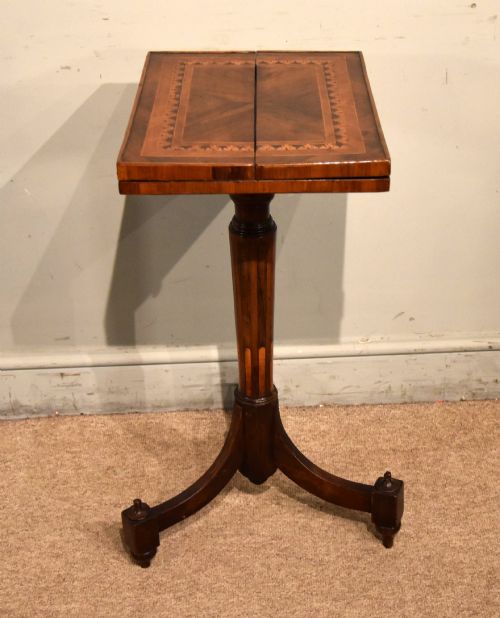
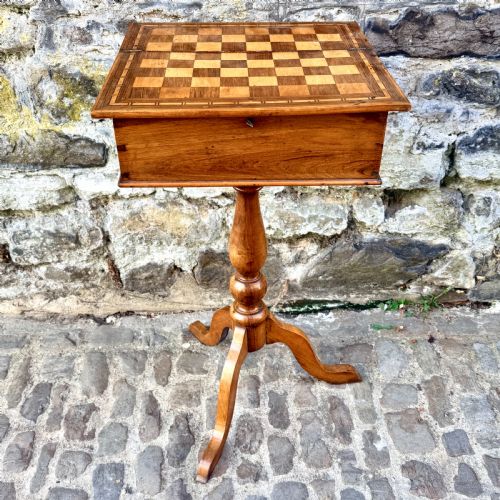
A brown inlaid games table is a versatile surface designed for pastimes like cards and chess, appearing primarily across Georgian, Regency and Victorian eras. These pieces frequently feature fold-over tops, swivel mechanisms or fitted interiors to conceal playing surfaces when not in use.
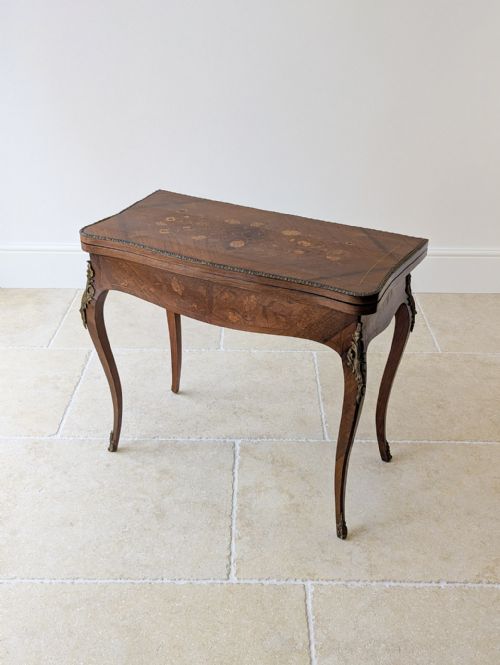
The most common formats on this page are mahogany and walnut card tables, often embellished with geometric or floral wood inlay. Alongside these traditional designs, occasional chess tables and multi-functional tea-and-games combinations emerge from both British and continental workshops.
How they were made
Cabinet makers built these tables using solid timber frames of mahogany, walnut or rosewood, applying fine veneers of satinwood, kingwood, amboyna or olive to the primary surfaces. Contrasting woods such as boxwood and ebony provided sharp definition for complex stringing and geometric borders.
Marquetry techniques involved hand-cutting thin slices of diverse timbers to create pictorial floral motifs or intricate repeating patterns set flush into the top. Brass inlay and ormolu mounts occasionally supplemented the wooden decoration, particularly on nineteenth-century French and Regency examples.
Materials documented across the inventory include mahogany, walnut, satinwood, rosewood, kingwood, amboyna, boxwood, ebony and brass.
What varies in quality
Quality rests upon the precision of the timber selection and the crispness of the cabinet work, from figured mahogany grains to meticulously aligned marquetry. Superior examples display seamless hinge mechanisms, stable swivel actions and harmonious proportions when opened for play.
The depth of hand-carving on the base and the complexity of the internal compartments distinguish standard production from exceptional pieces. Finer tables maintain structural integrity in their folding tops without sagging or timber distortion over time.
Bruce & Burns of Edinburgh·Maple & Co.
The Brown Inlaid Games Table Glossary
- Marquetry
- Decorative veneer work arranged in intricate pictures or patterns using various coloured woods. This technique requires patient hand-cutting and fitting of individual wooden pieces.
- Fold-over top
- A hinged table surface that doubles the top area when opened for dining or card games. It often reveals a baize-lined interior or hidden storage wells.
- Demi-lune
- A half-moon shape characteristic of side and card tables designed to stand flat against a wall. This silhouette gained particular popularity during the Georgian period.
- Stringing
- Thin inlaid lines of contrasting wood used to outline panels, drawers and table edges. It adds subtle linear definition to plain timber surfaces.
- Envelope table
- A card table with four triangular flaps that fold inward to cover the top like an envelope. Rotating the top typically swings the pivoting leaves open.
Brown Inlaid Games Table: Frequently Asked Questions
What games were these tables used for?
These tables accommodated card games like whist and ombre, alongside board pastimes such as chess and backgammon. Many surfaces combined multiple functions within a single piece of furniture.
Fitted interiors often included storage compartments for counters, dice and playing cards. The versatility made them central pieces in domestic drawing rooms.
How do I identify a Georgian games table?
Georgian examples typically feature solid mahogany or satinwood construction with restrained geometric stringing and straight or cabriole legs. The joinery employs traditional hand-cut dovetails and sturdy hinge mechanisms.
They emphasise structural balance over excessive ornamentation, relying on the natural figure of the wood. Many incorporate fold-over tops supported by swing-out rear legs.
How do I care for antique wood veneers?
Maintain a stable indoor environment away from direct sunlight and sudden temperature shifts to prevent veneer lifting. Regular dusting with a soft, dry cloth preserves the polished finish.
Avoid liquid cleaning products and excessive moisture, which can damage old adhesives beneath the inlay. Periodic waxing helps nourish dry timbers.