


Brown Horse Watercolour Art
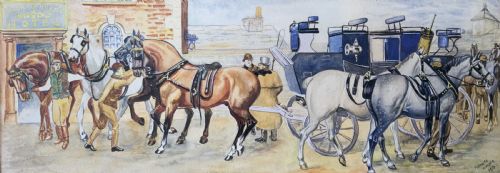
Brown horse watercolour art brings together equestrian subjects and fluid pigments, offering a direct view into working and sporting life from past centuries.
Brown Horse Watercolour Art
When you search for brown horse watercolour art, you are looking at works executed on paper using water-soluble pigments and ink, often finished with gouache. The pieces span from the Georgian and Victorian eras through the Edwardian period and into the mid-twentieth century.
The subjects range widely across rural and sporting life. You will encounter working animals in scenes such as logging carts, plough teams, and horse fairs, alongside hunting scenes and racing depictions.
Most examples appear mounted behind glass within wooden frames, frequently oak. The handling of the medium varies from detailed realism to looser Impressionist and genre interpretations.
Materials and technique
Artists painted primarily on paper surfaces, applying watercolour pigment sometimes combined with bodycolour, ink, or gouache to build opacity and texture. The fluid nature of water-based pigments required swift, confident brushwork to capture the vitality of equine forms.
Finished works found protection beneath glass and within wooden surrounds, such as oak frames, which preserved the delicate paper and pigments from atmospheric damage over the decades.
Listings feature works executed on paper using watercolour, gouache, and ink, preserved within wood and glass frames.
Distinctions in quality
Quality rests in the draughtsmanship and the artist's command of anatomy and movement. Stronger works capture the tension of muscle and the atmosphere of the scene with economy and precision.
The condition of the paper and the vibrancy of the pigments separate fine survivals from faded or heavily acid-damaged examples. Original framing and clear signatures by known hands also elevate a piece.
Herman S Melville·John Rattenbury Skeaping·James William Booth·John Augustus Atkinson·Helena Maguire·John Atkinson·Adrian Jones·Robert Hollands Walker·Charles Clifford Turner·George Hamilton Constantine·William Manners·Snaffles·Frank Saltfleet·Fred Lawson·Charles James Adams
The Brown Horse Watercolour Art Glossary
- Watercolour
- A painting method in which the paints are made of pigments suspended in a water-based solution. It relies on the transparency of the washes to create light and depth.
- Gouache
- An opaque water-based paint that includes a binding agent and white pigment added to create a heavier, matte finish. It is frequently found combined with watercolour in these equestrian works.
- Genre Art
- Depictions of aspects of everyday life by subjects from ordinary people to working animals. In this selection, it includes rural scenes of ploughing, logging, and market fairs.
- Equestrian
- Pertaining to horses and horse riding. The term covers racing scenes, hunting gatherings, and working teams alike.
Brown Horse Watercolour Art: Frequently Asked Questions
What periods do these paintings come from?
The works span from the early nineteenth century through the Victorian and Edwardian eras up to the mid-twentieth century. Artists worked across distinct stylistic shifts including British Realism and Impressionism.
Dates often attach to the signed or attributed working window of the artist, or reflect specific decades noted in the titles.
How should I frame and display them?
Watercolours on paper demand protection from direct sunlight to prevent the pigments from fading. Displaying them behind glass in stable indoor environments helps preserve the paper.
Many retain period wooden frames, such as oak, which complement the age and origin of the artwork.
What subjects appear most often?
Working animals dominate the selections, featuring plough teams, logging carts, timber haulage, and country horse fairs. Sporting subjects such as hunting scenes and racing events also occur.
These compositions record the daily interaction between horses and rural labourers across different British and European localities.
How do I distinguish watercolours from gouache?
Watercolour employs translucent washes that allow the white of the paper to provide highlights. Gouache incorporates opaque pigments and white additives to create solid, flat areas of colour.
Many pieces combine both media to render the sheen of a horse's coat or the texture of harness and cart.