




Harvest Scene Watercolour
A harvest scene watercolour captures the enduring rhythm of rural work, offering a charming window into historical pastoral life.
Harvest Scene Watercolour
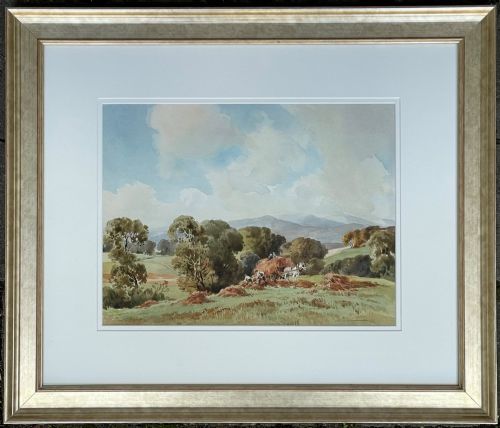
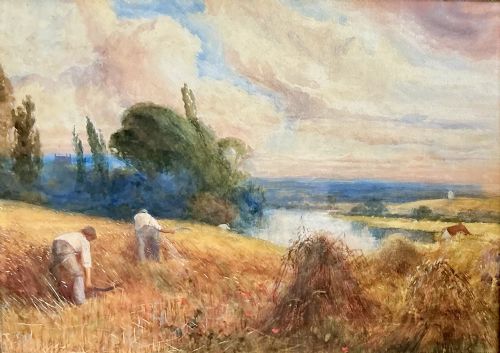
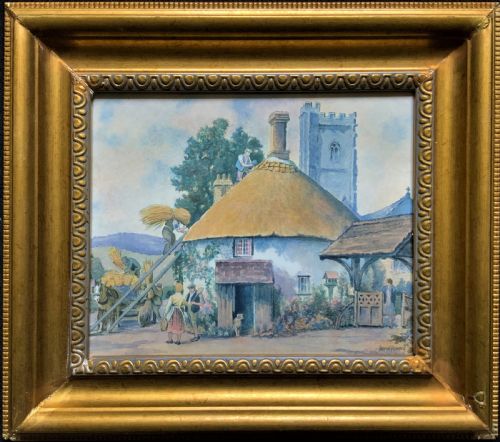
A harvest scene watercolour depicts rural labourers gathering crops, capturing traditional agricultural activities across the countryside. These artworks record historical farming methods, from loading horse and carts to hay cutting by the river.
The selections available range from late nineteenth century Victorian pastoral pieces to early twentieth century British impressionism and realism. Works from the Edwardian era and the nineteen twenties frequently appear, framed and glazed for display as wall art.
Collectors encounter named British artists such as Percy Lancaster, Frederick Hines, James William Booth, John Atkinson, Rowland Henry Hill, Walter Duncan, George Hamilton Constantine, David Heward, Wilmot Pilsbury, George Graham, Robert Thorne Waite, JE Hood, and H H Parker.
How they were made
These works utilise watercolour paint and pigment applied directly to paper supports, capturing light and atmosphere across rural landscapes. Artists employed fluid washes alongside detailed brushwork to delineate figures, fields, and skies.
Completed paintings are typically housed within traditional wooden frames, often constructed from oak and sometimes enhanced with gilt finishes. Glazing protects the delicate paper and water-soluble pigments from environmental damage over time.
Listings feature paper, watercolour paint, wood, glass, oak, and gilt materials across various British art styles.
What varies in quality
The strength of composition and the artist's ability to render light and movement across the landscape distinguish individual paintings. Masterful handling of watercolour pigment creates depth and atmospheric clarity in the depiction of pastoral scenes.
Framing and preservation also differentiate the pieces, with original wood and gilt frames contributing to the historical integrity of the work. Condition of the paper support and stability of the pigments determine the overall preservation standard.
Percy Lancaster·Frederick Hines·James William Booth·John Atkinson·Rowland Henry Hill·Walter Duncan·George Hamilton Constantine·David Heward·Wilmot Pilsbury·George Graham·Robert Thorne Waite·JE Hood·H H Parker
The Harvest Scene Watercolour Glossary
- Watercolour
- A painting method in which the paints are made of pigments suspended in a water-based solution. This medium allows for transparent washes of colour.
- Gilt
- Covered thinly with gold leaf or gold paint. This finish often adorns the wooden frames surrounding historical watercolours.
- Edwardian
- Pertaining to the reign of King Edward VII, spanning the early years of the twentieth century. Many pastoral paintings originate from this period.
- Victorian Pastoral
- An artistic style celebrating rural life and agricultural scenes during the nineteenth century. These works often idealise the British countryside.
- Glazed
- Fitted with a protective layer of glass over the artwork. This preserves the delicate paper and pigment from dust and moisture.
Harvest Scene Watercolour: Frequently Asked Questions
What periods do these watercolours span?
The works date from the late nineteenth century through to the middle of the twentieth century, covering Victorian, Edwardian, and later periods.
Most examples originate from the decades between eighteen eighty and nineteen forty, reflecting changing styles in British art.
How should I display these paintings?
These framed watercolours suit wall art placement in traditional living spaces, studies, or hallways.
Keep them away from direct sunlight to protect the pigments on paper from fading over time.
What materials were used?
Artists used watercolour paint and pigment on paper supports to create these rural landscape scenes.
The finished paintings are typically housed behind glass in wooden frames made of oak, occasionally featuring gilt details.
How do I identify the artist?
Many pieces feature signatures from the painters who recorded these agricultural landscapes across Britain.
Researching the named artists helps place the artwork within specific movements such as British Impressionism or Victorian Realism.