

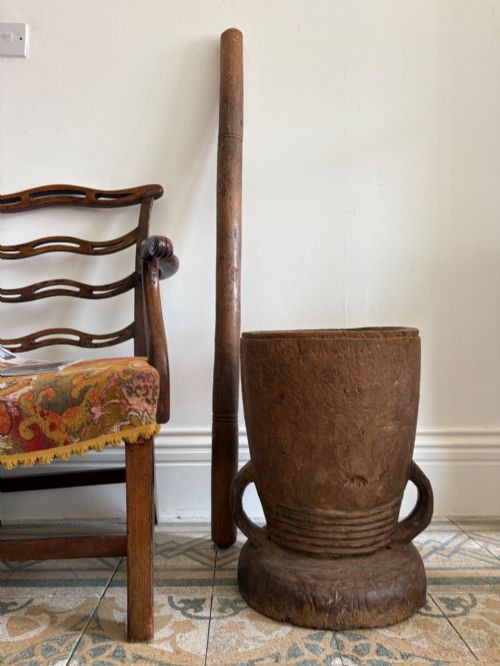
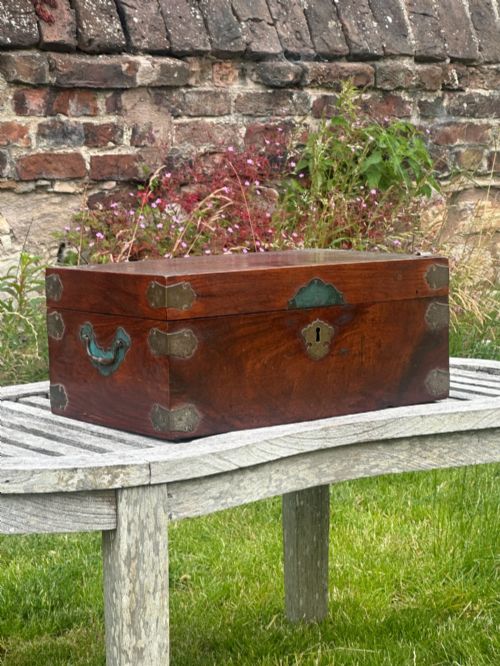

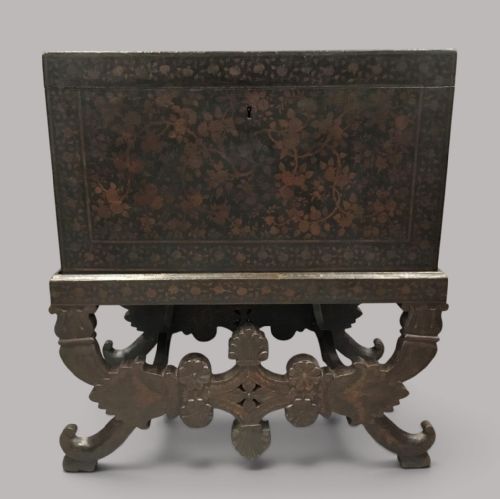


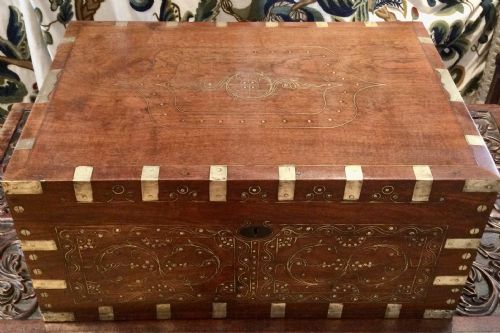


Brown Hardwood Trunk
These brown hardwood trunk examples offer sturdy storage and rich timber grain, bringing centuries of craftsmanship into modern rooms.
Brown Hardwood Trunk
A brown hardwood trunk provides robust storage and deep visual character, taking the form of coffers, deed boxes, and blanket chests. These items emerge from various cultural traditions spanning the eighteenth, nineteenth, and early twentieth centuries.
The version most commonly encountered on this page is the nineteenth-century Indian or Chinese trunk, frequently constructed from dense timbers and reinforced with metal bindings.
How they were made
Carpenters utilised dense regional timbers such as padouk, teak, and elm, building heavy frames designed to withstand travel and daily use. Panels were joined securely, often incorporating hand-carved decorative motifs or plain surfaces that highlight the natural grain.
Metalwork played a structural and decorative role, with smiths forging brass, iron, and copper corners, straps, and heavy locks. Bone inlays occasionally appeared on specialised boxes, adding contrast to the dark polished wood.
Brown Hardwood Trunk Retail Price Guide 2026
Typical asking prices for brown hardwood trunk among the pieces listed under this phrase on Sellingantiques today, from the lower quarter to the upper quarter. They describe what is for sale here now, not the wider market.
Some trunks arrived with hidden compartments inside, built specifically for stashing secret love letters or emergency coin purses.
What varies in quality
The calibre of a brown hardwood trunk rests on the selection of timber and the precision of the joinery. Heavier, unwarped planks and tighter structural joints separate robust examples from simpler utility boxes.
The execution of brass or iron hardware also marks the difference between standard production and superior work. Original mounts, hinges, and bindings that fit flush and show careful hand-forging elevate the standing of the piece.
The Brown Hardwood Trunk Glossary
- Padouk
- A dense tropical hardwood known for its deep reddish-brown colour and durability. It was frequently selected by colonial cabinetmakers for export chests.
- Coffer
- A heavy box or chest traditionally used for storing valuables. These pieces often feature hinged lids and sturdy metal reinforcement.
- Brass bound
- A method of reinforcing trunk edges and corners with metal strips and brackets. This technique protected the wood during long journeys.
- Zanzibar chest
- A distinct style of trunk characterised by heavy brass studs and elaborate plate work. They reflect maritime trade routes and diverse cultural influences.
Brown Hardwood Trunk: Frequently Asked Questions
What is a brown hardwood trunk used for?
These trunks serve primarily as durable storage containers for blankets, linens, and personal possessions. Their flat lids also allow them to function as display surfaces or occasional tables within a room.
Historically, they protected valuable goods during transport across land and sea. Today, they bring practical storage capacity and strong visual presence to living spaces.
How do I care for my trunk?
Maintain the timber by keeping the trunk away from direct heat sources and sudden humidity changes. Regular dusting with a dry cloth preserves the finish of the wood.
Avoid harsh chemical polishes that can damage older lacquered or waxed surfaces. Occasional gentle treatment with suitable natural wax helps nourish the dry hardwood.
How can I tell the period of a trunk?
Examine the construction methods, tool marks on the interior boards, and the style of the metal hinges. Eighteenth-century examples often display hand-sawn timber and simpler, heavy-duty joinery.
Nineteenth-century items frequently incorporate more intricate brass work and specific regional motifs. Comparing the type of wood and hardware to documented examples helps narrow down the date.
Are these trunks waterproof?
While tight-fitting wooden panels and metal bindings offer protection against dust and minor moisture, these vintage pieces are not fully waterproof. They were designed for domestic storage rather than modern weatherproofing.
Storing delicate items inside requires consideration of the ambient humidity in the room. Proper indoor placement ensures the dry hardwood remains stable over time.