



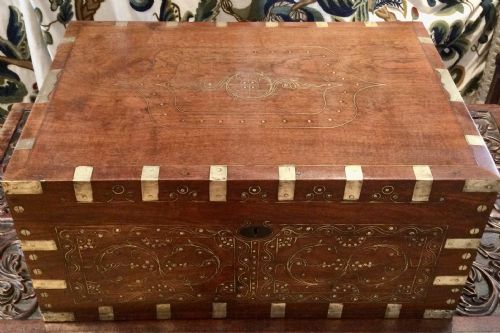


Brass Inlay Jewellery Chest
A brass inlay jewellery chest brings together fine hardwoods and metalwork to secure your most treasured keepsakes with quiet distinction.
Brass Inlay Jewellery Chest
A brass inlay jewellery chest is a compact container designed for holding valuables, personal ornaments, and small keepsakes. You encounter these pieces primarily in rosewood and mahogany, often dating from the Georgian and Victorian eras.
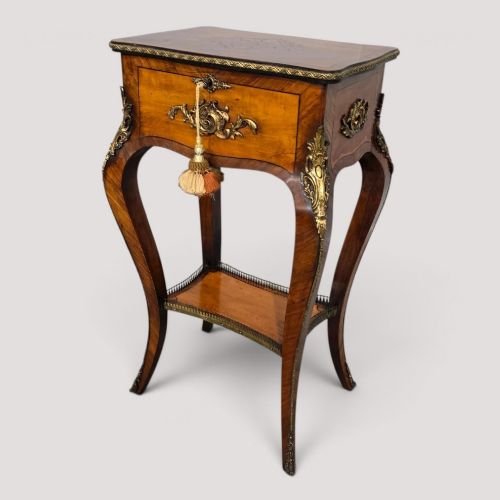
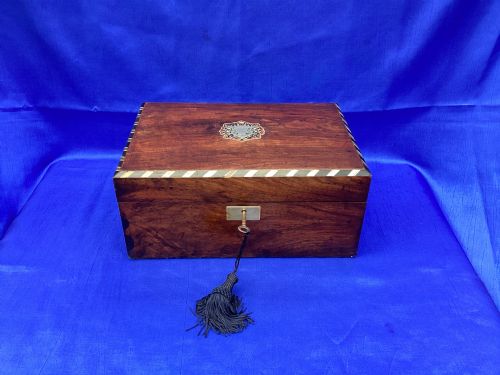
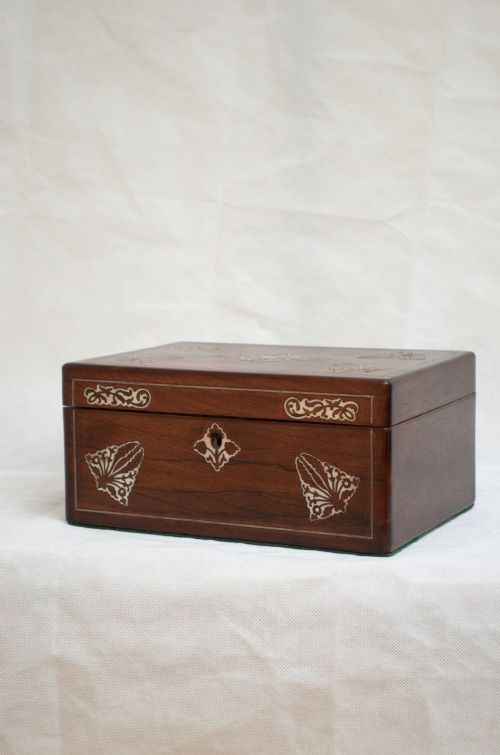
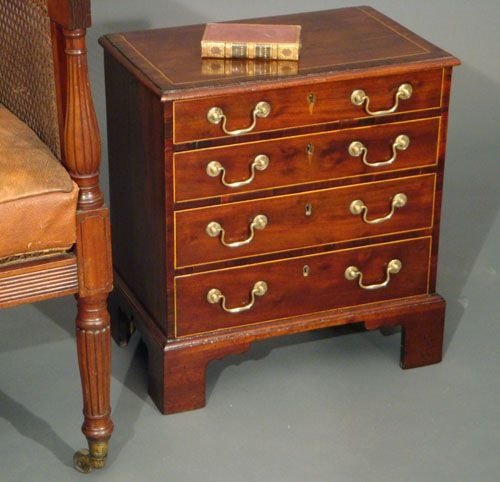
The objects take several forms on this page, including table cabinets, fitted work boxes, and miniature chests of drawers. Many examples feature compartmentalised trays and lined interiors intended to keep rings, watches, and trinkets organised.
Origins range from domestic British workshops to Anglo-Indian productions, reflecting varied cabinet-making traditions. The common thread across these forms is the deliberate application of brass stringing, plaques, or intricate motifs into the wooden surface.
Materials and construction methods
Cabinet-makers built these chests using dense hardwoods such as rosewood and mahogany, providing a stable dark ground for metal decoration. Artisans also utilised specialist materials like mother-of-pearl and specimen bone veneers to enhance the geometric and floral designs.
The brass ornamentation was sunk directly into channels hand-cut into the timber surface and secured with tiny pins or adhesive. This painstaking inlay technique demanded precision from the maker to ensure the metal sat flush with the surrounding grain.
Brass Inlay Jewellery Chest Retail Price Guide 2026
Typical asking prices for brass inlay jewellery chest among the pieces listed under this phrase on Sellingantiques today, from the lower quarter to the upper quarter. They describe what is for sale here now, not the wider market.
Periods represented span from the 18th century through the Victorian era and into the mid-20th century.
Distinguishing quality in construction
Quality rests upon the precision of the brass inlay work and the selection of the underlying timber. Tighter grain matching and crisper metalwork indicate a higher standard of original workshop production.
Interior fitments and compartmentalisation also set individual chests apart. Well-preserved trays, secret drawers, and intact linings demonstrate greater original expense and more careful guardianship over time.
The Brass Inlay Jewellery Chest Glossary
- Brass stringing
- Thin threads of brass inlaid into the wood to outline panels or edges. This linear detail defines much of the Regency and Victorian aesthetic.
- Campaign box
- A portable chest constructed for travel, typically featuring recessed brass carrying handles and reinforced corners. These items were built to withstand movement while retaining domestic refinement.
- Table cabinet
- A small chest designed to sit upon a desk or surface rather than stand on the floor. They often house multiple internal drawers behind locking doors.
Brass Inlay Jewellery Chest: Frequently Asked Questions
What is a brass inlay jewellery chest?
A brass inlay jewellery chest is a portable wooden box or small cabinet adorned with decorative metalwork, built to store valuables.
These pieces date largely from the Georgian and Victorian periods, utilising dense timbers like rosewood and mahogany.
How do I date a jewellery chest?
Dating relies on observing the wood species, construction methods, and the style of the brass embellishments. Regency and Victorian examples often display characteristic stringing and fitted internal trays.
Comparing the hardware and locking mechanisms to known period examples further clarifies the era of manufacture.
Where were these chests made?
The pieces originate primarily from British workshops, though Anglo-Indian examples also appear within the trade. Each region brought distinct cabinet-making traits and decorative preferences to the finished item.
Local timber availability and prevailing stylistic trends heavily influenced the construction origin.
How should I care for the wood?
Maintain these chests by keeping them away from direct sunlight and sudden temperature fluctuations. This protects the delicate wood ground and prevents the brass inlay from loosening.
Applying a suitable wax polish periodically helps preserve the natural lustre of the hardwood surface.