





Brown Hardwood Chest
These brown hardwood chest pieces are sturdy storage vessels and cabinets originating from various Asian and colonial traditions, offering both utility and rich decorative carving.
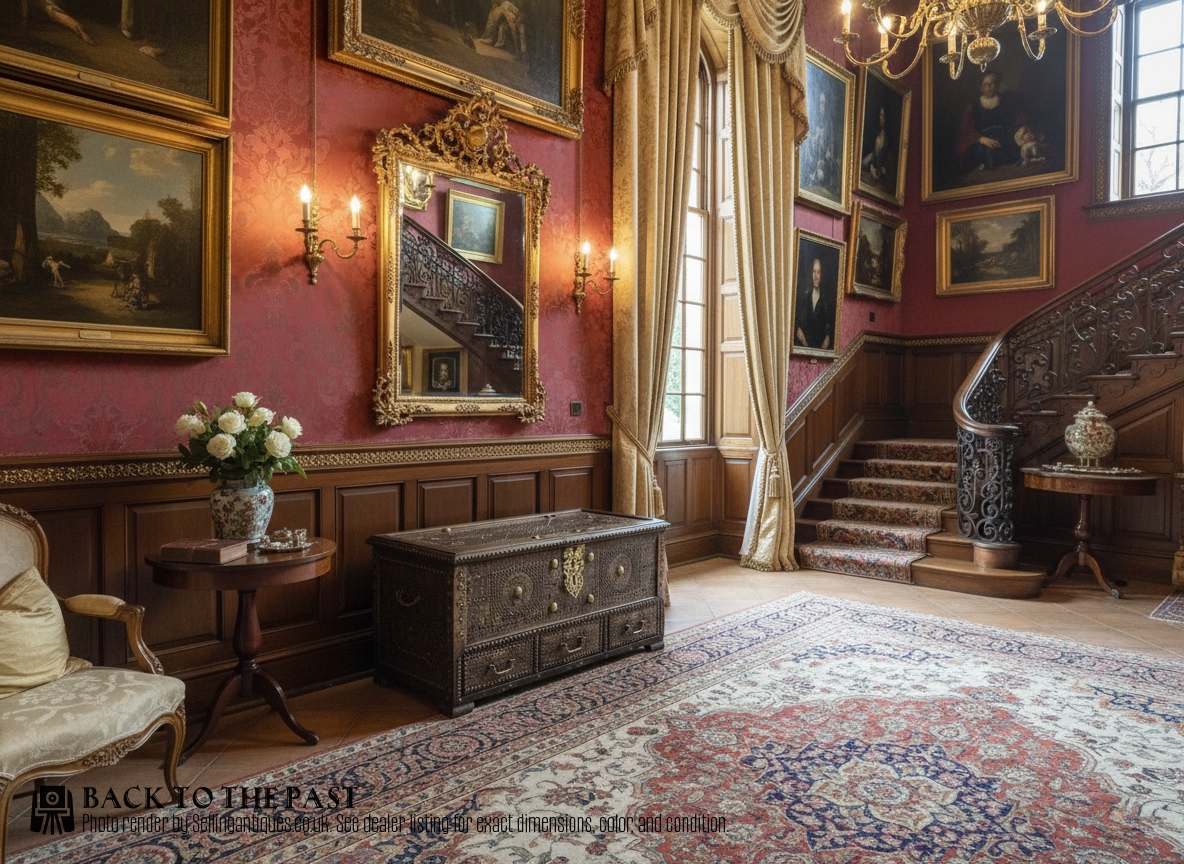
Brown Hardwood Chest
A brown hardwood chest is a solid storage piece designed for travelling, domestic organisation or display, encompassing trunks, coffers, cellarettes and tabletop cabinets. The selection on this page draws heavily from 19th century craftsmanship, alongside pieces from the 18th century, the 1920s and the 1930s.
Buyers will encounter diverse regional forms including Anglo-Indian deed boxes, Chinese lacquered storage cabinets, Zanzibar chests and Burmese specimen boxes. These items serve equally well as striking coffee table alternatives, blanket boxes or desktop organizers in a modern home.
Materials and construction
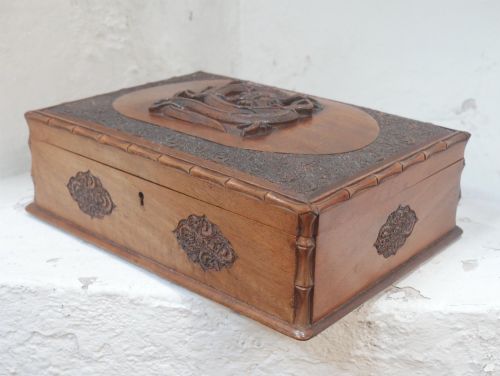
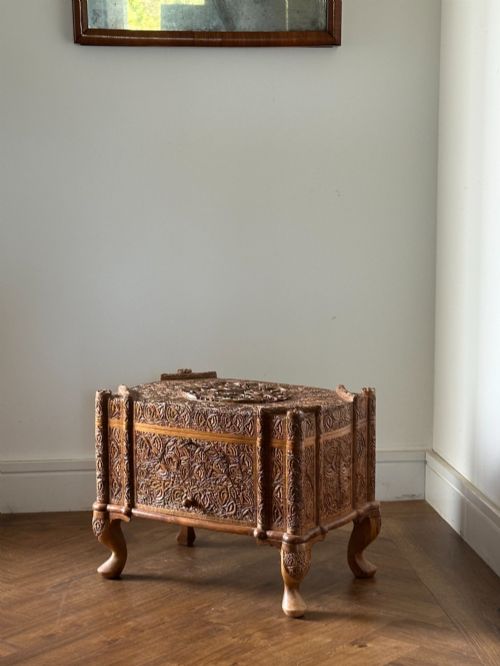
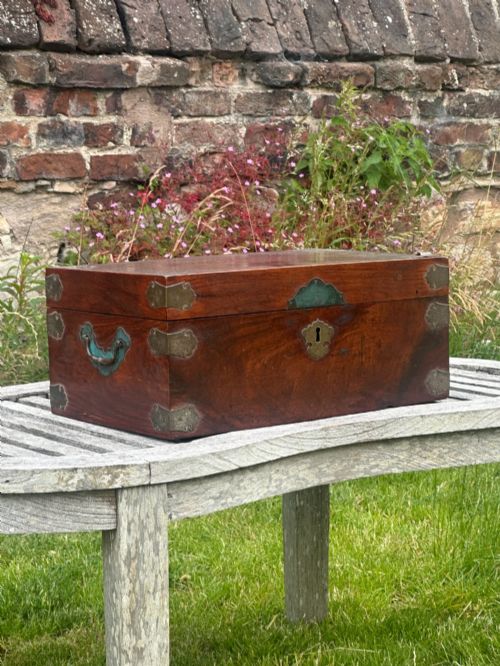
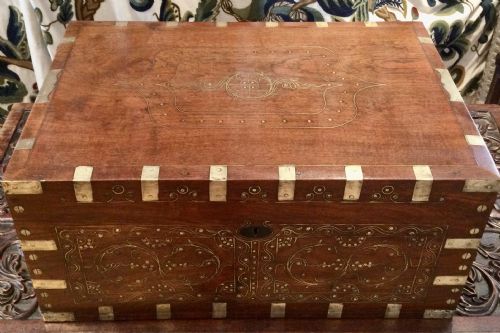
The construction relies on dense tropical timbers such as padouk, teak, walnut, elm and sandalwood, selected for their resilience and deep natural grain. Artisans frequently augmented these sturdy wooden structures with protective brass bindings, iron mounts and bronze animal decorations.
Surface ornamentation ranges from intricate traditional carving seen in Anglo-Indian and Burmese examples to smooth lacquered finishes characteristic of Chinese Qing Dynasty and Republic period pieces. Metal fastenings and handles were functionally integrated to secure heavy lids and facilitate transport.
Brown Hardwood Chest Retail Price Guide 2026
Typical asking prices for brown hardwood chest among the pieces listed under this phrase on Sellingantiques today, from the lower quarter to the upper quarter. They describe what is for sale here now, not the wider market.
Materials documented across the pieces include hardwood, teak, padouk, walnut, elm, brass, iron, and bronze.
Distinguishing quality
Quality rests in the crispness of the hand carving, the weight and integrity of the timber, and the originality of mounts such as brass straps and iron bindings. Pieces that retain their fitted interiors, original locks or dedicated stands command greater appreciation.
The sophistication of the joinery and the depth of the regional decorative vocabulary separate standard utilitarian trunks from masterwork specimens created for export or high-status domestic use.
The Brown Hardwood Chest Glossary
- Padouk
- A heavy, durable tropical hardwood prized for its reddish-brown colour and stability in furniture construction.
- Cellarette
- A lockable container originally designed for holding bottles of wine or spirits safely during transport or dining.
- Coffer
- A robust chest traditionally used for storing valuables, documents or textiles, often secured with iron or brass bands.
- Meiji Period
- The era in Japanese history spanning from 1868 to 1912, noted for intricate decorative arts and fine metalwork.
- Anglo-Indian
- A stylistic classification for furniture made in India by British commission or by native craftsmen incorporating British forms.
Brown Hardwood Chest: Frequently Asked Questions
How can I use a chest at home?
These pieces offer versatile storage for blankets, books or paperwork while acting as focal points in a hallway, bedroom or living room. Smaller tabletop cabinets and boxes sit comfortably on desks or sideboards for organising smaller items.
The rich wood tones and carved details complement both traditional interiors and modern minimalist spaces.
How do I date an antique chest?
Dating relies on observing construction methods, timber choice, and decorative styles associated with specific periods like the nineteenth century or the Qing Dynasty. Hand-cut dovetails, forged iron hardware and patinated surfaces often point to earlier craftsmanship.
Stylistic influences, such as Meiji period bronze decorations or Anglo-Indian colonial motifs, also help place an object within its historical window.
What is the difference between a trunk and a coffer?
A trunk is typically a portable container designed for travel, often reinforced with straps or handles for movement. A coffer is a heavier, stationary box traditionally used for safekeeping valuables and documents within a home.
Both forms make heavy use of durable hardwoods and metal reinforcements for structural security.