

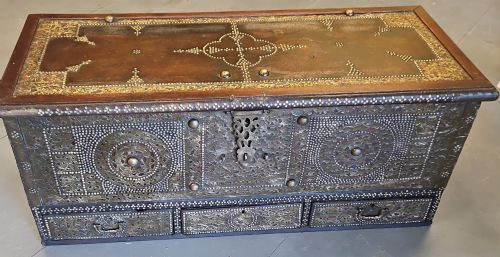


Zanzibar Coffer
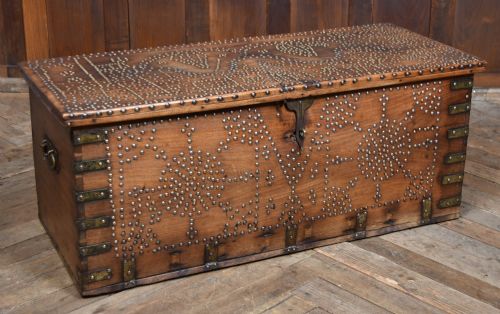
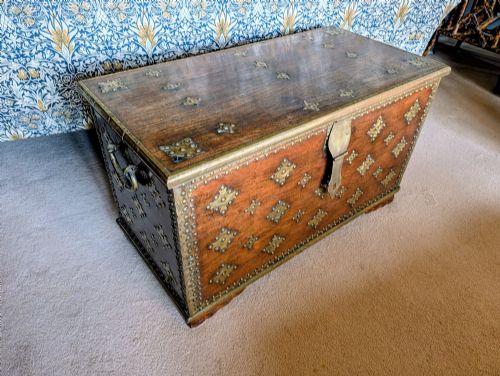
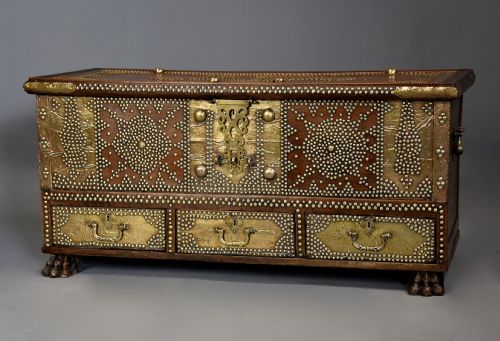
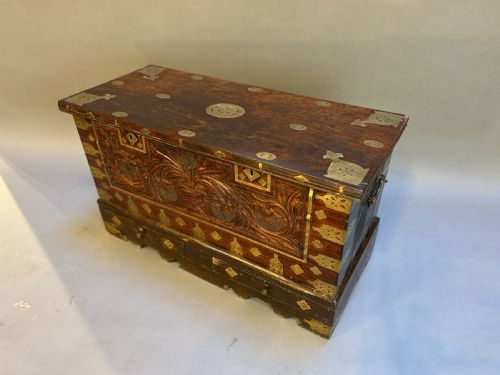
A zanzibar coffer is a heavy hardwood storage chest ornamented with brass studding, built for maritime trade and domestic use.
Zanzibar Coffer
A zanzibar coffer is a substantial storage piece often designated as a trunk, chest, blanket box, or mule chest within the available selection. These examples typically date from the nineteenth century, including Victorian periods and specific years like 1850, 1860, 1870, 1880, 1890, and 1920.
The aesthetic bridges several design traditions, appearing under styles such as Anglo-Indian, Colonial, Middle Eastern, and Victorian Colonial. Buyers encounter forms ranging from compact travel trunks to large carriage trunks and traders chests.
Most pieces serve practical storage roles while displaying decorative metalwork across the front and lid. The inventory reflects consistent regional characteristics tied to East African trade routes of the period.
How they were made
Construction relies on dense tropical hardwoods including teak, padouk, rosewood, shisham, and camphor wood. These timbers provide the structural weight and durability required for maritime transport.
Brass elements appear as extensive studding, bound edges, and decorative plates secured across the wooden body. Iron components also reinforce the structure of these heavy storage chests.
Zanzibar Coffer Retail Price Guide 2026
Typical asking prices for zanzibar coffer among the pieces listed under this phrase on Sellingantiques today, from the lower quarter to the upper quarter. They describe what is for sale here now, not the wider market.
Listings feature woods including teak, padouk, rosewood, shisham, and camphor wood paired with brass and iron hardware.
What varies in quality
The density and grain of the chosen timber determine the baseline quality of the piece, with select hardwoods showing finer figuring and greater resilience. Carpenters utilised heavier gauges of brass for the studding and corner bindings on superior examples.
The complexity and density of the brass ornamentation distinguish standard utility boxes from more ambitious merchant or traders chests. Proportions and the crispness of the metalwork dictate the visual weight of the object.
The Zanzibar Coffer Glossary
- Coffer
- A large wooden chest used for storing valuables or clothing. These lidded boxes often feature heavy reinforcement for travel.
- Padouk
- A heavy, durable tropical hardwood with a reddish hue. This material forms the primary structure of numerous listed blanket boxes.
- Shisham
- An Indian rosewood variant valued for its rich grain and strength. Makers utilised this timber extensively in nineteenth-century maritime furniture.
- Studding
- The application of metal pins or bosses arranged in patterns across the wooden exterior. Brass studding defines the visual character of these chests.
Zanzibar Coffer: Frequently Asked Questions
What is a zanzibar coffer?
A zanzibar coffer is a heavy nineteenth-century storage chest constructed from tropical hardwoods and decorated with brass studding.
These pieces originate from East African trade centres and reflect Anglo-Indian or Middle Eastern colonial design influences.
How were these chests used?
Merchants and travellers utilised these trunks for transporting goods and personal belongings across maritime routes.
In domestic settings, they functioned as blanket boxes, storage chests, and robust furniture pieces.
What woods are most common?
Makers relied on durable tropical timbers such as teak, padouk, rosewood, shisham, and camphor wood.
These dense hardwoods resisted warping and provided the necessary strength for long journeys.
How do I date a zanzibar chest?
Dating relies on timber selection, construction methods, and the style of the brass hardware.
Most surviving examples date from the Victorian era and the latter half of the nineteenth century.