

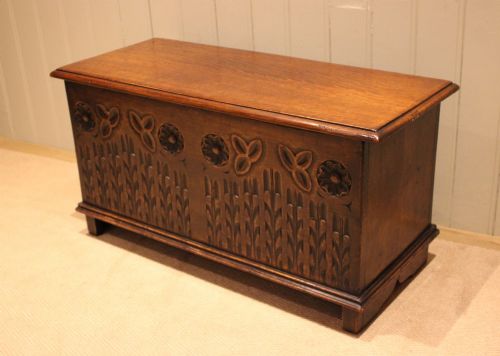
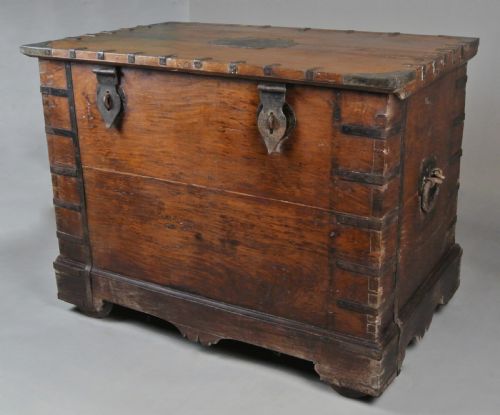
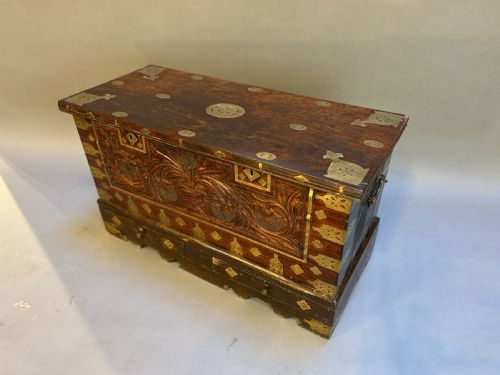


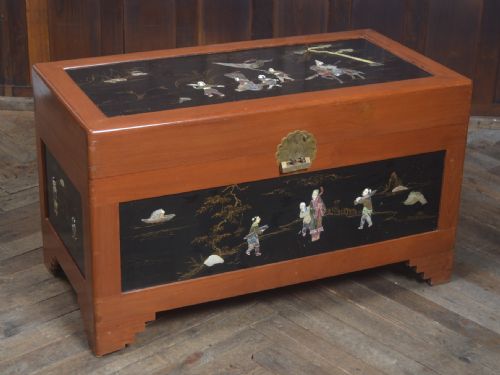

Vintage Carved Hope Chest
These vintage carved hope chests offer sturdy domestic storage in camphor wood, teak and oak, bringing regional craftsmanship and deep timber grain into the bedroom.
Vintage Carved Hope Chest
A vintage carved hope chest serves as a traditional blanket box or storage trunk, appearing frequently in robust oak, dense hardwood and fragrant camphor wood. These pieces emerge from distinct regional traditions spanning the nineteenth and early twentieth centuries, including Chinese export workshops, Anglo-Indian studios and British Arts and Crafts circles.
Buyers encounter forms ranging from monumental teak dowry chests banded in iron and brass to simple folk art coffers and limed oak blanket boxes. The exterior decoration relies heavily on deep relief carving, botanical motifs and historic regional styling that reflects the heritage of its maker.
Origins stretch from seventeenth-century European oak pieces through Victorian celebration trunks up to Oriental camphorwood chests dated around nineteen thirty. Each format provides practical household storage while displaying the characteristic construction methods of its period.
Materials and construction
Construction relies on solid timbers such as teak, oak and camphor wood, selected for durability and distinctive grain patterns. Workshops employed traditional joinery techniques to form heavy lids and deep storage wells designed to protect textiles from damp and insects.
Metalwork played a structural and decorative role, with iron and brass bindings, straps and heavy corner braces reinforcing the wooden carcasses. Surface finishes varied from natural wax polishes on hardwoods to painted treatments and limed effects on oak.
Vintage Carved Hope Chest Retail Price Guide 2026
Typical asking prices for vintage carved hope chest among the pieces listed under this phrase on Sellingantiques today, from the lower quarter to the upper quarter. They describe what is for sale here now, not the wider market.
Camphor wood trunks retain their distinct medicinal scent for over a century, quietly evicting every moth within a five-mile radius.
Evaluating craftsmanship and condition
Quality rests upon the depth and precision of the carving, where crisply defined botanical motifs and balanced panel layouts distinguish finer studio work from simpler vernacular pieces. The choice of timber also dictates standard, with fragrant camphor wood and dense teak commanding strong attention.
The integrity of the original hardware, including brass hinges, iron straps and locks, elevates a piece significantly. Retaining original feet, lid supports and untreated interior timber surfaces marks out a superior example.
The Vintage Carved Hope Chest Glossary
- Coffer
- A heavy wooden chest traditionally used for storing valuables or dry goods. Early examples employ robust oak panels and pegged joints.
- Dowry chest
- A storage trunk prepared for a bride, filled with household linens and textiles. These often feature elaborate regional carving and metal reinforcements.
- Camphor wood
- An aromatic Asian hardwood prized for storage trunks because its natural scent repels moths and insects. The timber ages to a warm reddish-brown hue.
- Arts and Crafts
- A design movement prioritising traditional craftsmanship and honest materials. Pieces from this circle often display unpretentious oak construction and subtle hand-finishing.
- Zanzibar chest
- A distinct type of heavily brass-studded hardwood trunk produced for maritime and domestic trade. They combine robust timber construction with decorative metalwork.
Vintage Carved Hope Chest: Frequently Asked Questions
What is a vintage carved hope chest used for?
These pieces serve primarily as practical storage boxes for blankets, bedding and household linens. Their deep interior wells and hinged lids keep stored textiles tidy while functioning as display surfaces or low seating within a room.
The natural aromatic properties of woods like camphor also make them suitable for protecting woollens and garments from moths without resorting to chemical deterrents.
How do I date a carved wooden chest?
Dating relies on examining the timber species, joinery methods, hardware and carving styles. Seventeenth-century pieces typically show pegged oak framing, whereas nineteenth-century examples often incorporate brass bindings or heavy iron hardware.
Twentieth-century pieces frequently utilise exotic hardwoods like teak and camphor with machine-finished internal joints alongside hand-carved exterior panels.
Are these chests heavy to move?
Most of these storage trunks are built from solid hardwoods such as oak, teak and camphor wood, making them inherently heavy and substantial. Large dowry chests and Zanzibar chests often feature iron or brass carrying handles mounted to the sides.
Moving them generally requires two people, particularly when dealing with monumental nineteenth-century versions reinforced with metal bands.
How do I care for a camphor wood chest?
Maintain the timber by keeping the chest away from direct heat sources and sudden temperature fluctuations that can cause the wood to split. A light application of natural beeswax preserves the surface sheen without masking the grain.
Avoid placing damp textiles directly inside unlined camphor chests to protect both the stored fabric and the interior timber surface.