
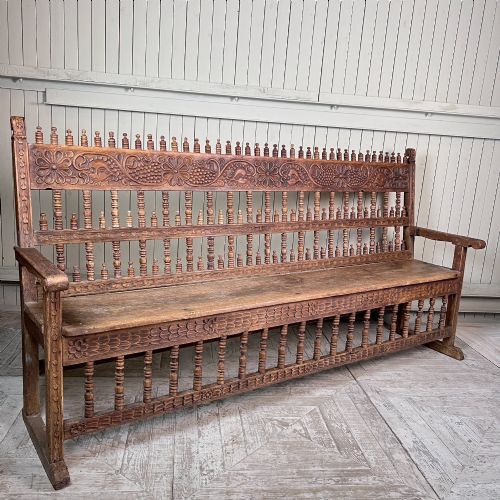
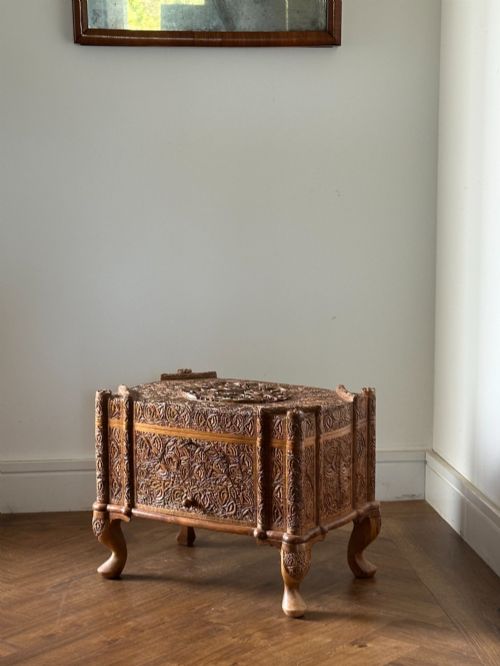
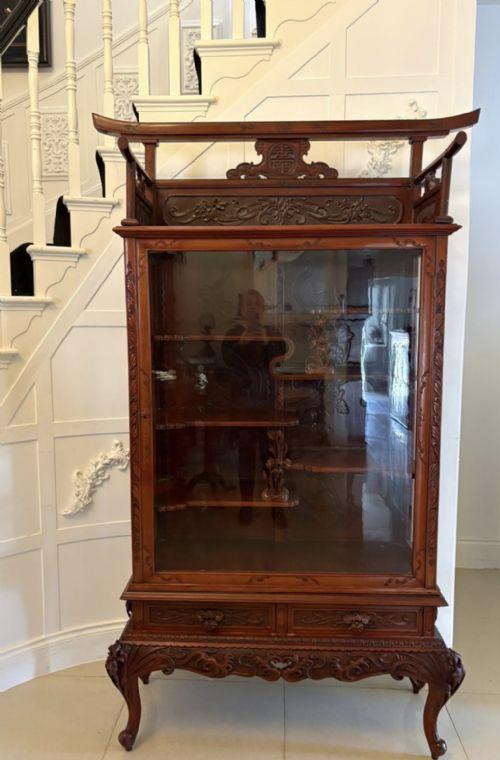
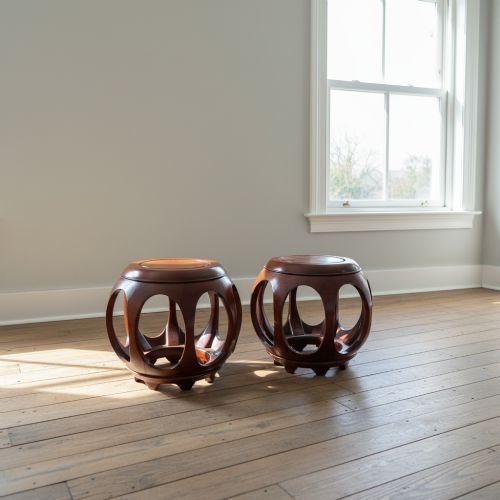
Brown Hardwood Carving
These pieces of brown hardwood carving span diverse global traditions, offering dense tropical timbers shaped into furniture and sculptures.
Brown Hardwood Carving
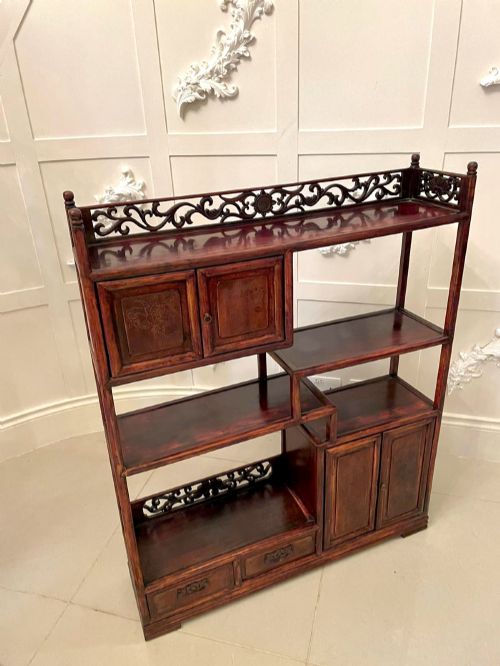
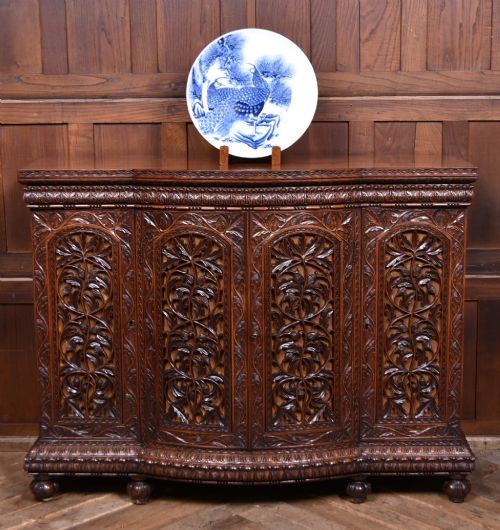
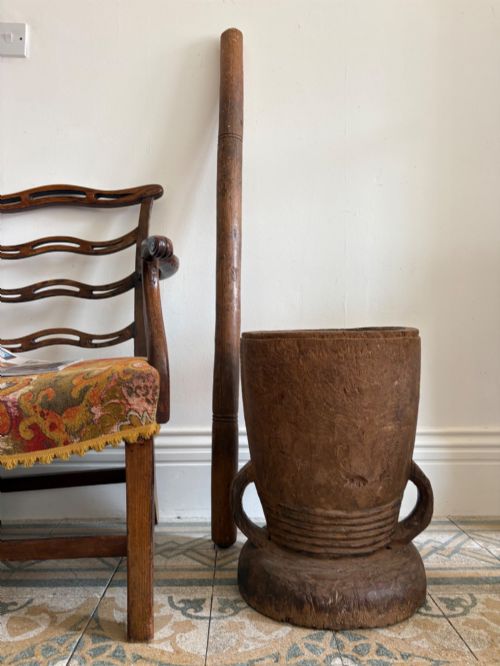
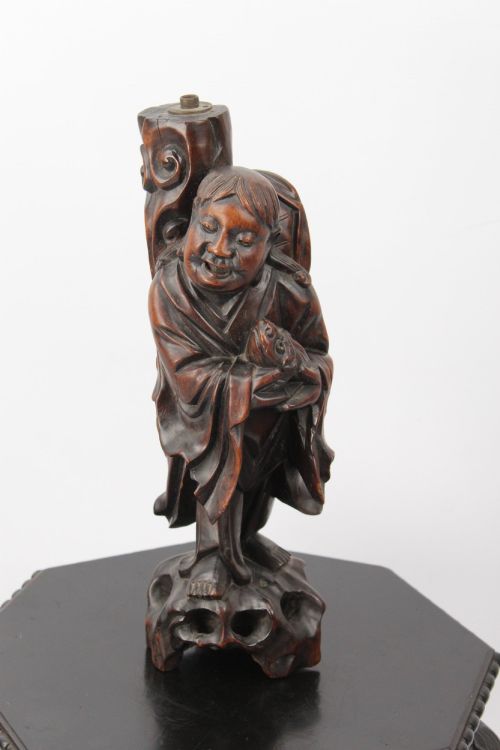
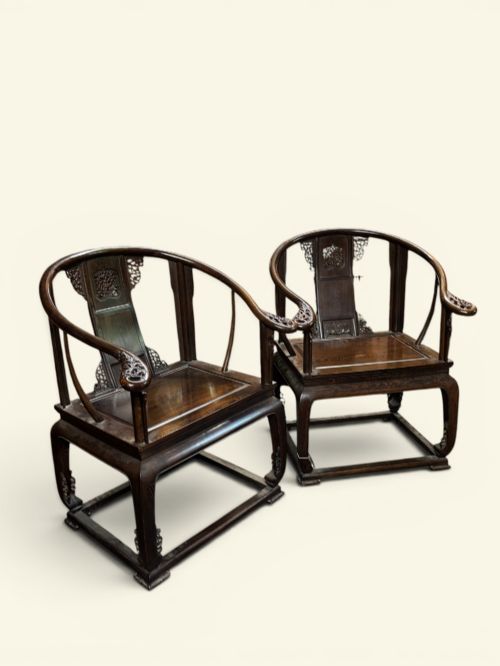
A brown hardwood carving on this page typically manifests as a substantial piece of furniture or a figurative sculpture from the nineteenth or early twentieth centuries. Buyers encounter items ranging from Chinese display cabinets and horseshoe-back armchairs to Indian tables and African tribal figures.
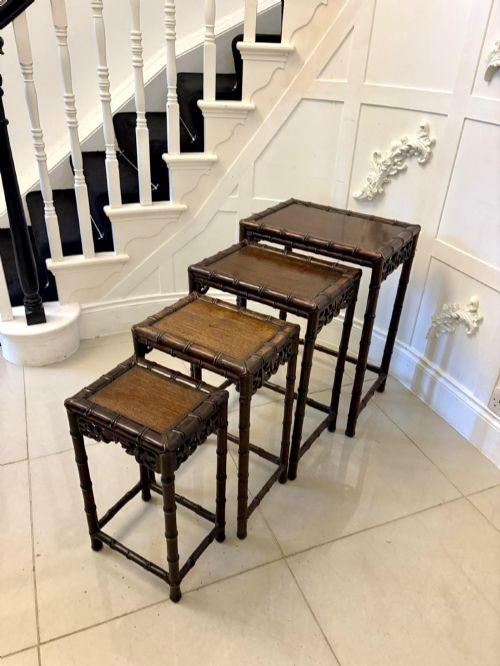
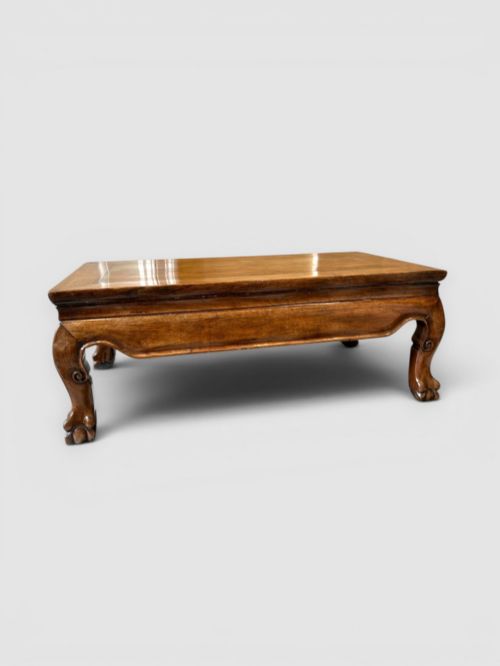
The regional origins of these works are remarkably broad, encompassing Chinese Qing Dynasty workshops, Anglo-Indian studios, Japanese Meiji period makers, and African tribal communities. Objects frequently serve domestic functions, such as plant stands, nest of tables, and benches.
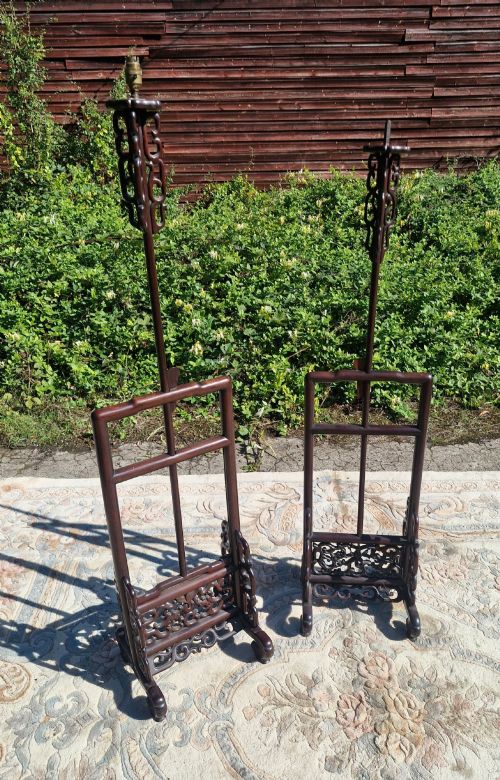
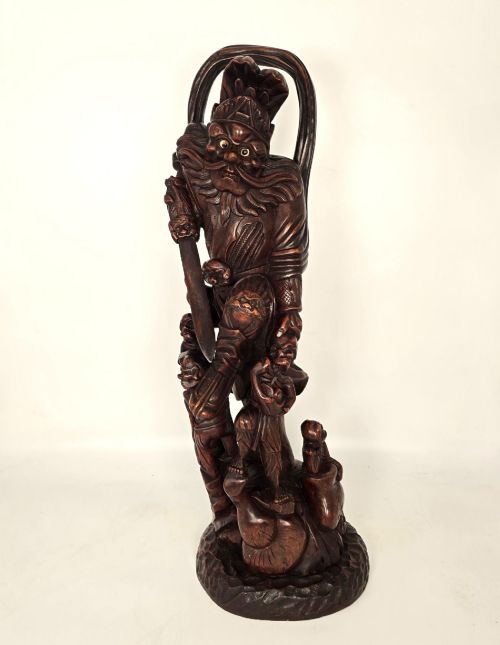
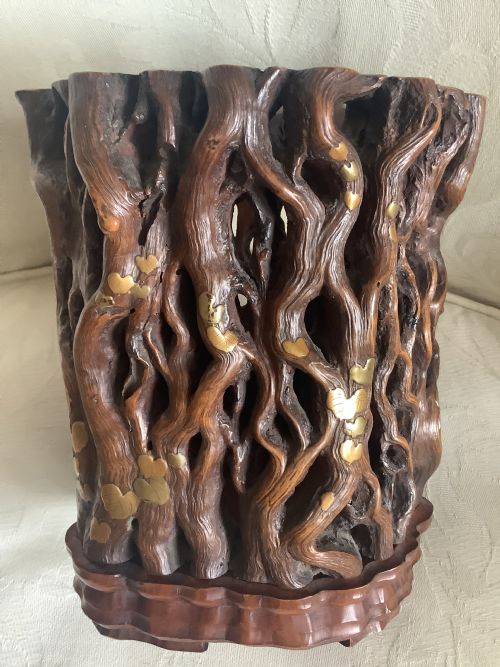
Within this selection, Chinese forms dominate the offerings, particularly altar benches, brush pots, and guardian sculptures carved from dense timbers. Buyers also find smaller decorative items like jewellery caskets and opium tables alongside larger architectural elements.
The Spectrum of Craftsmanship
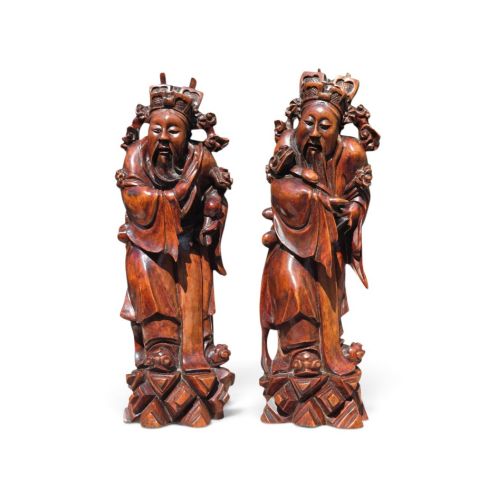
Quality in these carvings is determined by the depth and precision of the chisel work, particularly in complex figural scenes involving human or animal subjects. Master carvers achieved distinct facial expressions and naturalistic muscle tone, whereas lesser examples remain flat and stiff.
The selection of the timber itself dictates the hierarchy of the piece, with richly figured grain patterns and uniform colour fetching greater admiration than plain, utility-grade wood. Structural integrity, including the survival of original joinery and minimal replacement parts, distinguishes a preserved antique from a heavily restored assembly.
An anonymous artisan once carved a solid tree trunk into a grinning monkey.
Liberty of London
The Brown Hardwood Carving Glossary
- Padouk
- A heavy, durable reddish-brown tropical timber favoured for sideboards, console tables, and structural elements. It darkens gracefully with age.
- Lokapala
- A celestial guardian king depicted in Chinese Buddhist sculpture, often rendered in monumental carved hardwood with fierce expressions and elaborate armour. They historically guarded temple gates.
- Mashrabiya
- An architectural element featuring intricate wooden latticework panels used for windows, room dividers, and screens. It provides ventilation while maintaining privacy.
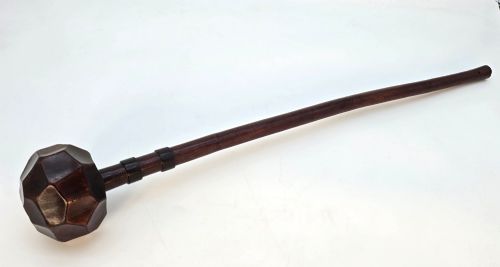
- Knobkerrie
- A traditional African wooden throwing club featuring a straight shaft terminating in a heavy rounded knob. They were utilised primarily as hunting or defensive weapons.
Brown Hardwood Carving: Frequently Asked Questions
What is brown hardwood carving?
Brown hardwood carving encompasses furniture, decorative objects, and sculptures shaped from dense tropical timbers across various Asian, African, and colonial traditions. These pieces range from functional seating and tables to elaborate figurative sculptures.
Items date predominantly from the nineteenth and early twentieth centuries, reflecting diverse cultural aesthetics from Chinese Qing Dynasty workshops to Anglo-Indian studios.
How do I identify Chinese hardwood furniture?
Chinese hardwood furniture is typically recognised through traditional joinery methods that avoid metal nails, coupled with dense timbers like padouk or huanghuali. Forms often include horseshoe-back armchairs, display cabinets, and nest of tables.
Decoration frequently incorporates auspicious symbols, dragons, or floral motifs executed in deep relief carving upon rich brown wood.
Where were these carved items made?
The pieces originate from multiple global regions, with a strong representation from Chinese workshops during the nineteenth century. Other notable origins include India, Japan, and various African communities.
Each region utilised locally available hardwoods and distinct artistic styles, producing objects as varied as Japanese display stands, Indian jewellery caskets, and African tribal figures.
How do I care for antique hardwood?
Antique hardwood requires stable indoor humidity levels to prevent the dense timber from drying out and splitting over time. Keep pieces away from direct heat sources and strong sunlight.
Dust regularly with a soft, dry cloth and avoid applying modern silicone polishes, which can build up and damage the traditional surface patina.