



Brown Hallway Runner
A brown hallway runner brings tactile depth and rich tribal character to a narrow passage, offering a grounded, durable foundation for high-traffic spaces.
Brown Hallway Runner
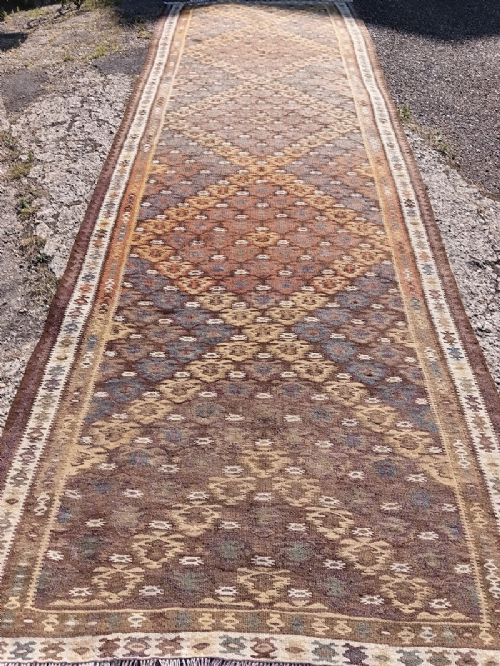
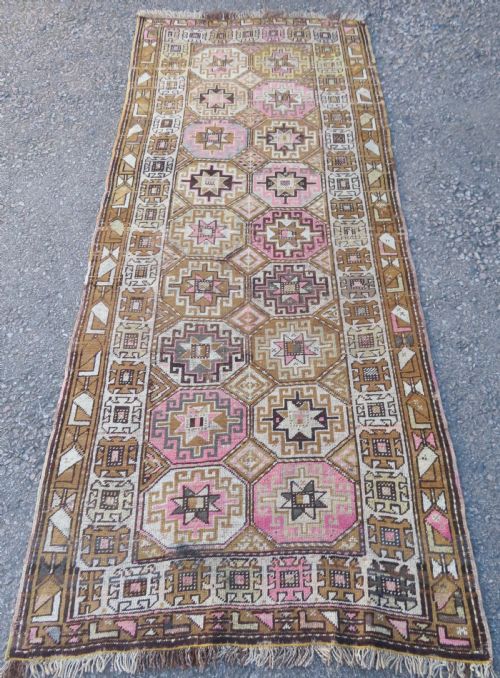
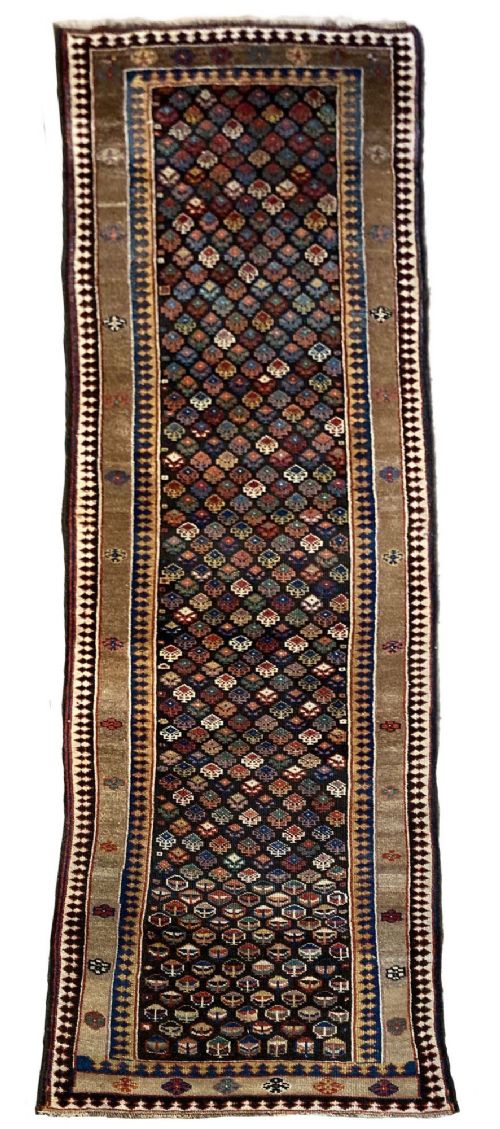
When you search for a brown hallway runner, you encounter woven tribal and nomadic carpets originating from Persian, Caucasian, Afghan, and Central Asian regions, dating from the late nineteenth century into the early twentieth century.
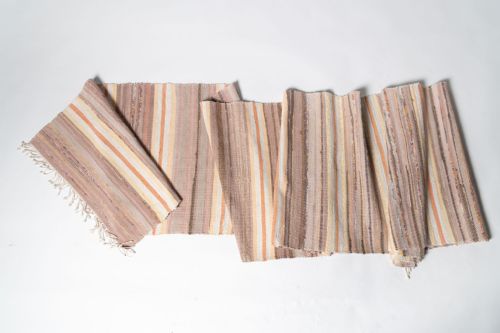
The pieces on this page are predominantly narrow runner rugs, rug runners, and kilims produced by Kurdish, Karabagh, Baluch, and Luri weavers.
These floor coverings utilise elongated formats specifically suited for corridors, galleries, and domestic thoroughfares, displaying traditional geometric motifs, latch hooks, boteh patterns, and memling guls.
How they were made
Weavers constructed these long carpets using hand-spun wool and cotton foundations, often incorporating natural dyes to achieve rich, earthy brown tones and deep secondary colours.
Nomadic and tribal workshops utilised durable wool piles alongside flatweave kilim techniques, sometimes integrating camel hair for natural resilience and varied texture in high-wear environments.
Brown Hallway Runner Retail Price Guide 2026
Typical asking prices for brown hallway runner among the pieces listed under this phrase on Sellingantiques today, from the lower quarter to the upper quarter. They describe what is for sale here now, not the wider market.
Materials documented across the page include wool, cotton, hand-spun wool, natural dyes, and camel hair.
What varies in quality
Quality in these older runners rests upon the tightness of the weave, the clarity of the tribal motifs, and the depth achieved through natural dyes.
Finer examples maintain structural integrity across the wool pile and warp foundations, while lesser specimens show heavy fibre loss or brittle wool foundations from age and wear.
The Brown Hallway Runner Glossary
- Kilim
- A flatwoven carpet or rug made without a pile, produced by tightly interweaving warp and weft strands. These pieces offer a flat, durable surface often characterised by sharp geometric patterns.
- Boteh
- An almond-shaped or pine-cone motif with a curved upper end, frequently seen in Persian and Caucasian textile designs. This ancient symbol represents fertility, life, and eternity.
- Memling gul
- An octagonal or stepped medallion motif found primarily in rugs from the Caucasus and Central Asia. Named after the painter Hans Memling who depicted similar carpets in his art.
- Warp
- The vertical threads stretched lengthwise on a loom before weaving begins. The weft threads are passed across and under these stationary structural cords.
Brown Hallway Runner: Frequently Asked Questions
How do I choose the right size runner?
Measure your corridor carefully, leaving a consistent border of exposed floorboards or stone around the edges. A narrow format works best when centered properly between walls or furniture.
Ensure doors can swing freely over the pile height without catching the edges of the textile.
Are these runners suitable for busy hallways?
These woven pieces were built by tribal communities for heavy domestic use, utilising resilient wool fibres and sturdy foundations.
Placing a quality underlay beneath the textile prevents slipping and cushions the fibres against hard stone or timber floors.
How do I care for an older wool runner?
Vacuum the rug gently using suction only, avoiding rotating brush bars that pull at the hand-spun wool pile. Rotate the piece periodically to distribute foot traffic evenly across the length.
Professional cleaning is recommended when dirt settles deep into the foundation threads.
How can I tell the region of origin?
Weavers from different tribal groups utilised distinct palettes, border arrangements, and structural motifs. Kurdish pieces often display bold geometric medallions, while Caucasian examples feature sharper, linear symbols.
Examining the selvedges and knotting structure provides further clues to the specific nomadic tradition.