


Brown Glazed Jardiniere
These brown glazed jardiniere pieces are substantial ceramic plant vessels designed to hold indoor greenery, bringing tactile warmth and historic character to a room.
Brown Glazed Jardiniere
A brown glazed jardiniere is a decorative plant vessel designed to hold potted plants indoors, appearing frequently in Victorian, Arts and Crafts, and Art Nouveau styles. The items on this page span the nineteenth and early twentieth centuries, including earthenware, stoneware, and ceramic pieces with rich brown surface finishes.
Forms range from straightforward cylindrical pots and double-handled planters to naturalistic plant holders and occasional combination pieces involving wood and metal. Makers and potteries represented in this tradition include Doulton, Minton, Linthorpe, and Julius Dressler.
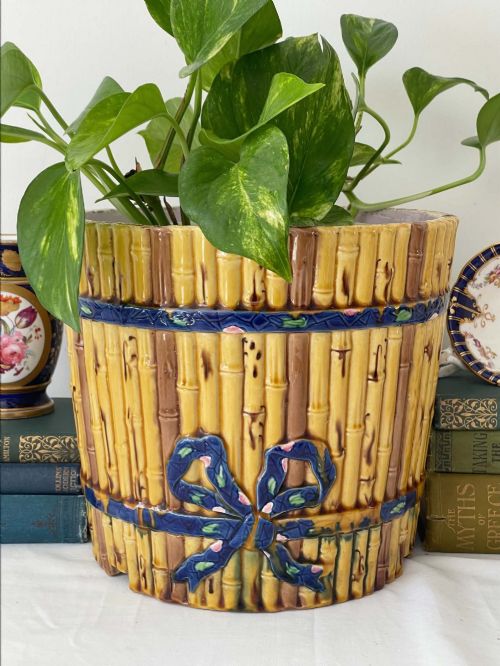
Buyers will find that many examples lean towards Victorian naturalism or Majolica taste, incorporating organic textures, bamboo motifs, or rich glazes. These vessels function equally well as traditional planters or as decorative floor and table focal points.
How they were made
Makers shaped these earthenware and stoneware bodies on the potter's wheel or in moulds before applying rich brown glazes to the ceramic surfaces. Some pieces incorporate applied organic decoration or moulded relief work, capturing the naturalistic tastes of the nineteenth century.
Specialised potteries utilised metallic oxide glazes to achieve deep brown tones, sometimes combining them with majolica techniques or contrasting matte and gloss finishes. Certain pieces integrate secondary materials such as kingwood and ormolu mounts to elevate the status of the plant holder.
Materials appearing alongside the ceramic bodies include kingwood and ormolu, reflecting varied nineteenth-century manufacturing traditions.
What varies in quality
Quality in a brown glazed jardiniere rests upon the crispness of the moulded relief, the depth and consistency of the glaze, and the artistic reputation of the pottery. Pieces bearing factory marks or recognised artists' signatures demonstrate higher execution standards than unmarked commercial wares.
The physical weight of the ceramic body and the complexity of the form distinguish finer studio and art pottery productions from standard utilitarian planters. Structural integration with secondary materials like ormolu or fine cabinet woods also indicates a more ambitious workshop origin.
Minton·Doulton Lambeth·Doulton Burslem·Royal Doulton·Julius Dressler·Woodlesford Art Pottery·Linthorpe Pottery·Christopher Dresser
The Brown Glazed Jardiniere Glossary
- Majolica
- A type of earthenware glazed with opaque tin-lead enamels, known for bright colours and naturalistic relief modelling.
- Stoneware
- A robust, vitrified ceramic fired at high temperatures, making it impermeable to water and durable for holding plants.
- Earthenware
- Porous pottery fired at lower temperatures, commonly used for nineteenth-century planters before being glazed to hold moisture.
- Faience
- European tin-glazed earthenware, often associated with decorative art pottery and rich surface decoration.
- Ormolu
- Gilded bronze mounts and decorative details applied to furniture and ceramic objects, particularly in French style pieces.
Brown Glazed Jardiniere: Frequently Asked Questions
What is a brown glazed jardiniere?
A brown glazed jardiniere is an ornamental ceramic pot designed to contain a potted plant, preventing water from damaging furniture surfaces.
These vessels emerged strongly during the Victorian period, serving as decorative centrepieces for ferns and indoor palms.
Can I plant directly inside it?
Many nineteenth-century ceramic and stoneware vessels lack drainage holes because they were intended to function as cachepots.
Placing a nursery pot inside the jardiniere protects the historic ceramic body from moisture damage and soil accumulation.
How do I date these pieces?
Dating relies on maker's marks, impressed factory stamps, registration numbers, and stylistic markers such as Art Nouveau curves or Victorian naturalism.
Glaze chemistry and clay bodies also provide clues to whether a piece originates from the nineteenth or early twentieth century.
Where should I place it?
These vessels suit prominent locations like plant stands, pedestals, entrance halls, or tabletops where their rich glazes are visible.
They pair well with large leafy foliage plants that complement the organic modelling of the ceramic surface.