
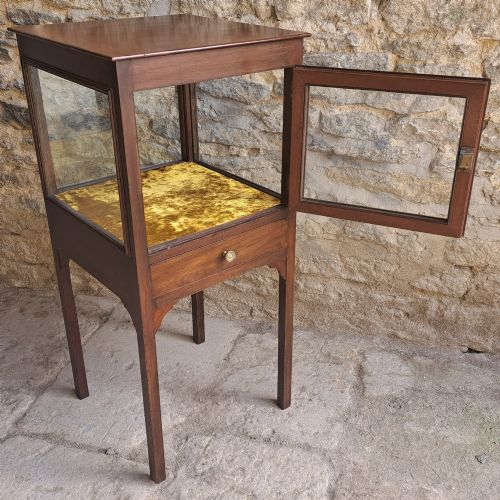


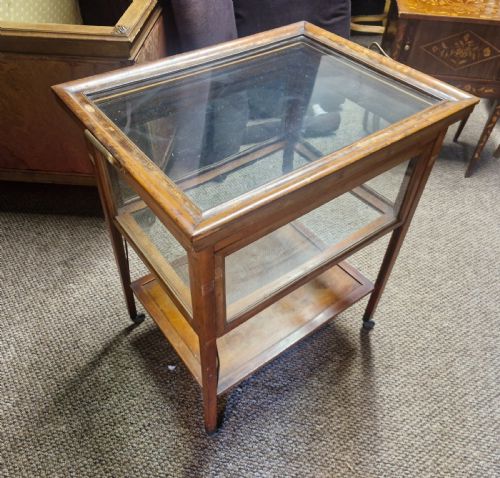


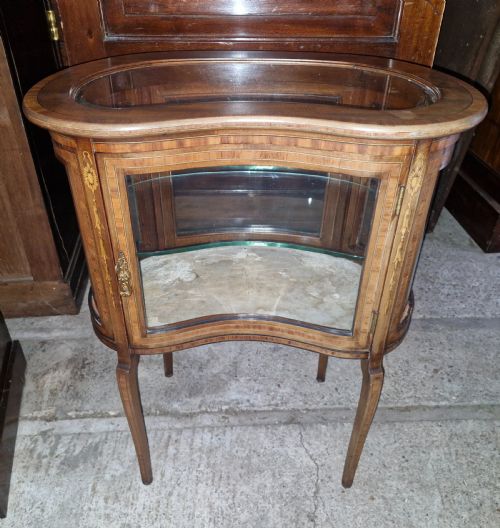

Brown Glass Display Table
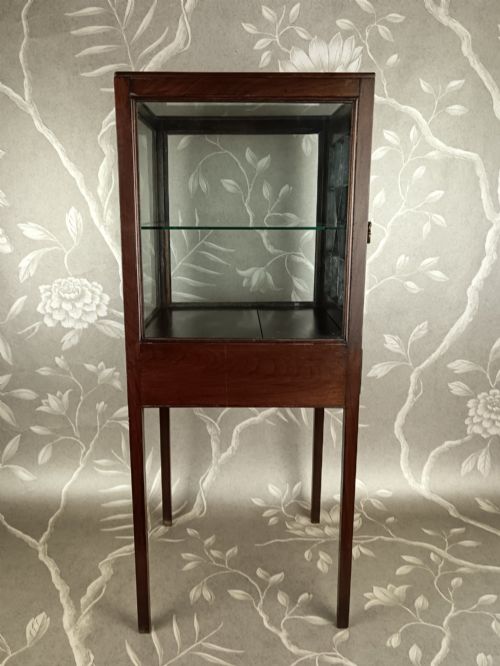
A brown glass display table is a glazed showcase designed to elevate and protect small treasures.
Brown Glass Display Table
A brown glass display table combines the surface utility of a small occasional table with the enclosed visibility of a showcase. When exploring this selection, buyers encounter pieces primarily from the Georgian, Victorian, and Edwardian eras.
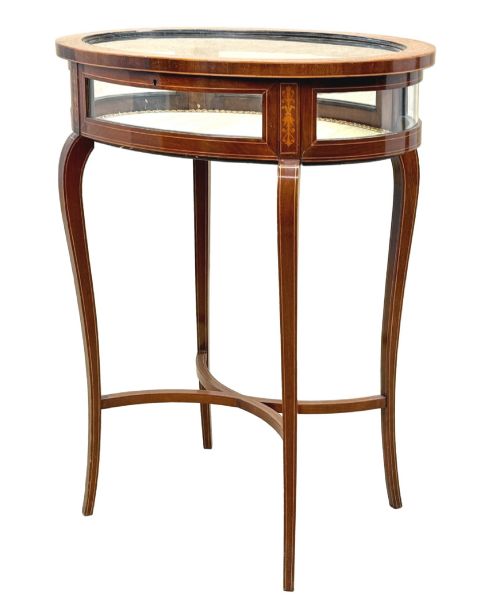
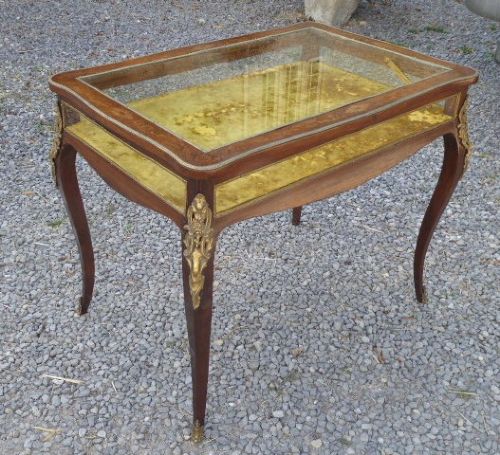
The most common formats on this page are bijouterie tables and vitrines, constructed with glazed tops or side panels to exhibit jewellery, medals, and curiosities. These items originate from English workshops and French cabinets, reflecting periods ranging from the late eighteenth century to the early twentieth century.
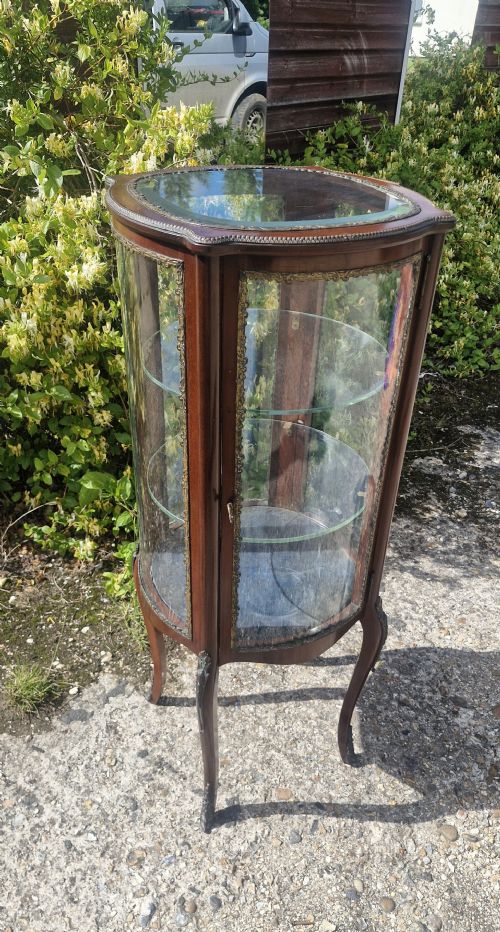
The forms range from oval and kidney-shaped occasional tables to octagonal stands and serpentine cabinets. Each piece provides a secure compartment beneath glass, allowing owners to view collections from above while keeping them free from dust.
Materials and construction methods
Cabinet makers utilised dense hardwoods such as mahogany, kingwood, and satinwood to build the structural frames of these display surfaces. Marquetry, inlay, and floral painted decoration frequently adorn the timber elements, reflecting Sheraton Revival and French styling.
Glazing forms the central visual component, fitted tightly into wooden rebates to seal the display compartment. Metal mounts in brass, ormolu, and gilt-bronze secure the glass edges and accent the corners, legs, and hinges of the cabinet work.
Listings span from the Georgian period through the Victorian and Edwardian eras, predominantly featuring mahogany and satinwood.
Factors of distinction
The refinement of the timber work and the complexity of the wood veneers dictate the upper tier of these pieces. Fine marquetry, matched satinwood grains, and intricate brass or ormolu mounts signal superior craftsmanship.
Structural integrity and the precision of the glazed enclosures separate standard items from exceptional examples. Original bevelled glass plates, smoothly operating hinges, and well-proportioned legs demonstrate a higher standard of period production.
The Brown Glass Display Table Glossary
- Bijouterie table
- A small display table with a glazed top and compartment designed for holding jewellery and small precious objects. These pieces often feature silk or velvet lining inside the display well.
- Vitrine
- An enclosed glass cabinet intended for the display of curiosities and porcelain. These structures sit on legs or act as table top cases.
- Ormolu
- Gilt-bronze decorative mounts applied to furniture. This technique was favoured by French cabinet makers to accent mahogany and kingwood surfaces.
- Marquetry
- Decorative veneer patterns assembled from various coloured woods to form pictorial or geometric designs. Craftsmen apply these patterns to the tabletops and sides of display cabinets.
- Etagere
- An open tiered piece of furniture used for display or storage. These stands appear in Edwardian interiors alongside traditional glazed tables.
Brown Glass Display Table: Frequently Asked Questions
What is a bijouterie table used for?
These tables were designed in the eighteenth and nineteenth centuries to display small precious items, medals, and personal ornaments. The glazed compartment kept delicate pieces visible yet protected from dust.
Today, owners utilise them in living spaces and hallways to exhibit small collections while maintaining a functional surface for daily use.
How do I date a display table?
Dating relies on examining the timber species, construction joints, and decorative style, such as Sheraton inlay or French ormolu mounts. Edwardian and Victorian pieces often show machine-sawn elements and lighter satinwood banding.
Earlier eighteenth-century examples feature hand-cut timbers and heavier mahogany framing. Comparing the hardware and glass type helps narrow the manufacturing period.
Are these tables sturdy enough for daily use?
Most examples are built from durable hardwoods like mahogany and kingwood, making them suitable as occasional tables or stands. However, the glazed compartments require careful handling compared to solid timber surfaces.
Placing them away from heavy traffic areas protects the glass top and delicate legs from accidental knocks.