


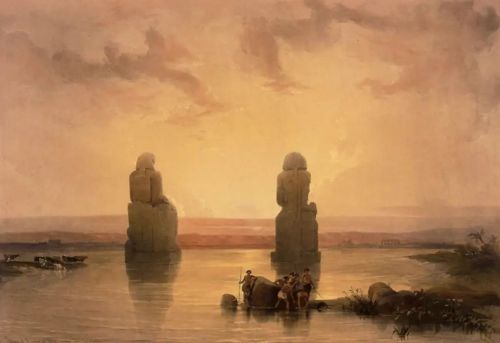
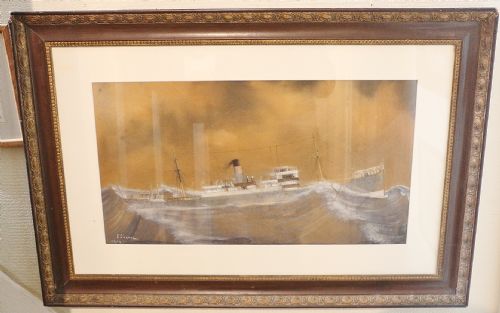
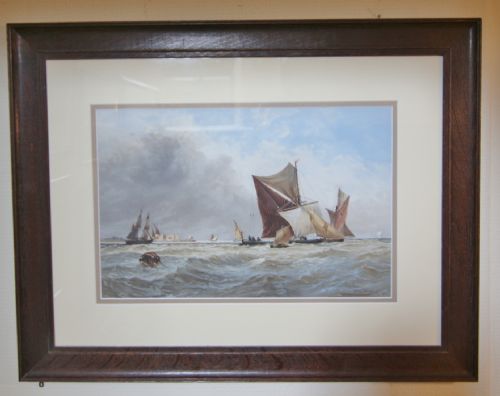
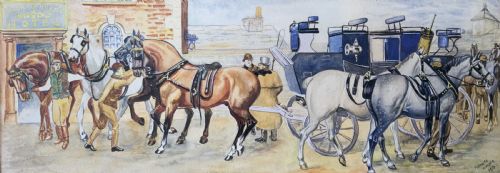
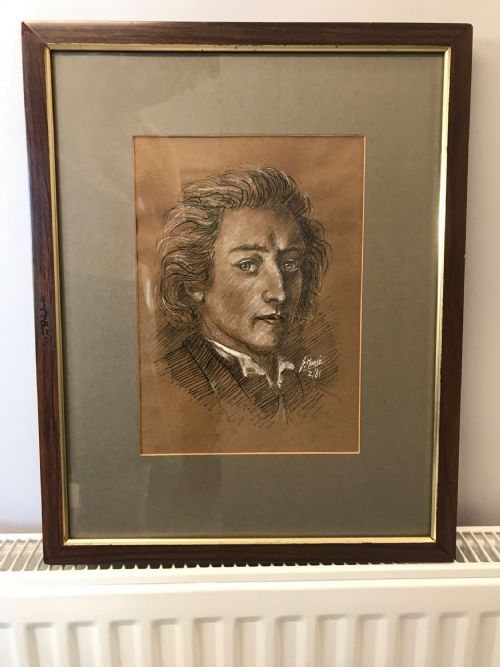
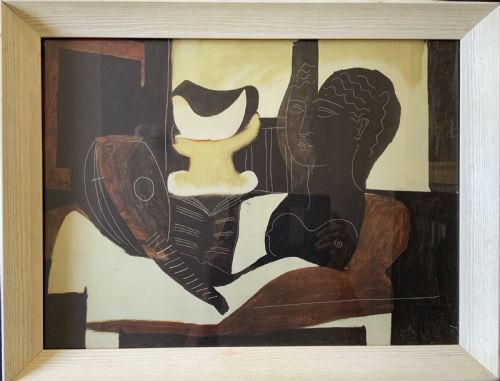
Brown Framed Art Print
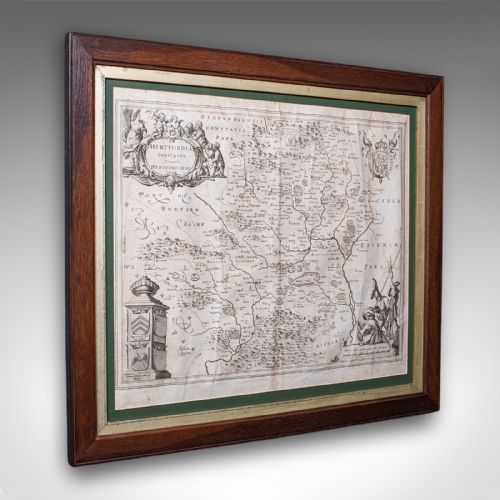
A brown framed art print brings historical engraving, watercolour and oil painting into a room within wood and glass.
Brown Framed Art Print
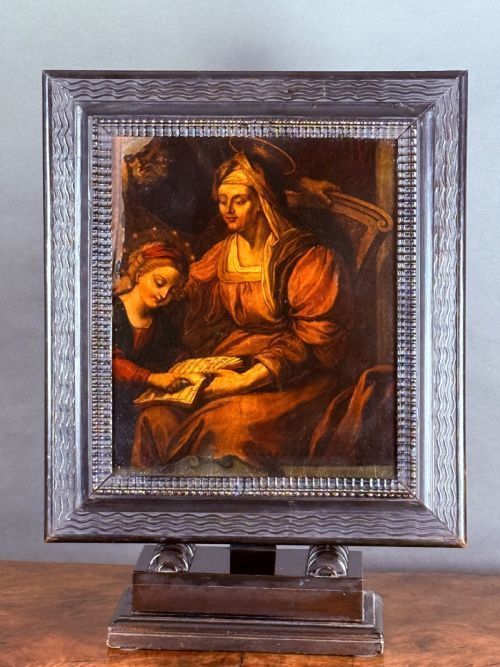
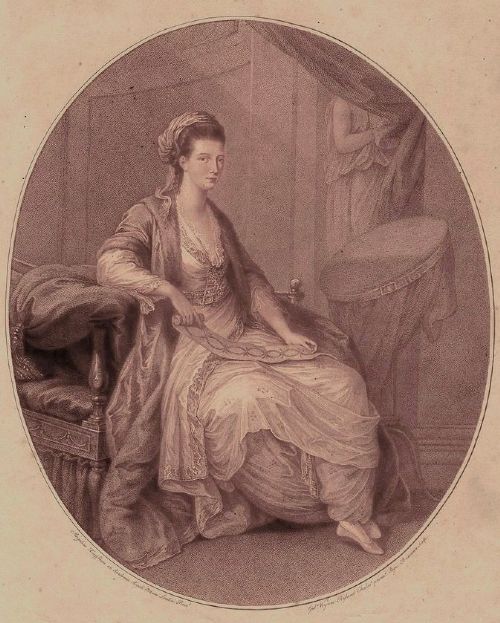
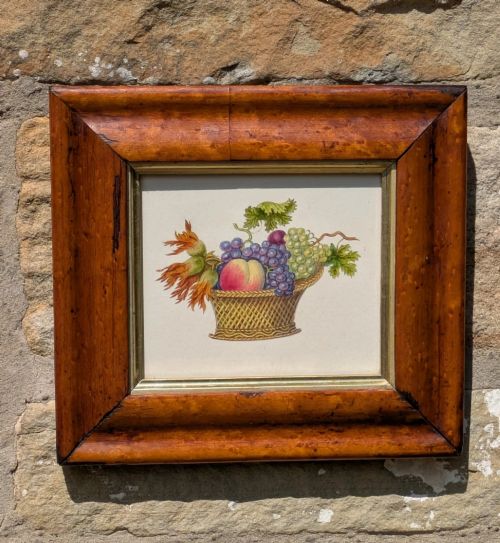
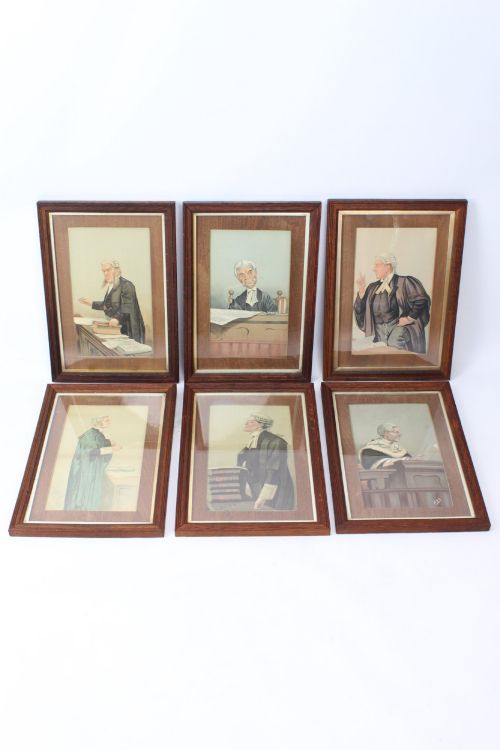
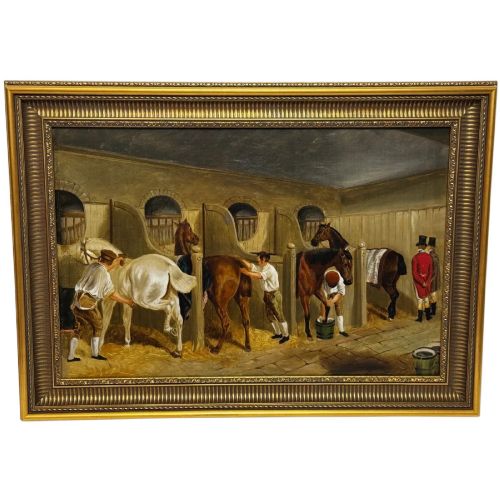
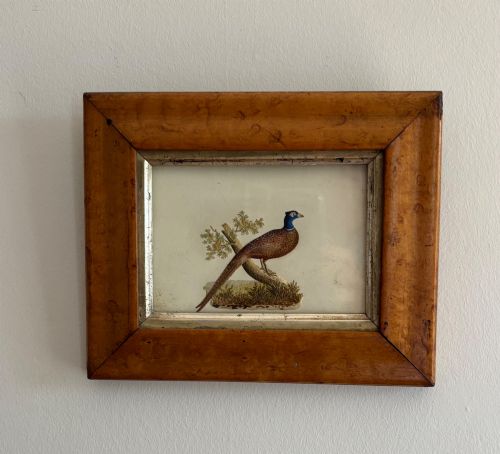
A brown framed art print encompasses wall art, framed prints, oil paintings and watercolours spanning the eighteenth, nineteenth and mid-twentieth centuries. Buyers seeking a brown framed art print will find historical portraits, sporting scenes, cartography and botanical studies housed in period wooden mounts.
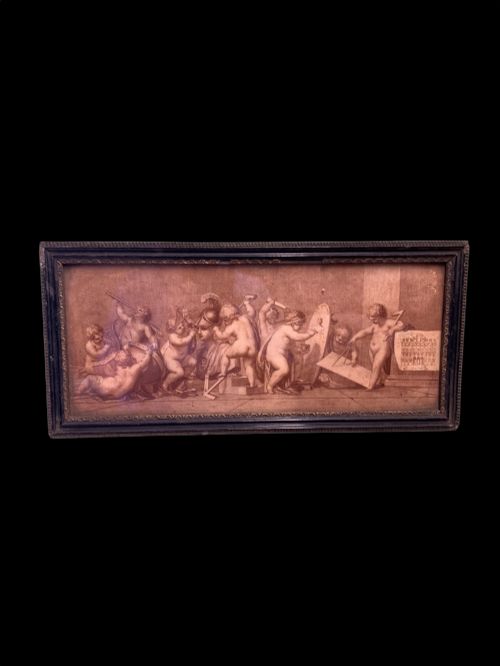
The selection ranges from early reverse glass mezzotints and copper engravings to Victorian chromolithographs and mid-century abstract prints. Most examples lean towards nineteenth-century Victorian works or Georgian copper engravings set within oak, gilt wood or plain timber surrounds.
How they were made
Makers utilised paper, canvas and glass as surfaces for ink, gouache, oil paint and hand-applied watercolours. Engravings and lithographs relied on copper plates and stone presses before receiving individual colour washes by hand.
Surrounding timber frames incorporate solid oak and gilt wood, protecting the delicate paper or canvas beneath glass. Original frames frequently employ period joinery matching the era of the artwork inside.
Cats and pugs frequently share wall space with nineteenth-century steamships and historic aviation oils.
What varies in quality
The distinction between tiers rests upon the clarity of the impression, the vibrancy of hand-applied pigments and the originality of the mounting. Finer engravings show sharp plate marks and crisp lines, whereas lesser examples suffer from fading or muddy coloration.
Original frames matching the exact period of the artwork elevate the piece above those placed in later replacement surrounds. The prestige of the original artist or cartographer also dictates the standing of the work.
Donald Grant·Samuel Dixon·David Roberts·TB Hardy·Horatio Henry Couldrey·John Alfred Wheeler·John Frederick Herring Snr·Ralston Gudgeon·Warwick Goble·John Rattenbury Skeaping·David Shepherd
The Brown Framed Art Print Glossary
- Lithograph
- A print produced by drawing on limestone or metal with an oily substance so that ink adheres only to the drawn areas. This technique allowed for faithful reproduction of tonal drawings and paintings.
- Mezzotint
- A printmaking process where the copper plate is roughened uniformly to produce rich dark tones and subtle gradations of light. Reverse glass examples place the inked image directly against the glass.
- Chromolithograph
- A colour lithographic technique utilising multiple stones, one for each hue, to build up a vibrant multi-coloured image. Victorian publishers employed this method widely for illustrated portfolios.
- Cartography
- The scientific and artistic practice of map-making, represented here through antique engraved regional maps and charts. Early examples often feature hand-coloured borders and decorative cartouches.
- Gouache
- An opaque water-based paint composed of pigment, water, and a binding agent such as gum arabic. It dries to a smooth, matte finish frequently combined with pen and ink.
Brown Framed Art Print: Frequently Asked Questions
How do I date a framed print?
Dating relies on the paper type, printing technique, style of the artwork and the construction methods of the wooden frame. Examining the backboards, fixings and any visible publisher inscriptions provides further chronological clues.
Comparing the stylistic markers of the subject matter against known historical periods helps narrow the production window.
Are these prints original?
The listings include original period engravings, lithographs, etchings and unique paintings rather than modern photographic reproductions. Each piece originates from the era stated in the description, from the eighteenth century through to the mid-twentieth century.
Original frames are noted where applicable, though some pieces retain later historical mountings.
How should I hang and light them?
Artwork on paper and canvas requires positioning away from direct sunlight to prevent the fading of inks and watercolours. Stable room humidity protects both the wooden frames and the delicate materials inside.
Soft ambient lighting highlights the texture of oil paintings and the fine lines of engravings without causing heat damage.