
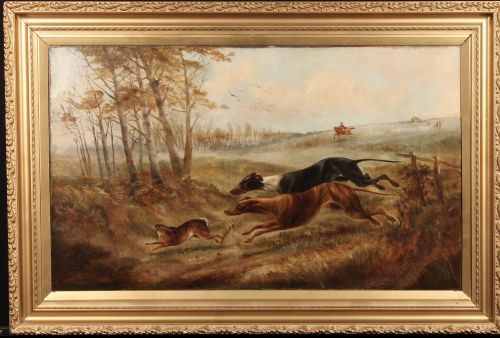

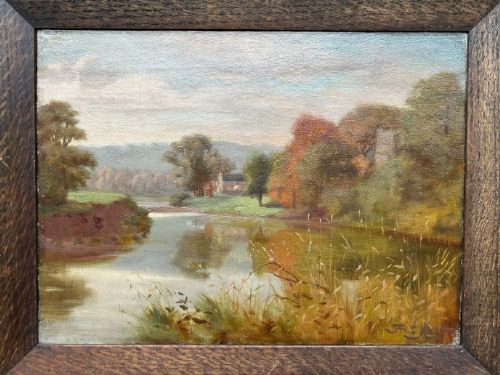
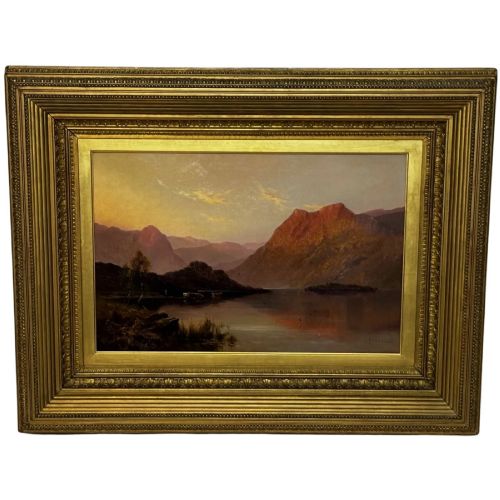
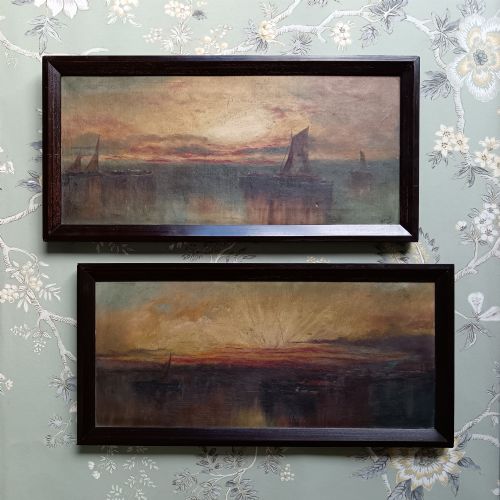
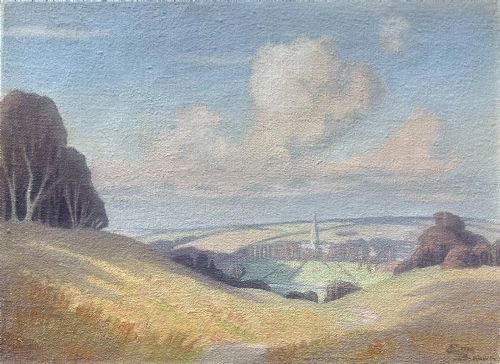
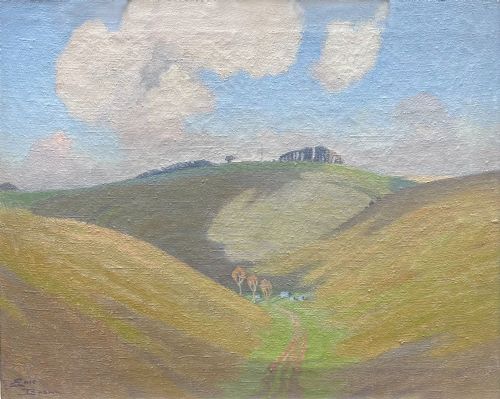
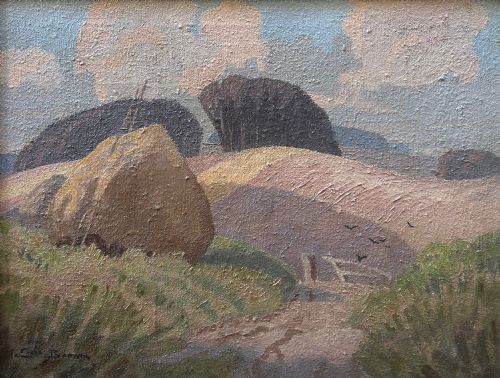
Brown Frame Landscape Canvas
Brown frame landscape canvas works bring together pastoral scenes and coastal views held within wooden or gilt surrounds.
Brown Frame Landscape Canvas
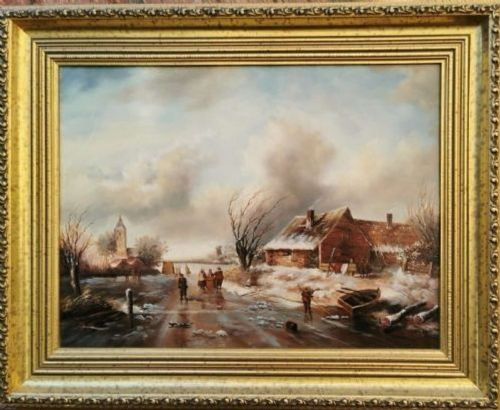
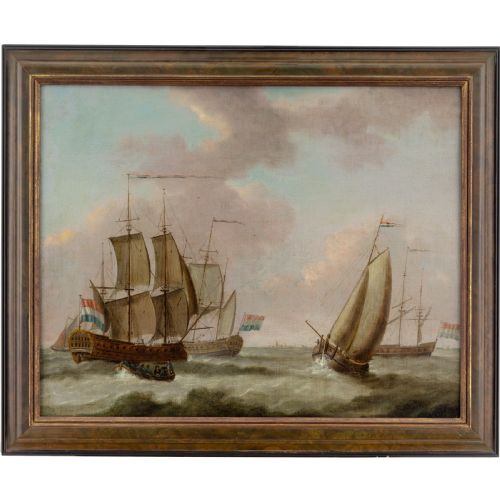
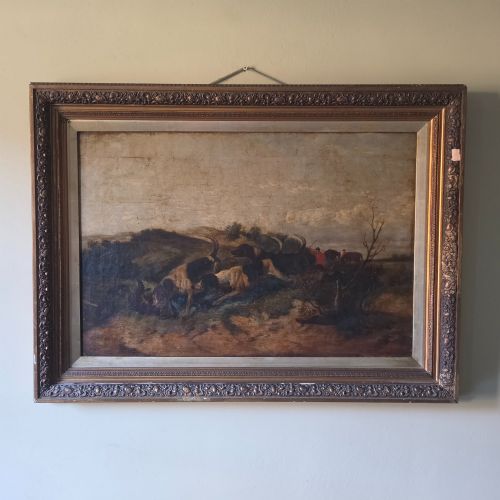
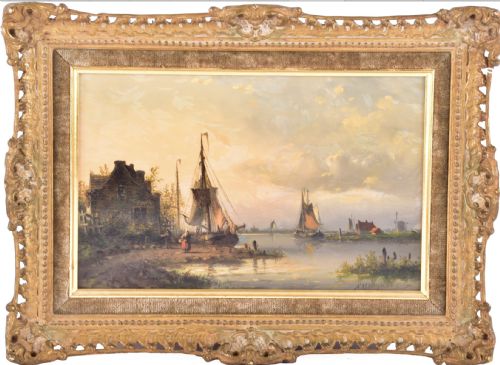
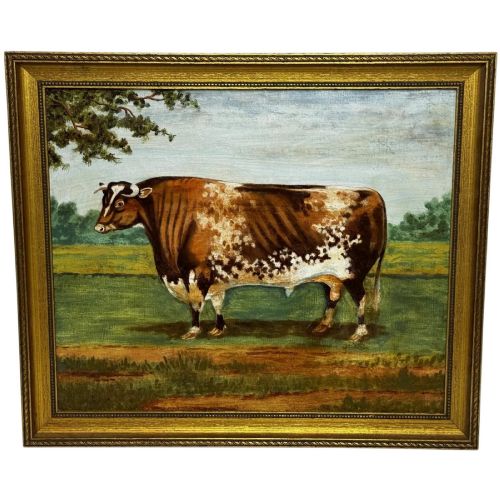
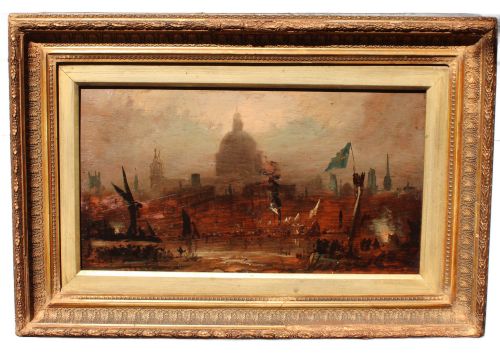
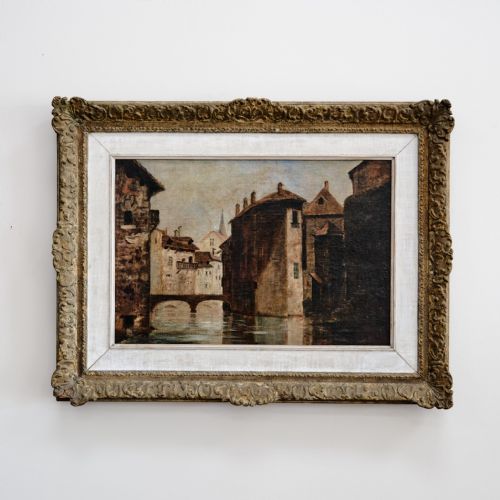
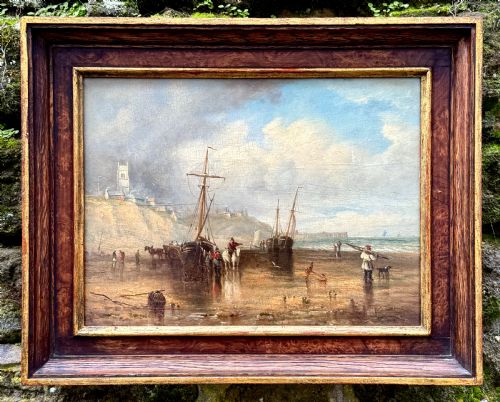
A brown frame landscape canvas encompasses oil paintings on canvas depicting natural scenery, enclosed primarily in wood or gilt borders. These works span from the 18th century through to the mid 20th century, capturing rural vistas, river scenes, and maritime views.
Buyers encounter numerous 19th-century and Victorian interpretations, alongside Edwardian and mid-century examples. The subjects range from Scottish highlands and quiet woodland paths to agricultural animals and marine shipping lanes.
The enclosing frames vary significantly, from simple dark wood mouldings to elaborate gilded surrounds that complement the oil medium. Each piece presents a distinct record of British, Dutch, and French schools of painting.
Materials and Construction
Painters utilised oil paint applied directly onto stretched canvas surfaces, frequently employing impasto techniques to build texture in later periods. The pigments capture light and shadow across landscapes, maritime expanses, and rural subjects.
The supporting frames consist of solid wood, sometimes highlighted with gilt leaf or applied plaster ornamentation. These surrounds protect the canvas edges while providing a formal architectural boundary for the artwork.
Listings feature works spanning the 18th, 19th, and 20th centuries, executed in oil on canvas within wood and gilt frames.
Assessing Quality and Execution
The distinction between standard works and superior examples lies in the handling of light, atmospheric depth, and brushwork precision. Skilled artists create convincing spatial recession and naturalistic movement within the landscape.
The integrity of the canvas and the preservation of the original paint layer determine the physical condition of the piece. Superior framing, whether period wood or original gilt, enhances the overall coherence of the artwork.
Nicolaas Martinus Wijdoogen·Thomas Creswick·Richard Redgrave·Brian Shields Braaq·Henry Schouten·Sydney Yates Johnson·John Emms·John Ferneley Senior·Henry Robinson Hall
The Brown Frame Landscape Canvas Glossary
- Canvas
- A heavy woven fabric used as a surface for oil painting. It is typically stretched over a wooden frame before pigment is applied.
- Impasto
- A technique where paint is laid on an area of the surface in very thick layers. This creates a textured, three-dimensional effect that catches the light.
- Gilt
- A thin layer of gold leaf or gold paint applied to wooden frames. It provides a reflective decorative border around the canvas.
- Oil Paint
- A slow-drying paint made with pigmented particles suspended in a drying oil. It allows artists to blend colours smoothly and work in translucent layers.
- Manner
- A stylistic approach indicating an artist working in the tradition or style of another master. It denotes artistic lineage rather than a direct copy.
Brown Frame Landscape Canvas: Frequently Asked Questions
What periods do these paintings come from?
The works span multiple centuries, with significant representation from the 18th, 19th, and early 20th centuries. Pieces also extend into the mid-century modern era.
Collectors will find Victorian sporting art alongside Dutch school landscapes and Edwardian marine paintings.
How should I hang a heavy canvas?
Ensure the wall fixings are secured directly into wall studs or use appropriate heavy-duty wall anchors. The weight of the wooden or gilt frame requires stable support.
Position the work away from direct sunlight and moisture sources to protect the oil paint and canvas.
Are the frames original to the paintings?
Many works retain their period wooden or gilt surrounds, which match the era of the canvas. Frames were often chosen specifically to complement the tones of the oil painting.
Examine the fit and joinery of the wood to understand the relationship between the artwork and its enclosure.
What subjects are most common?
Rural scenes, river landscapes, and highland vistas dominate the pastoral selections. Marine views, shipping scenes, and animal studies also appear frequently.
Artists frequently recorded agricultural life, livestock, and coastal harbours across Britain and Europe.