
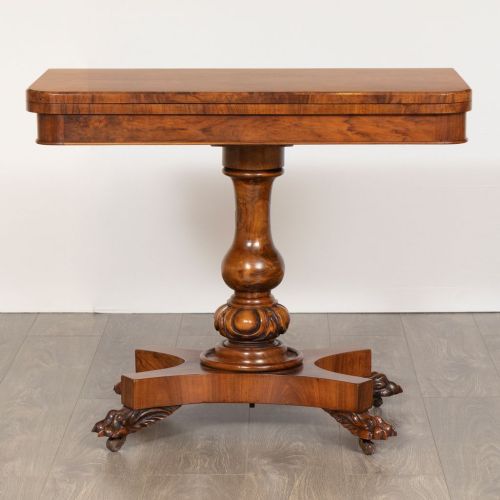
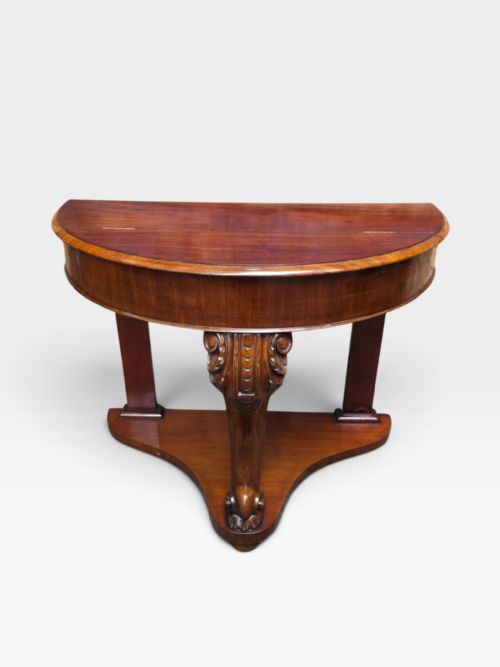
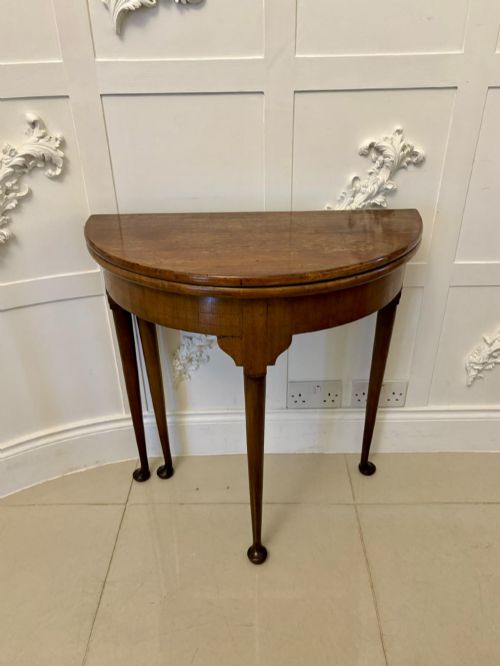
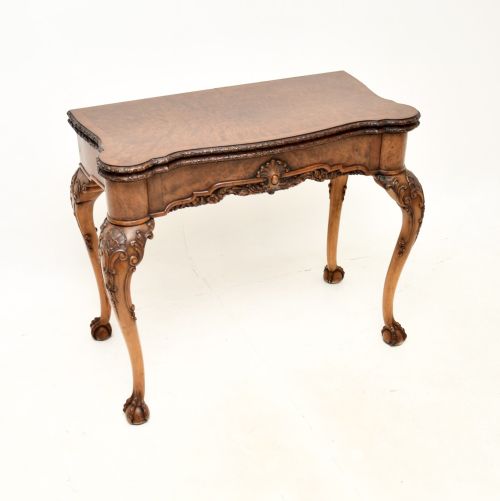
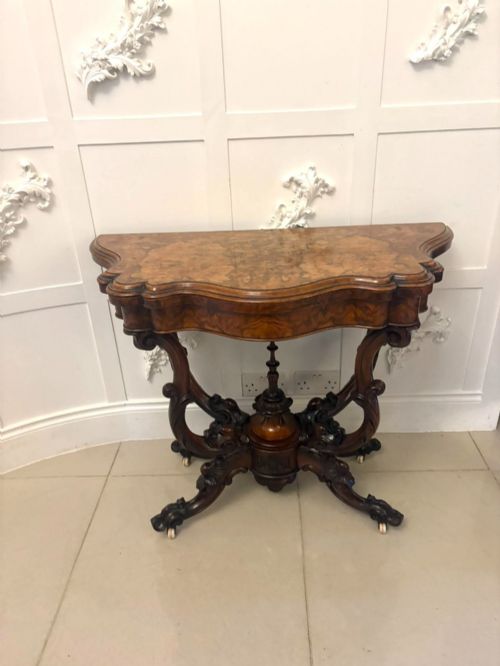
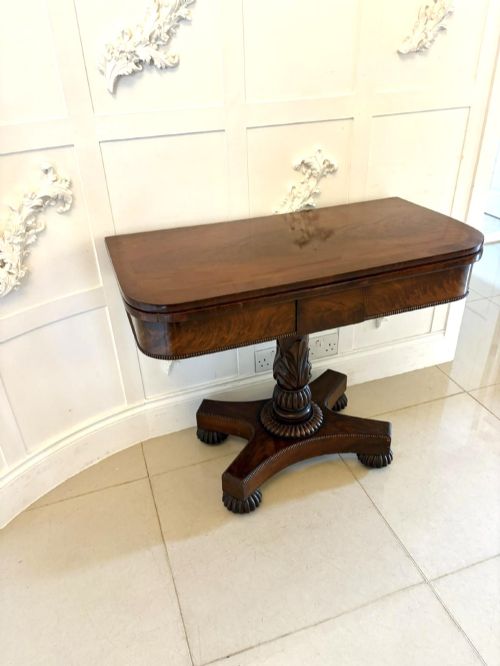
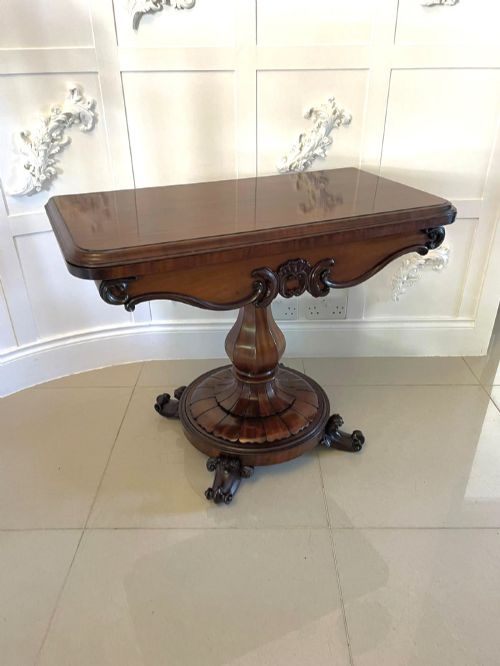

Brown Fold Over Table
A brown fold over table offers clever dual-purpose surfaces for cards and tea, bringing eighteenth and nineteenth century craftsmanship directly into modern living rooms.
Brown Fold Over Table
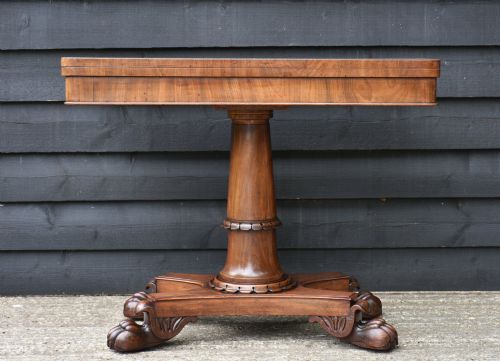
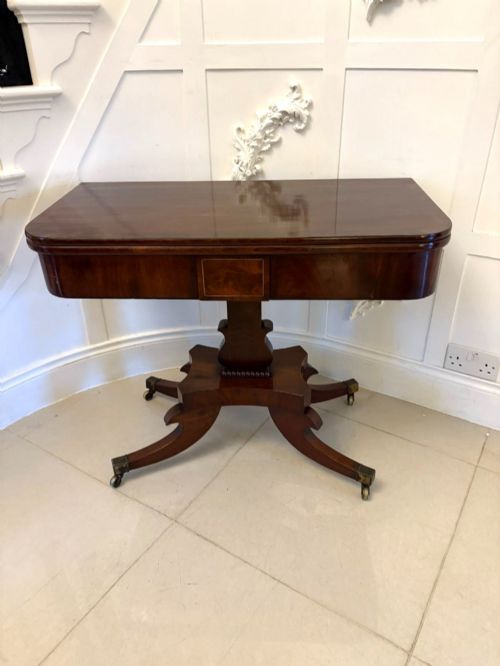
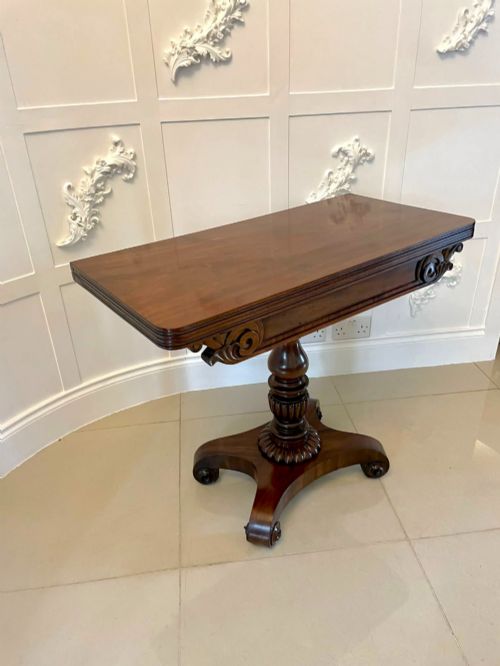
A brown fold over table serves as a versatile piece designed to expand when needed for evening games or tea. These items function primarily as card tables, games tables, or tea tables that sit flush against a wall until opened.
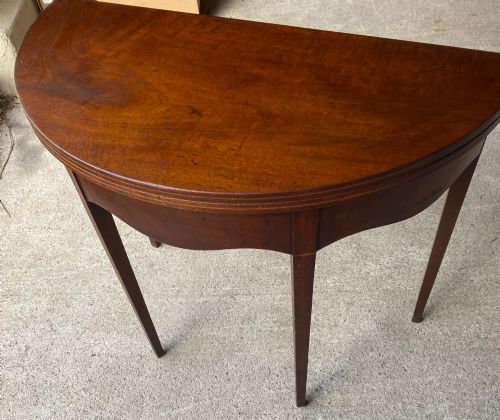
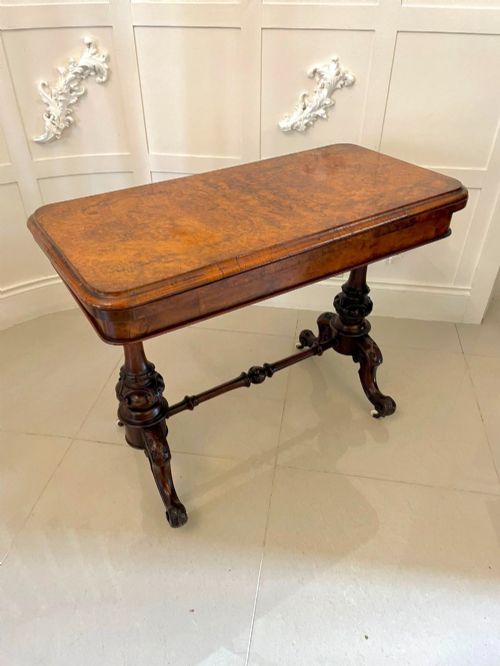
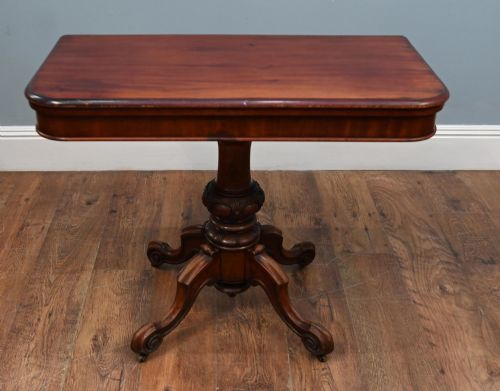
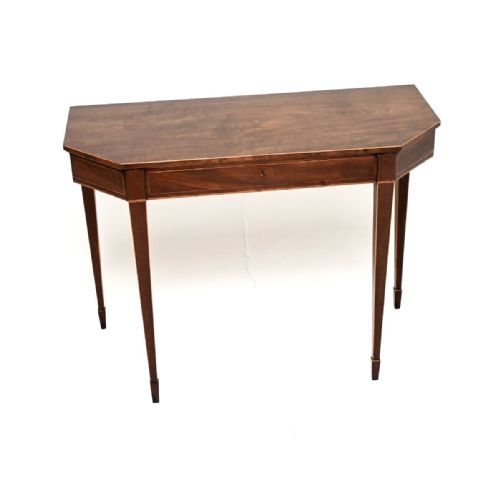
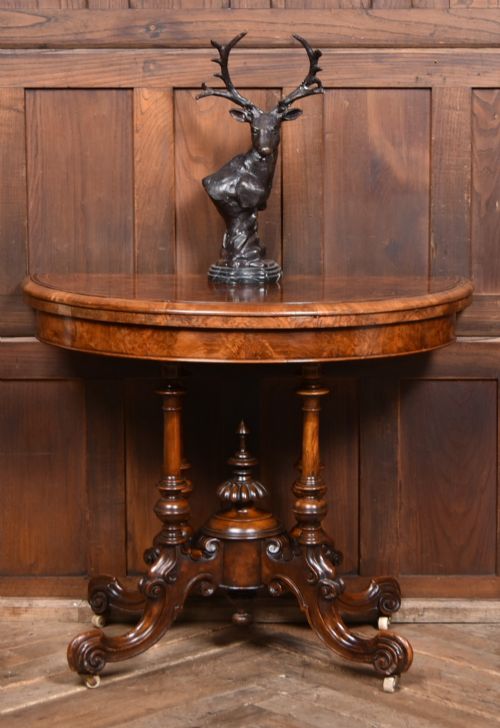
The selections on this page span from Georgian and Regency eras through to the Victorian period. Mahogany and burr walnut dominate the forms, frequently taking demi-lune, D-shaped, or serpentine profiles.
Buyers most commonly encounter nineteenth century mahogany and burr walnut examples featuring hinged tops that rotate or fold outward. These designs conceal hidden storage compartments or playing surfaces lined with baize.
Materials and Construction
Cabinetmakers utilised dense timbers such as mahogany, walnut, and satinwood, often selecting figured veneers with dramatic grain patterns like flame mahogany and burr walnut. Crossbanding in contrasting woods frames the primary surfaces.
Joinery relies on sturdy hinges, concertina actions, and pivoting mechanisms to support the heavy folding top safely. Carved pedestal bases, paw feet, and subtle brass inlays provide structural stability and decorative contrast.
Judging Quality
The standard of a brown fold over table rests on the selection of timber veneers and the precision of the pivoting mechanism. Superior items display uninterrupted grain alignment across the fold and crisp, deep carving on the supports.
Original patination and depth of colour elevate an example significantly, showing decades of gentle use rather than heavy restoration. Finer pieces incorporate secondary woods of high grade and retain their original brass mounts or casters.
Bruce & Burns of Edinburgh·G T Morant, London
The Brown Fold Over Table Glossary
- Demir-lune
- Half-moon shape. These tables sit flat against a wall and open into a full circle.
- Concertina action
- An expanding frame. This mechanism supports the unfolded top evenly on all four sides.
- Crossbanding
- A border technique. Thin strips of veneer run perpendicular to the main grain to frame the top.
- Baize
- A woolen felt. This material lines the playing surface revealed when the table opens.
- Patina
- Surface sheen. Years of polishing create this deep, lustrous finish on old wood.
Brown Fold Over Table: Frequently Asked Questions
How do I open a fold over table?
Most tops either swing on a pivot or lift and fold outward onto a pivoting rear leg or concertina frame. Check the movement gently to find the swing direction before lifting.
Ensure the supporting leg or gate-leg swings fully into place to bear the weight of the open leaf securely.
What were these tables originally used for?
Households used these pieces for afternoon tea or evening card games such as whist. During the day, they functioned as side or console tables against the wall.
When guests arrived, the top unfolded to double the surface area for entertaining.
How do I date a mahogany table?
Examine the timber choice, secondary woods, and the style of the legs or pedestal base. Georgian pieces often display straight tapered legs or carved ball-and-claw feet.
Later Victorian versions tend to feature heavier burr walnut veneers, serpentine shapes, and carved platform bases.
Where should I place this in my home?
These items fit well in hallways, living rooms, or dining spaces as console tables against a wall. The shallow depth when closed keeps pathways clear.
Opening the top creates an impromptu desk or a surface for displaying lamps and decorative objects.