

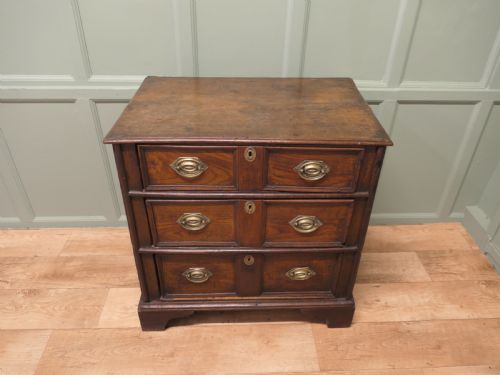
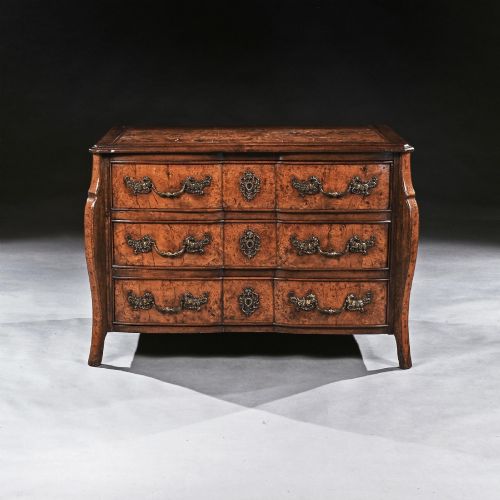
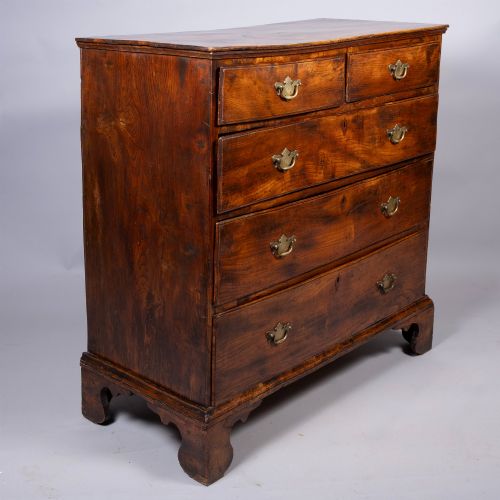


Brown Elm Wooden Commode
A brown elm wooden commode offers rich figure and warm grain, bringing tactile depth and character to an interior.
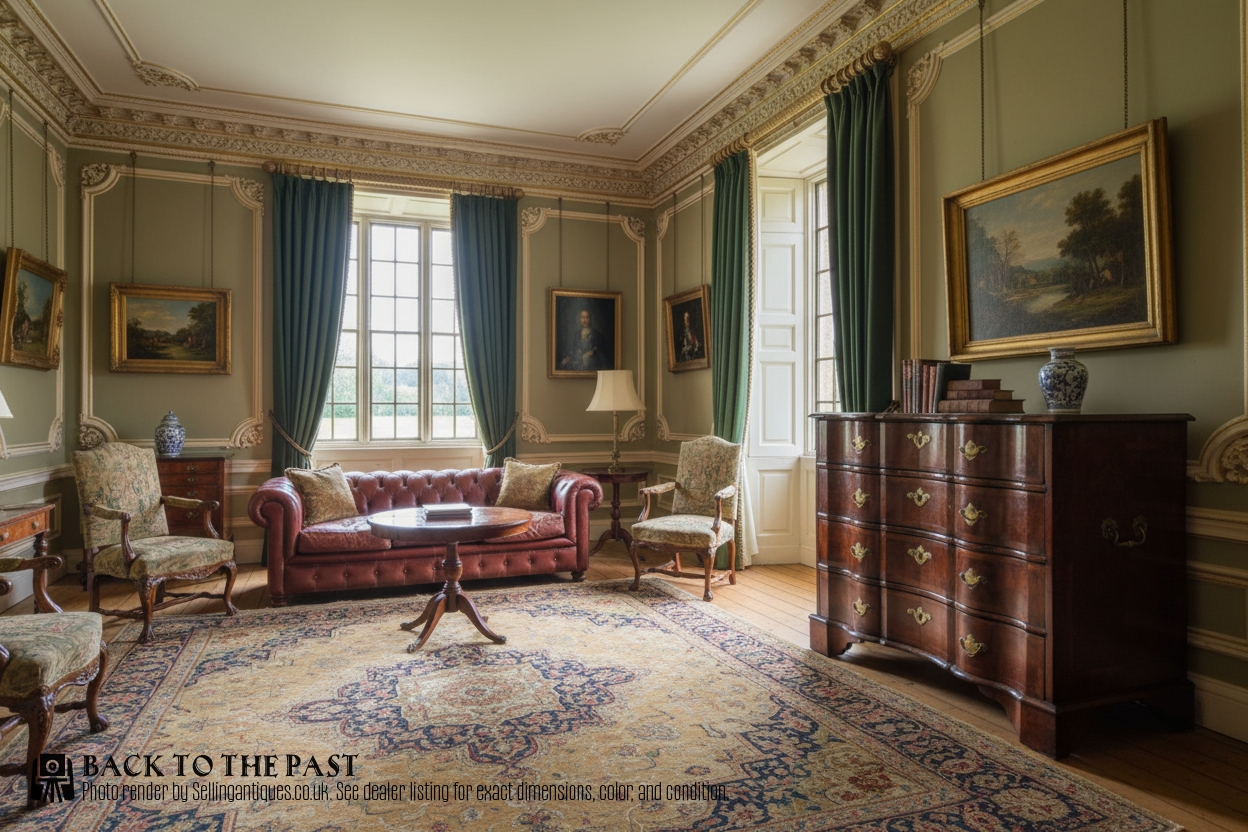
Brown Elm Wooden Commode
When you search for a brown elm wooden commode, you encounter a selection spanning the eighteenth and nineteenth centuries, including Georgian and Victorian examples. These pieces range from substantial chests of drawers and bedside cabinets to shaped provincial forms and close stools.
Makers and regional joiners utilised the timber's strong character, sometimes pairing the wood with grey marble tops or brass and bronze hardware. Alongside storage chests, the selection occasionally includes smaller bedside pieces and chairs adapted for domestic utility.
How they were made
Cabinetmakers selected elm and burr elm for their undulating grain patterns, frequently combining figured veneers with solid timber construction. Regional workshops shaped fronts into bombé or serpentine contours, utilising the natural twist and strength of the wood.
Fittings typically included cast brass or bronze handles and escutcheons secured to drawer fronts. Selected pieces incorporate grey marble tops, adding a dense mineral contrast to the warm timber surfaces.
Brown Elm Wooden Commode Retail Price Guide 2026
Typical asking prices for brown elm wooden commode among the pieces listed under this phrase on Sellingantiques today, from the lower quarter to the upper quarter. They describe what is for sale here now, not the wider market.
Listings feature eighteenth-century and nineteenth-century periods, incorporating materials such as burr elm, grey marble, and brass.
What varies in quality
The visual strength of the timber grain separates standard examples from exceptional ones, particularly where burr elm or highly figured surfaces display deep movement. The crispness of provincial shaping and the harmony of the proportions dictate the visual success of the piece.
Construction methods also define the standard, seen in the precision of the drawer linings and the integration of secondary woods like oak and ash. The retention of original brass or bronze hardware contributes significantly to the integrity of the design.
The Brown Elm Wooden Commode Glossary
- Commode
- A low chest of drawers or cabinet designed for domestic use. The form developed in various European regions during the eighteenth century.
- Burr Elm
- A specialised timber growth yielding highly figured, swirling grain patterns. Cabinetmakers prized this material for decorative drawer fronts and primary surfaces.
- Mazarin Commode
- A distinct form of provincial cabinetwork featuring shaped configurations and recessed central sections. These pieces often date from the Louis XV period.
- Close Stool
- A piece of furniture enclosing a chamber pot, frequently disguised as a small chest of drawers or bedside cabinet. Eighteenth-century examples disguised this utility within refined cabinetwork.
- Dutch Shaped Front
- A curved or undulating cabinet front characteristic of eighteenth-century Netherlands furniture. This contour showcased the figured grain of elm veneers.
Brown Elm Wooden Commode: Frequently Asked Questions
What is an elm commode?
An elm commode is a low chest of drawers or bedside cabinet constructed primarily from elm timber. These pieces range from eighteenth-century provincial designs to nineteenth-century vernacular examples.
Craftsmen utilised elm for its durability and prominent grain, creating storage furniture suited to both formal rooms and country houses.
How do I date a wooden commode?
Dating relies on construction techniques, hardware styles, and the overall silhouette of the piece. Eighteenth-century examples often feature hand-cut dovetails and regional provincial shaping.
Later nineteenth-century pieces display different proportions and mechanical assembly methods. Comparing the secondary timbers and joinery offers reliable clues to the era of manufacture.
Where were these commodes made?
Surviving examples originate from British and continental European workshops. Many provincial pieces hail from Dutch and French regional centres where elm was readily available.
British makers in Georgian country workshops also produced robust elm furniture, utilising local ash and oak as secondary woods.
How do I care for burr elm?
Burr elm furniture requires stable indoor humidity and protection from direct sunlight to prevent timber movement. Regular dusting with a soft, dry cloth preserves the polished surface.
Avoid placing these items near heat sources that might dry out the historic wood and veneer.