





Brown Elm Farmhouse Table
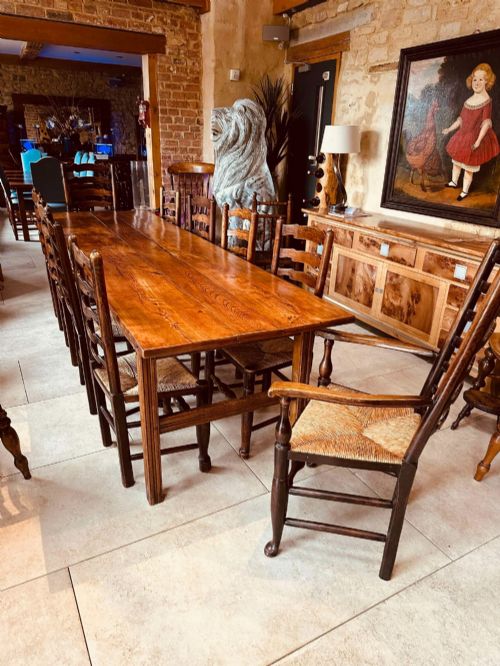
A brown elm farmhouse table brings durable country utility and a rich grain directly into your kitchen or dining room.
Brown Elm Farmhouse Table
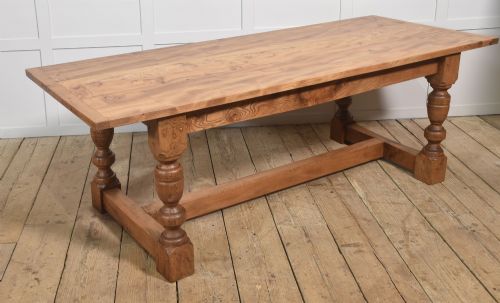
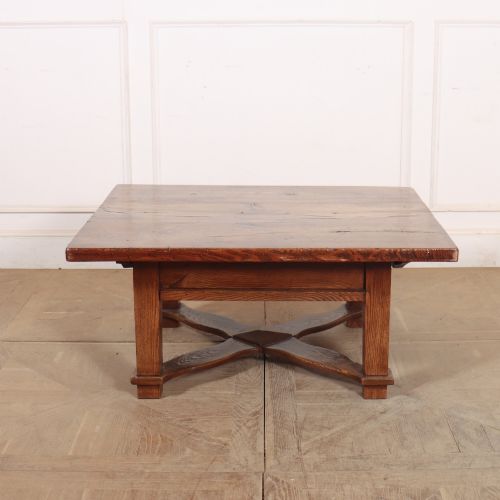
A brown elm farmhouse table offers a sturdy surface shaped by rural traditions across England, France, and Austria. These pieces encompass dining tables, coffee tables, refectory tables, and even benches and dough bins designed for daily household labour.
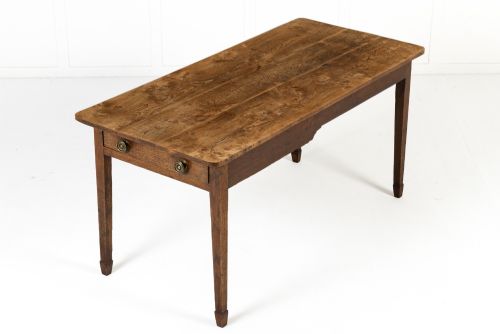
The versions most likely to meet you on this page date from the eighteenth and nineteenth centuries, often showing the warm timber tones and heavy plank construction typical of country kitchens. Some examples measure large for family gatherings, while others take a lower coffee table format.
How they were made
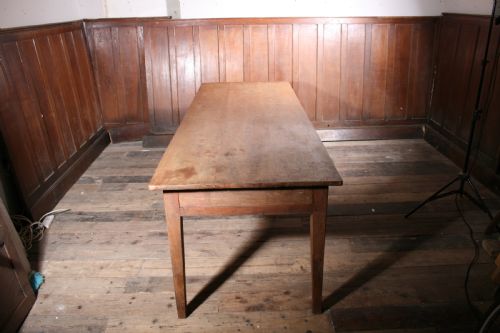
Carpenters built these tables using solid elm and oak timber, relying on the natural toughness of hardwood to withstand heavy daily use. Planks were joined to form expansive surfaces, sometimes supported by trestle bases or incorporating a single side drawer for utility.
Makers utilised regional styles ranging from English country and French provincial to Austrian country and Qing dynasty formats. The resulting construction prioritised absolute functional strength over delicate ornamentation.
Brown Elm Farmhouse Table Retail Price Guide 2026
Typical asking prices for brown elm farmhouse table among the pieces listed under this phrase on Sellingantiques today, from the lower quarter to the upper quarter. They describe what is for sale here now, not the wider market.
Listings feature items spanning the eighteenth and nineteenth centuries, constructed predominantly from elm, oak, and hardwood.
What varies in quality
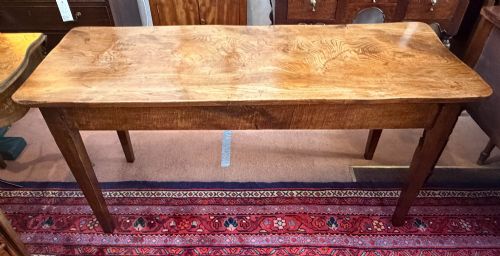
The distinction between ordinary utility items and superior examples lies in the depth of the timber grain and the integrity of the original joints. Tables featuring substantial one-piece elm tops carry a stronger presence than those assembled from mismatched boards.
Proportion and age also determine worth, with eighteenth-century pieces holding greater historical weight than later nineteenth-century adaptations. The survival of original structural timber without excessive replacement defines the better specimens.
The Brown Elm Farmhouse Table Glossary
- Elm
- A tough hardwood known for its twisting grain and resistance to splitting, making it ideal for large table tops. It develops a deep, warm tone through centuries of wear.
- Refectory table
- A long dining table historically used in communal dining halls and adapted for domestic country kitchens. They provide generous seating space along each flank.
- Dough bin
- A utilitarian box mounted on legs used for resting bread dough before baking. In country homes, these often double as low furniture pieces.
- Trestle table
- A table consisting of two or more supports holding up a flat plank top. This construction allows for maximum legroom beneath the surface.
Brown Elm Farmhouse Table: Frequently Asked Questions
How do I clean a brown elm farmhouse table?
Wipe the surface with a damp cloth and mild soap, avoiding harsh chemical cleaners that strip the finish.
Dry the timber immediately afterwards to protect the grain from moisture damage.
Are these tables suitable for daily dining?
These tables were originally built for heavy domestic labour and family meals, making them exceptionally durable.
The robust hardwood construction easily handles the demands of modern kitchen use.
How can I tell an eighteenth-century table from a nineteenth-century one?
Examine the construction marks beneath the top and the wear patterns along the edges.
Earlier pieces often display hand-cut joinery and deeper patination acquired over longer periods of domestic service.
Do elm tables require special humidity controls?
Keep timber furniture away from direct heat sources and sudden temperature shifts to prevent warping.
A stable indoor climate preserves the natural expansion and contraction of the hardwood.