

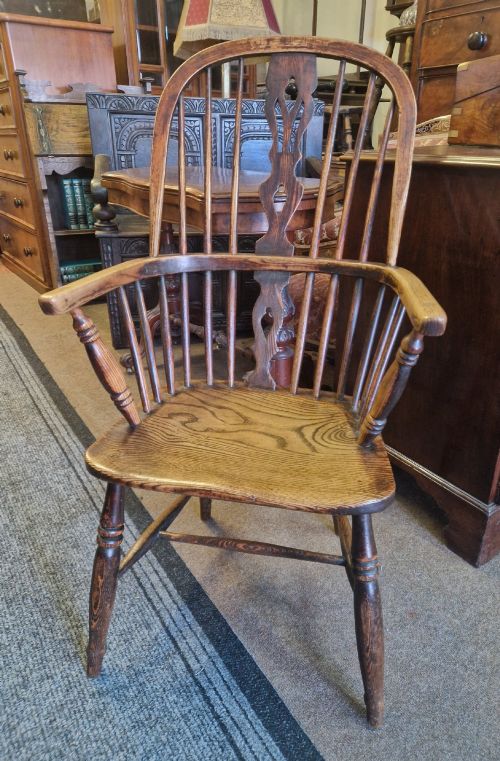
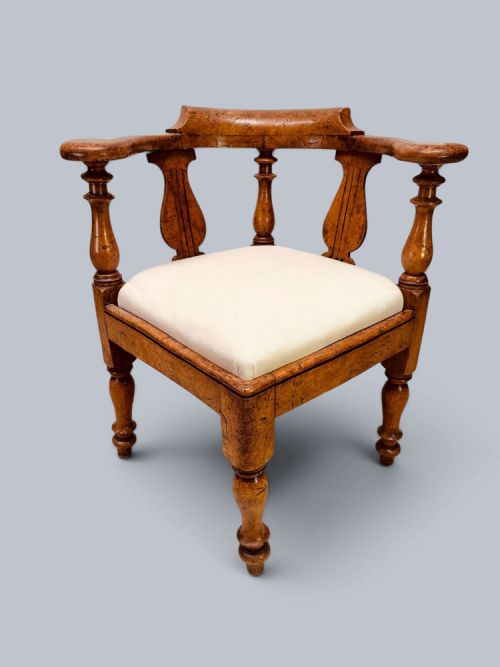
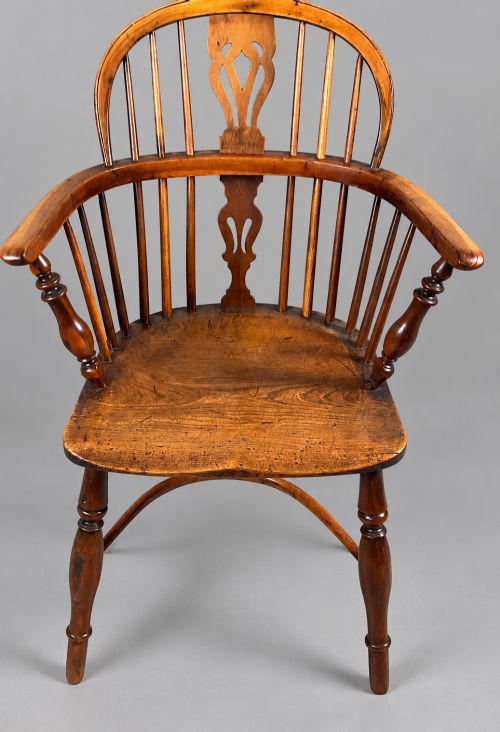

Brown Elm Armchair
A brown elm armchair brings the tactile grain and honest build of English country workshops straight into a room.
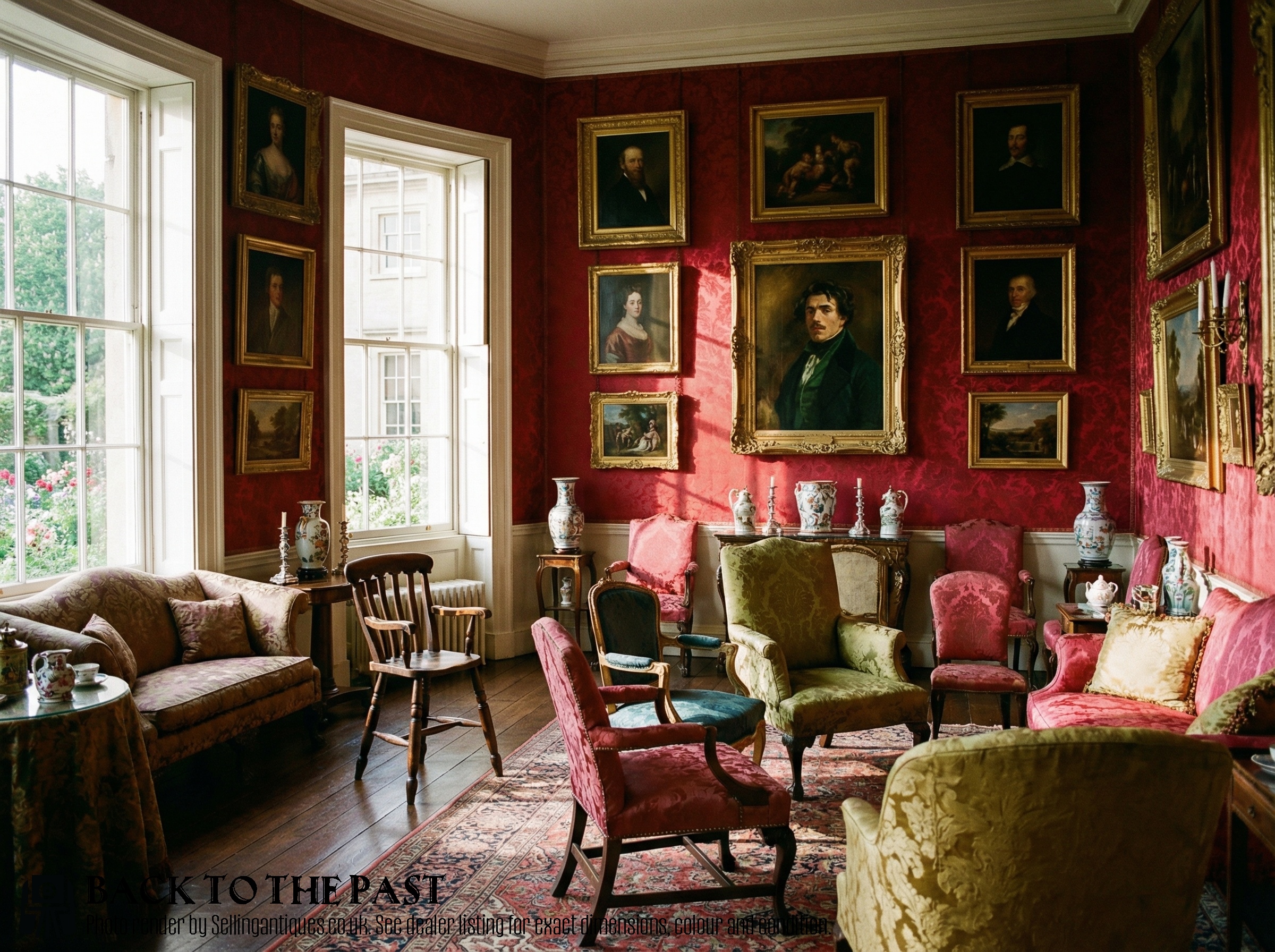
Brown Elm Armchair
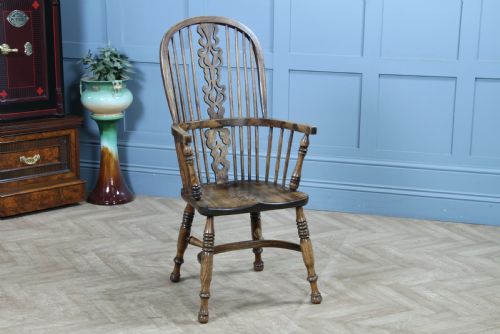
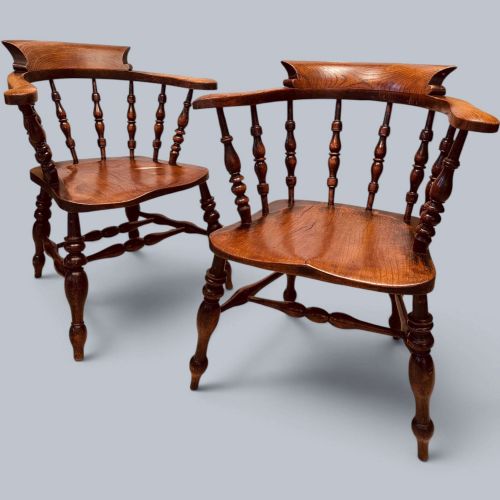
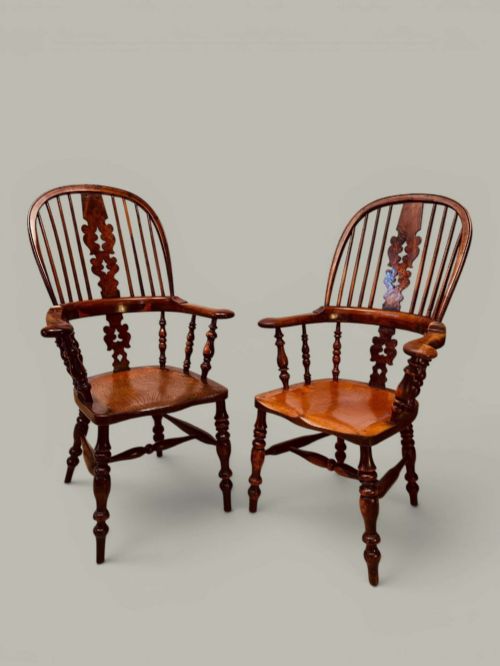
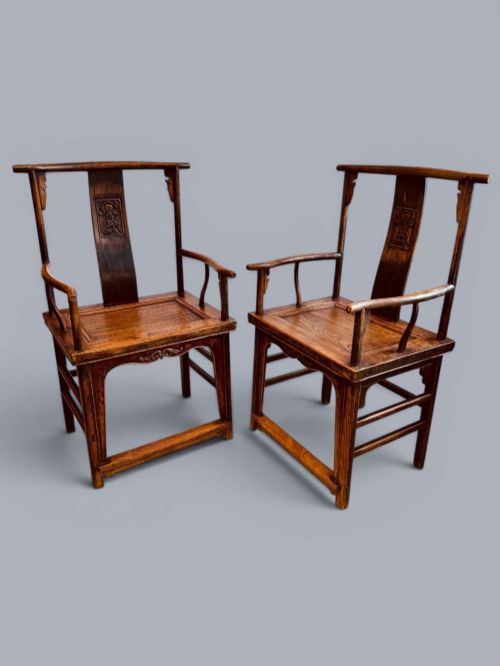
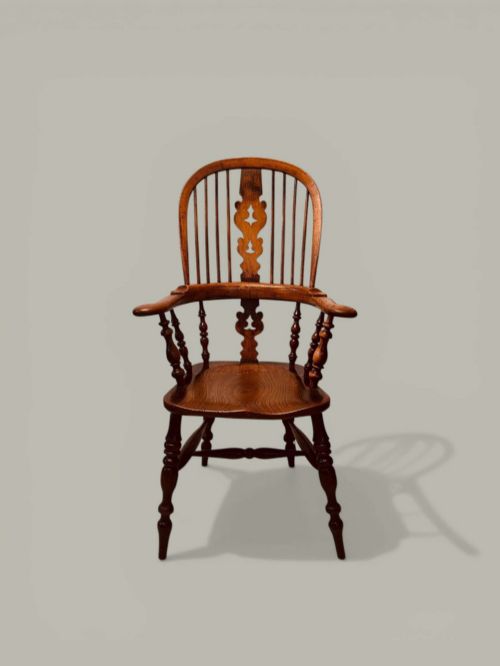
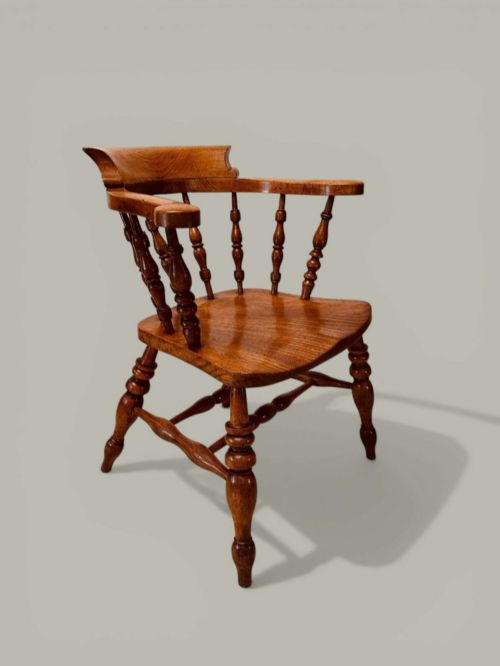
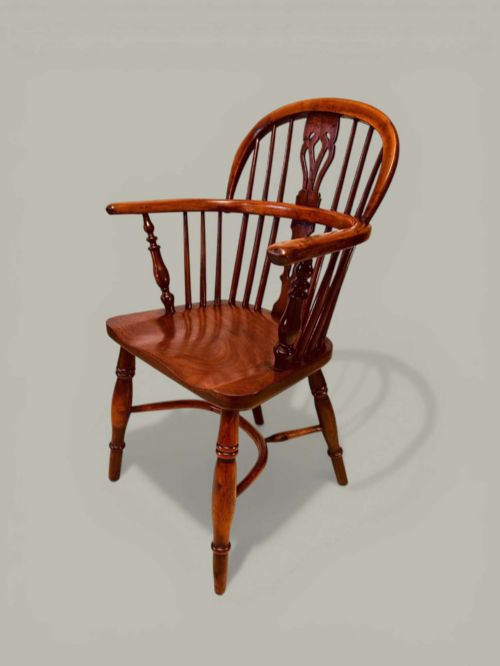
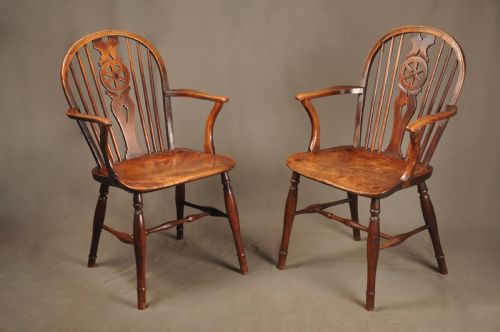
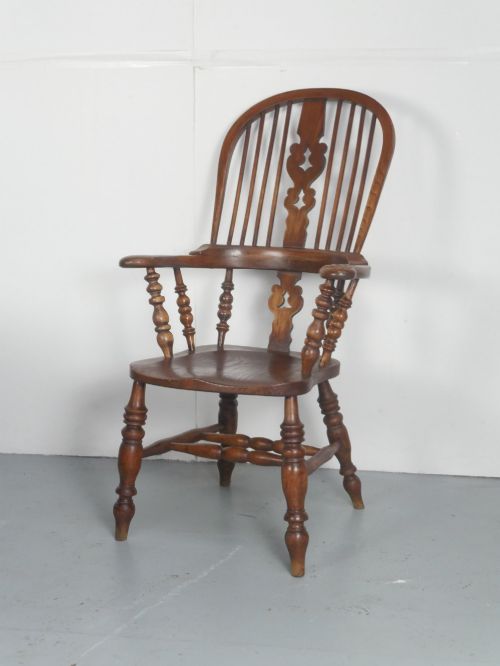
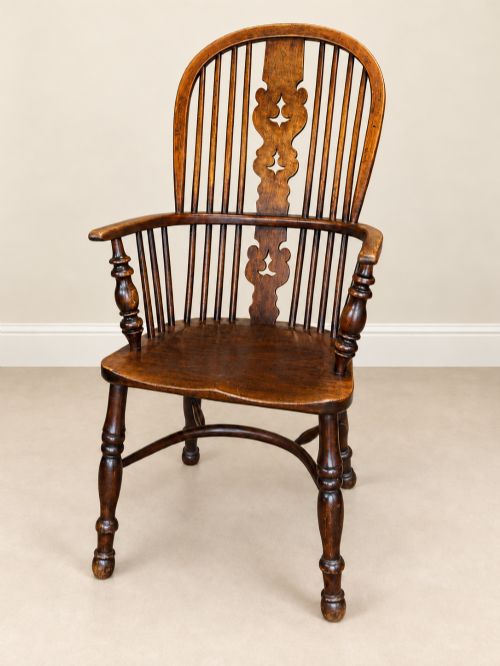
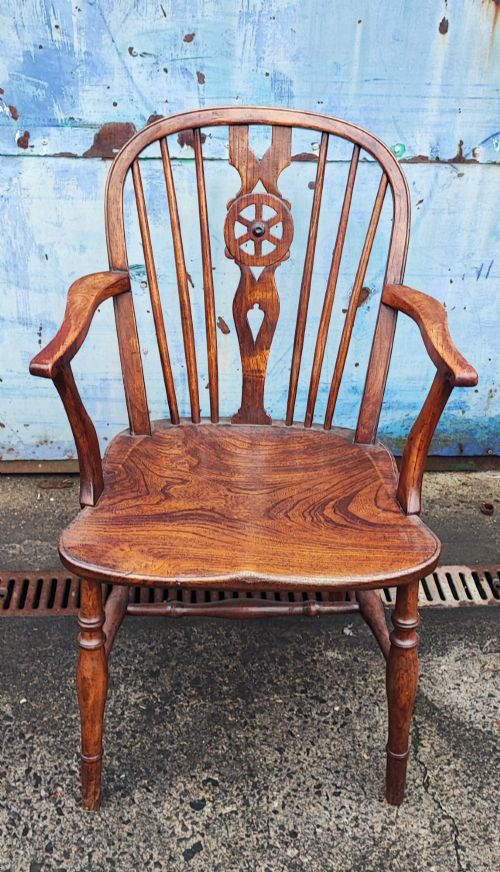
A brown elm armchair combines robust rural utility with expressive domestic seating, spanning regional vernacular designs from the eighteenth century through to the Edwardian period. Buyers searching for a brown elm armchair will most frequently encounter nineteenth-century Windsor forms, smokers' bows, and captains' chairs produced in provincial English workshops.
The material identity of these pieces relies heavily on solid timber construction, pairing elm seats with complementary woods such as ash, beech, and yew. Makers utilised the tough, interlocking grain of elm for saddle seats that resisted splitting under heavy daily use.
Regional styles dictate the silhouette, ranging from the high backs and comb backs of the Georgian era down to the low-backed kitchen chairs and smoker's bows of the Victorian period. These chairs served practical roles in farmhouses, cottages, and offices before finding favour as decorative period seating.
Materials and construction methods
Makers fashioned the characteristic thick seats of these armchairs from single slabs of solid elm, hollowed out with an adze or scorp for comfort. This durable timber resisted cracking while supporting the intersecting spindles, legs, and bow backs.
Framing components often integrated ash and beech for steam-bent back bows and turned spindles, leveraging the flexibility of these straight-grained hardwoods. Yew wood also appeared in high-status country chairs, providing rich colour and fine figuring alongside the elm seat.
Traditional green woodworking techniques ensured tight joints, as dry turned legs and spindles were driven into slightly damp seats so that wood shrinkage locked the structure permanently in place. Finish was typically kept simple, relying on wax or oil to nourish the natural grain.
Brown Elm Armchair Retail Price Guide 2026
Typical asking prices for brown elm armchair among the pieces listed under this phrase on Sellingantiques today, from the lower quarter to the upper quarter. They describe what is for sale here now, not the wider market.
Countless nineteenth-century countrymen sat in these chairs while pondering local gossip, leaving behind deeply sculpted seats moulded by human anatomy.
Distinctions in quality
Quality rests primarily on the depth of the saddle shaping in the elm seat and the harmony of the timber's grain and colour. Superior examples display bold turning on the legs and spindles without excessive replacement parts or compromised structural integrity.
The grace of the bentwood bow and the balance of the spindle arrangement separate finer vernacular pieces from standard utilitarian seating. Maker stamps or unusual regional variations add historical weight and desirability to individual pieces.
J Spencer
The Brown Elm Armchair Glossary
- Windsor chair
- A wooden chair constructed with a thick solid timber seat into which the legs and back spindles are direct-inserted. This form developed deep regional variations across rural England.
- Smoker's bow
- A low-backed Windsor armchair featuring a continuous curved arm rail supported by turned spindles. These sturdy chairs were common in provincial inns and farmhouse parlours.
- Comb back
- A Windsor chair design where the central vertical spindles extend upward to support a horizontal top rail resembling a traditional hair comb. Eighteenth-century examples frequently utilise this skeletal upper frame.
- Crinoline stretcher
- An arched underframe connecting the legs of a Windsor chair to provide lateral stability. The name derives from its resemblance to the hooped fashion of nineteenth-century undergarments.
- Captain's chair
- A low, rounded wooden armchair designed for desk or office use. These seats combine sturdy proportions with a compact footprint.
Brown Elm Armchair: Frequently Asked Questions
What is a brown elm armchair?
A brown elm armchair is a traditional wooden seat featuring a solid elm saddle base combined with turned or bentwood components. These pieces originate primarily from English country workshops and span the eighteenth, nineteenth, and early twentieth centuries.
They encompass diverse vernacular forms such as Windsor chairs, captains' chairs, and smokers' bows, built for everyday domestic or commercial utility.
How do I date an elm armchair?
Dating relies on observing construction traits, timber combinations, and the evolution of chair silhouettes from high-backed eighteenth-century styles to lower Victorian formats. Tool marks, joint construction, and wear patterns also offer clues regarding age.
Changes in turning styles on the legs and spindles help narrow down the period of manufacture across the Georgian and Victorian eras.
Where were these chairs made?
These chairs were produced in regional vernacular workshops across England, with distinct styles emerging from various counties and rural districts. Local craftsmen utilised available native hardwoods such as elm, ash, beech, and yew.
Town and country joiners supplied farmhouses, cottages, offices, and inns with durable seating tailored to local preferences.
How should I care for elm furniture?
Maintain elm furniture by applying periodic coats of natural beeswax to nourish the wood and protect the grain. Avoid placing pieces near direct heat sources or in fluctuating humidity to prevent timber movement.
Gentle dusting with a soft cloth preserves the historic surface finish without stripping the patina accumulated over decades of use.