

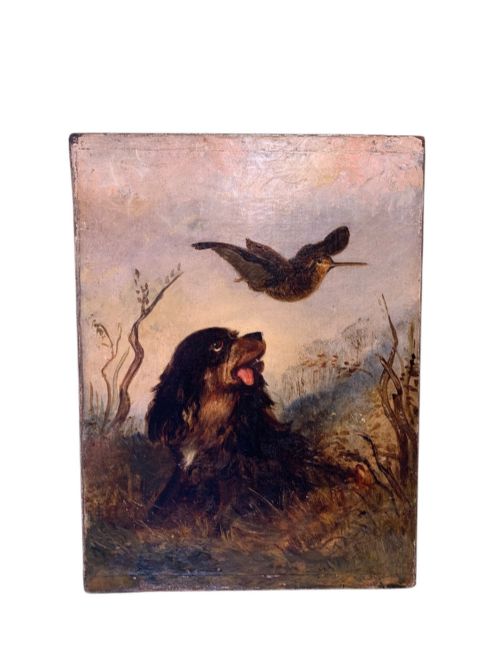
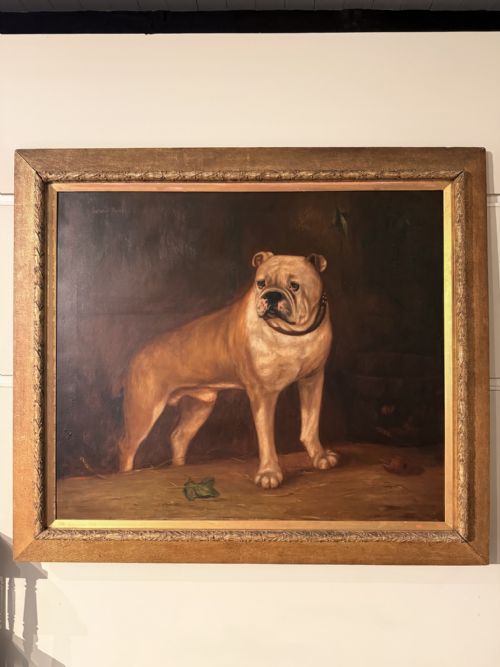


Brown Dog Portrait Canvas
A brown dog portrait canvas brings the character of a valued canine companion directly from centuries past onto the wall.
Brown Dog Portrait Canvas
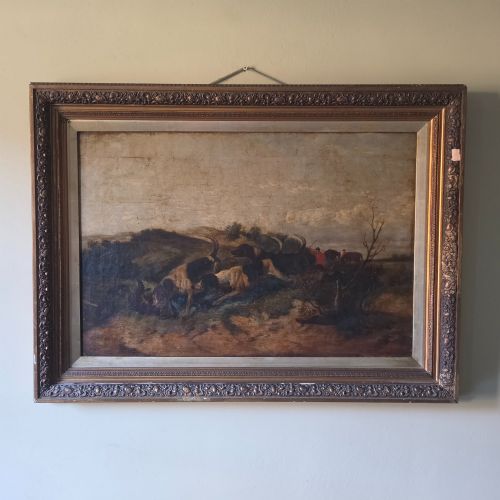
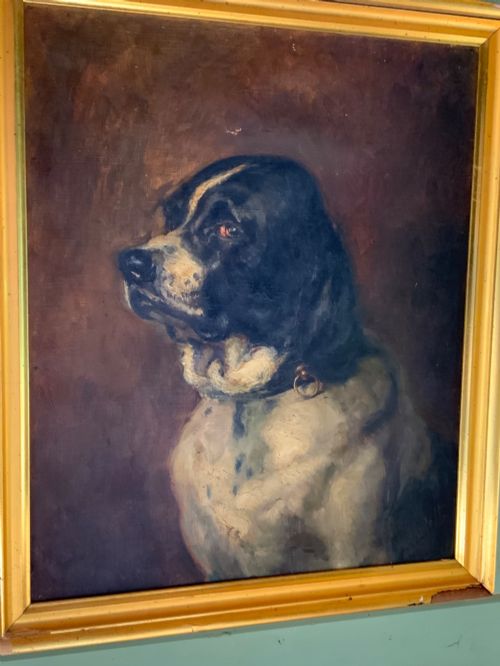
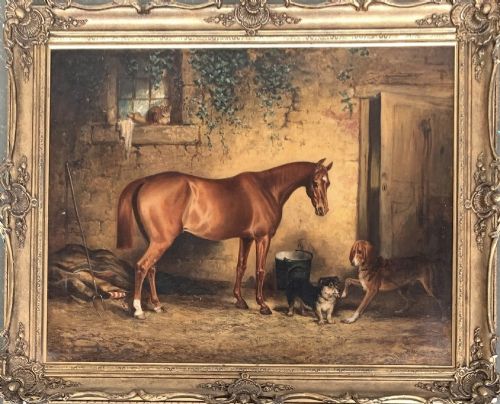
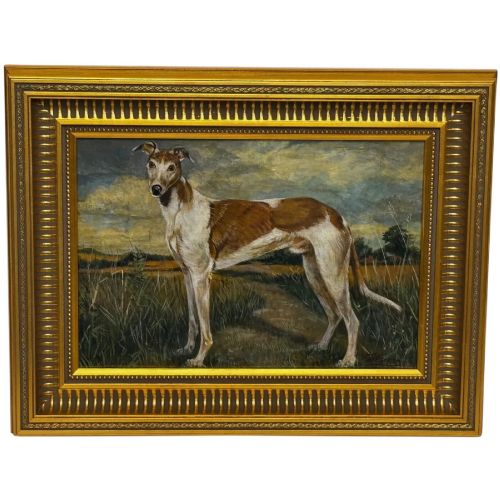
A brown dog portrait canvas captures the distinct personality of various breeds through historical oil painting traditions. Buyers searching for a brown dog portrait canvas encounter works spanning the seventeenth century through to the mid-twentieth century, with nineteenth-century Victorian examples appearing most frequently.
These works range from intimate depictions of individual terriers and spaniels to larger canvases showing working hounds in rural landscapes. The subjects reflect changing domestic attitudes toward animals across Georgian, Victorian, and Edwardian periods.
Materials and technique
Artists painted these works using oil paint applied to a woven canvas substrate, often supported by a wooden stretcher framework. Many pieces retain their original or period giltwood frames, sometimes incorporating gold leaf accents that complement the warm tones of the animal's coat.
The technique relies on building up layers of pigment to render the texture of fur and the play of light in a landscape setting. Painters utilised fine brushes to achieve realistic detail in the eyes and muzzle while keeping background elements softer.
The listings span from the seventeenth century through to the mid-twentieth century, utilising oil paint on woven canvas.
Distinctions in execution
Quality rests in the anatomical accuracy of the animal and the expressiveness captured in its posture and gaze. The most accomplished paintings convey individual temperament rather than a generic breed representation.
The handling of the surrounding environment also sets works apart, as skilled artists integrate the dog into a cohesive spatial setting with balanced light and shadow. Weaker examples show stiffer brushwork and less convincing depth in the background landscape.
Henry Barraud·Valentine T. Garland·John Emms·Thomas Hicks·LM Webb·George E Sharpe·Sir Edwin Landseer·John Trivett Nettleship·Fannie Moody·Robert Cleminson·Henri Schouten·Thomas Beach·Molly Maurice Latham·Philip Eustace Stretton·Dixon Clark
The Brown Dog Portrait Canvas Glossary
- Canvas
- A heavy woven fabric, typically linen or cotton, stretched tightly across a wooden frame to serve as a stable support for oil paint.
- Giltwood
- Timber carved and coated with a thin layer of gold leaf or metallic paint, commonly used for nineteenth-century picture frames.
- British Sporting Art
- A genre of painting depicting horses, hounds, shooting, and rural pursuits, prominent throughout the eighteenth and nineteenth centuries.
- Realism
- An artistic movement focusing on everyday subjects rendered without idealisation, seen frequently in Victorian animal portraiture.
Brown Dog Portrait Canvas: Frequently Asked Questions
How do I identify a Victorian dog painting?
Victorian works often display a sentimental or highly realistic approach to animal subjects, reflecting the era's deep affection for domestic pets. Look for clothing details in human figures or landscape elements typical of the nineteenth century.
Frame styles also offer clues, as heavy moulded giltwood frames were standard during this period. The treatment of the dog's coat often shows meticulous layering characteristic of nineteenth-century academic training.
What is British sporting art?
British sporting art encompasses paintings that record horses, hunting dogs, shooting parties, and rural country life. These works served to document prized animals and significant rural events for landowners and enthusiasts.
Many dog portraits originate from this tradition, capturing terriers, spaniels, and hounds associated with country pursuits. The genre spans multiple centuries with distinct shifts in how artists portrayed animals in the field.
How should I care for an oil on canvas?
Keep the canvas away from direct sunlight and sources of extreme heat or humidity to prevent the paint and fabric from cracking. Displaying the work in a stable indoor environment protects both the stretcher frame and the delicate oil pigments.
Dust the surface very gently with a soft, dry brush, avoiding any moisture or chemical cleaning agents. Professional conservators should handle any repairs to the paint layer or canvas support.
Are these paintings signed by the artist?
Some canvases bear the signature or monogram of the painter, often placed discreetly in a lower corner of the composition. Other historical works remain unsigned, created by competent practitioners or school workshops whose names were lost over time.
Signatures can sometimes be found on the reverse of the canvas or on the wooden stretcher frame during closer inspection. Unsigned pieces are catalogued by period and school rather than attributed to a specific individual.