

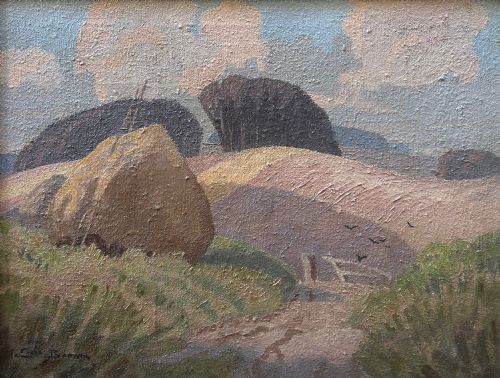
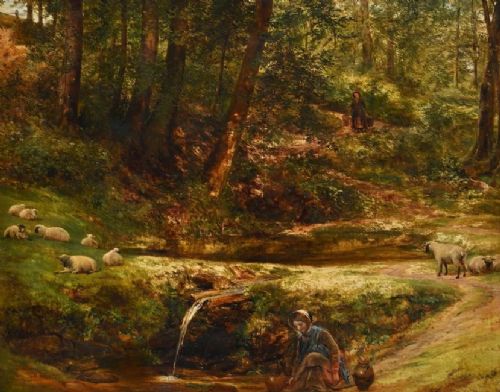
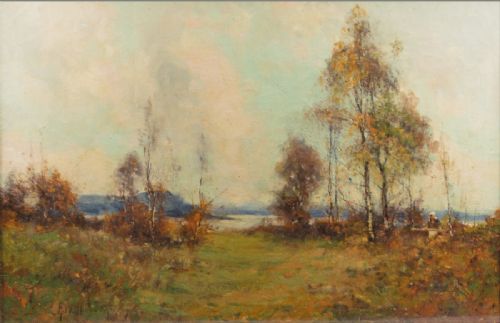


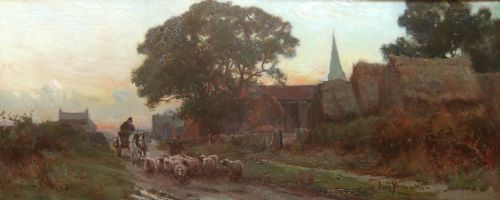

Brown Countryside Oil Painting
A brown countryside oil painting brings the quiet depth of rural fields and riverbanks straight onto the wall.
Brown Countryside Oil Painting
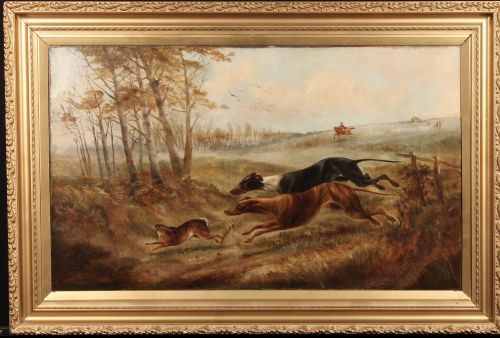
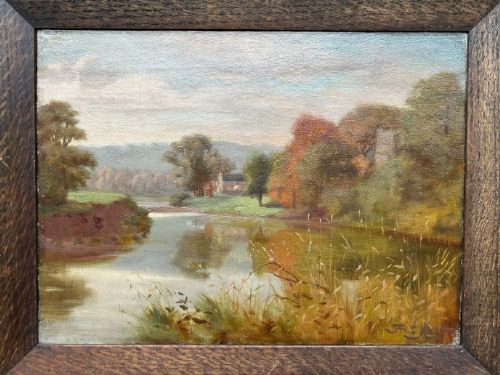
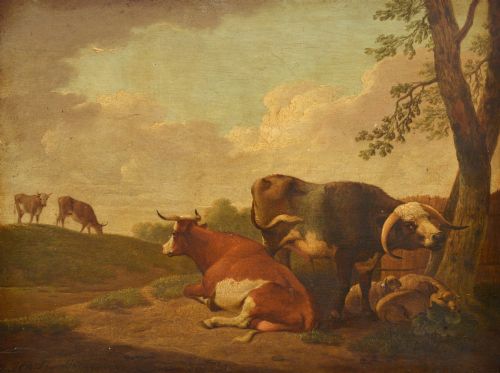
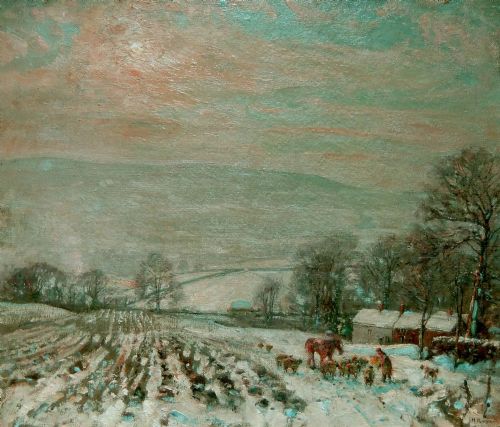
A brown countryside oil painting captures rural scenes through muted earth tones, depicting pastures, livestock, and woodlands. When searching this phrase, a buyer meets works spanning the nineteenth century up to the mid-twentieth century.
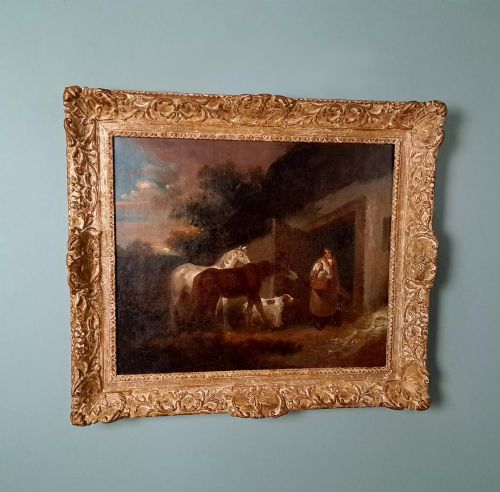
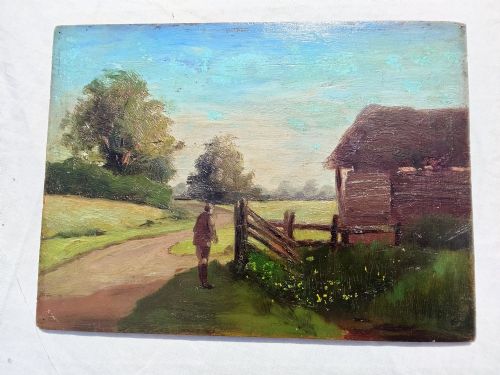
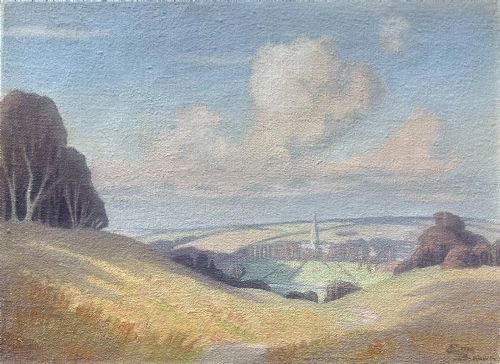
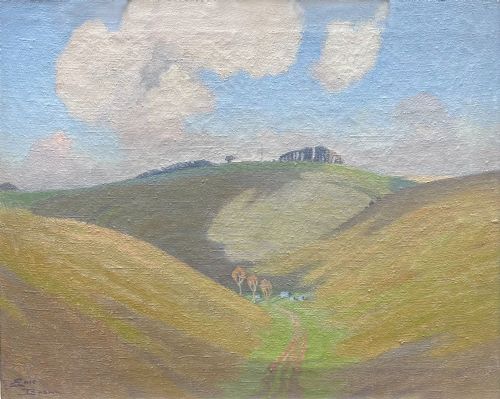
The selections on this page feature traditional British landscapes, river views, and farmstead studies rendered in oils. Canvas and wooden boards serve as the primary supports for these pastoral compositions.
Makers range from named regional artists working in the Edwardian era to anonymous Victorian painters capturing English and Scottish countryside views. Common subjects include cattle by streams, winter haystacks, and sheep grazing in Yorkshire valleys.
How they were made
Artists built these works using oil paint applied to stretched canvas or prepared wooden boards. Brushes laid down rich layers of pigment, creating textured fields and luminous skies.
Gilt frames frequently complement the canvases, adding a traditional metallic border that enhances the warm browns and greens of the pastoral palette.
Common subjects across these paintings include farmyard scenes, cattle by streams, and winter sheep pastures.
What varies in quality
The strength of composition and brushwork distinguishes finer works from simpler decorative pieces. Skilled artists captured atmospheric light and natural movement with confident handling.
Provenance and legible signatures by documented painters elevate certain works above anonymous regional pieces. The preservation of the original paint surface and canvas tension also marks the standard of survival.
George Armfield·William H Myers·Frederick Marriott·William Joseph Shayer Senior·Hendrik Willem Schweickhardt·Herbert Royle·Eric Brown·Richard Redgrave·Alexander Wellwood Rattray·John Horace Hooper·Owen Bowen·John Sanderson Wells·William Sydney Cooper·William Greaves·William Mellor·John Linnell·Robert Finley McIntyre·James William Booth·Florence Hess·John Wright Oakes·Arthur Charles Dodd·Ernest Higgins Rigg·W.A. Clark
The Brown Countryside Oil Painting Glossary
- Canvas
- A heavy woven fabric stretched across a wooden frame to provide a stable painting surface. It remains the most common support found in these traditional landscapes.
- Oil Paint
- A slow-drying medium made by mixing pigments with vegetable oil. This allows artists to blend tones smoothly and build rich surface textures.
- Wood Panel
- A rigid board used as an alternative to canvas for supporting painted compositions. Panels often survive from the nineteenth century in stable condition.
- Gilt Frame
- A wooden moulding coated with gold leaf or metallic paint to finish the presentation of a picture. These surrounds are typical of Victorian and Edwardian framing styles.
- British Impressionism
- An art movement focusing on natural light and outdoor scenes using visible brushstrokes. Painters in this style sought to capture transient weather effects in rural settings.
Brown Countryside Oil Painting: Frequently Asked Questions
How do I date a countryside oil painting?
Examine the canvas preparation, stretcher frame construction, and artist signatures where present. Costume details on figures and the style of the gilt frame also offer clues to the period.
Paint pigments and canvas stamps from suppliers help narrow down the decade of creation. Comparing the technique to known works by regional painters confirms the era.
Are these paintings on canvas or board?
The works use both stretched canvas and rigid wooden boards as supports. Canvas is the standard surface for larger Victorian and Edwardian landscapes.
Smaller panel paintings often survive on wooden boards or thin panels. Both supports were common across nineteenth and early twentieth-century British art.
How should I clean an antique oil painting?
Dust the surface gently with a soft, dry brush to remove loose particles. Avoid using water, household cleaners, or chemical solvents on the aged paint layer.
Professional conservators should handle deeper cleaning and varnish removal. Improper cleaning can permanently damage the delicate oil pigments beneath.
Where were these rural scenes usually painted?
Artists worked across British rural locations, including Yorkshire valleys, riverbanks, and agricultural farmsteads. Many painters travelled out from cities to sketch pastoral life directly from nature.
regions like Wharfedale and the Scottish Highlands inspired numerous Victorian landscape compositions. These settings reflected a deep appreciation for the traditional countryside.