
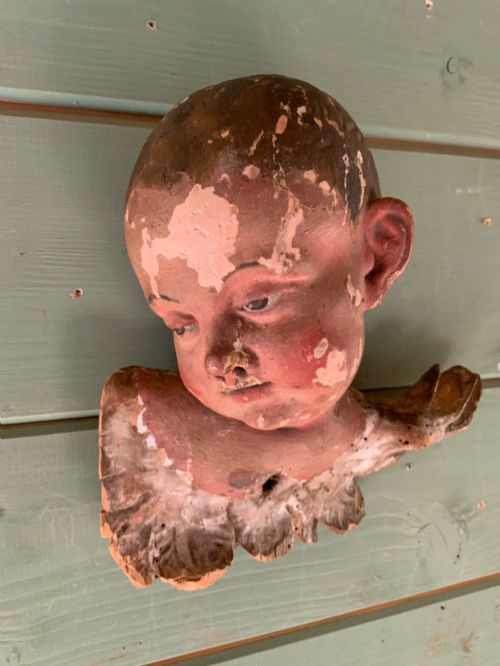
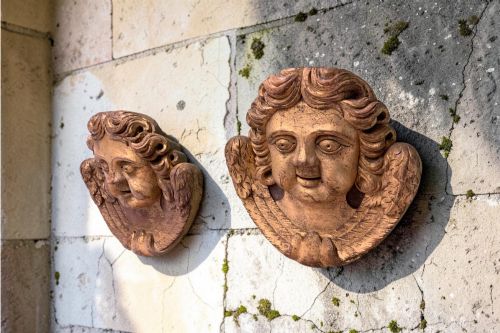

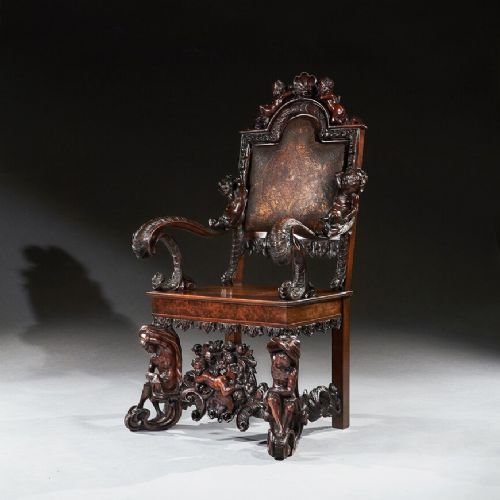
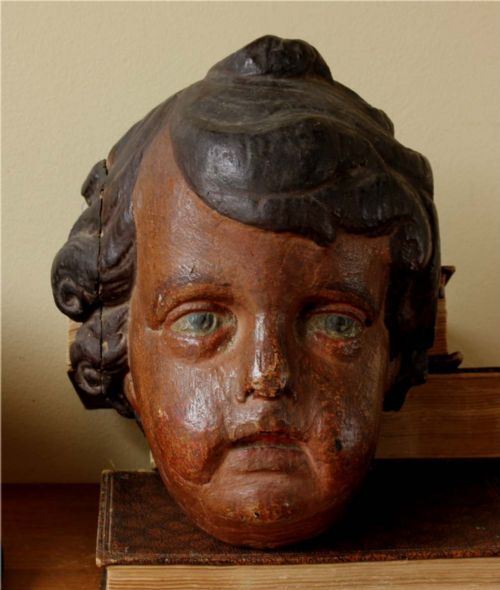


Brown Carved Wooden Putto
These brown carved wooden putto figures bring expressive Baroque energy to a room, shaped from rich timbers like oak, walnut, and lime wood.
Brown Carved Wooden Putto
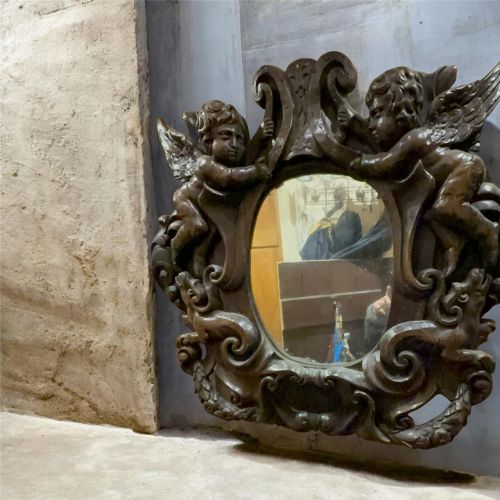
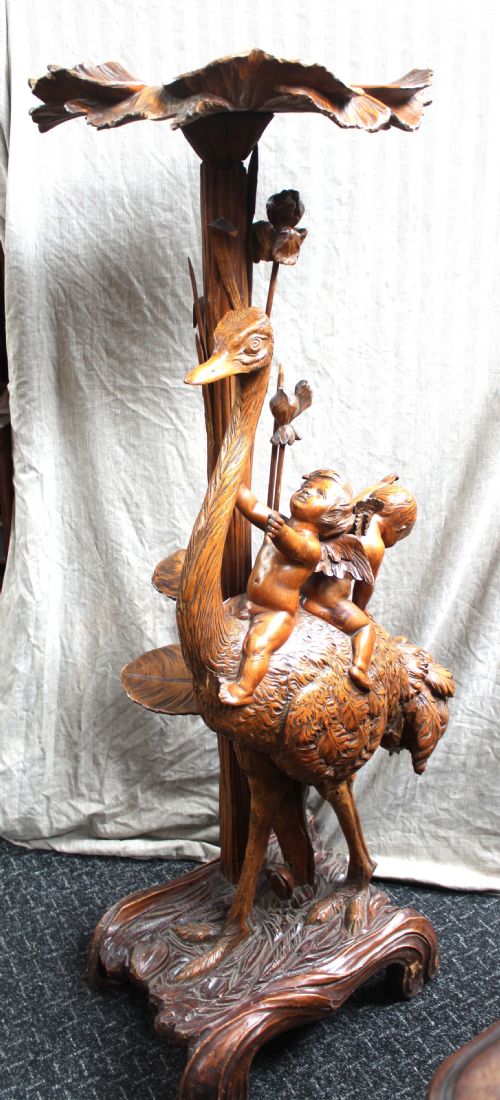
A brown carved wooden putto takes many forms across this selection, appearing as standalone figures, wall brackets, sculptural stands, and church carvings. You will frequently encounter these winged cherubic motifs integrated into mirrors, panels, and architectural salvage dating from the seventeenth century onwards.
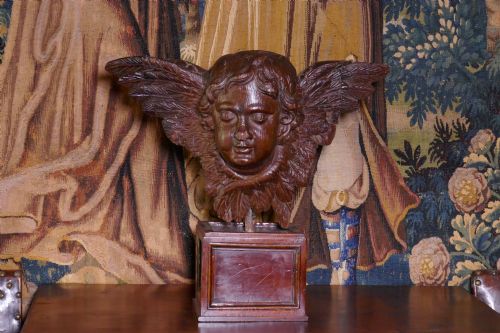
The pieces span various European traditions, notably French and Italian workshops influenced by Baroque and Renaissance styles. Surviving examples range from individual cherub heads to full figures and sculptural terms carved in deep relief.
Makers utilised dense hardwoods to achieve dynamic poses and expressive faces. Many items show the influence of revival movements, capturing earlier ecclesiastical grandeur in solid oak and walnut.
Materials and construction methods
Carvers shaped these putti from durable hardwoods such as oak, walnut, lime wood, and boxwood, allowing for intricate detail in wings, hair, and facial expressions. Some works combine carved timber with gesso or traces of polychrome pigment.
Makers employed hand chisels and gouges to build deep undercut relief on panels, mirror frames, and architectural fragments. Grain direction and timber selection determined the scale and projection of each carved form.
Object types range from wall mirrors and architectural salvage to table lamps, armchairs, and pedestals.
Assessing quality in carved putti
Patina and surface preservation dictate the visual weight of the piece, with untouched wax or polished timber surfaces outperforming stripped or over-cleaned carvings. The integration of the putto into its original functional context, such as a mirror frame or wall bracket, adds structural and artistic cohesion.
Andrea Brustolon·Steiner
The Brown Carved Wooden Putto Glossary
- Putto
- A plump, often winged child figure derived from classical art and heavily utilised in Renaissance and Baroque decoration. These figures frequently appear in ecclesiastical and domestic woodwork.
- Baroque
- An ornate artistic style dominant from the seventeenth to mid-eighteenth century, characterised by drama, deep carving, and dynamic movement. Revival versions emerged strongly during the nineteenth century.
- Polychrome
- The practice of decorating wooden sculpture with multiple painted colours or gilding. Traces of these historic finishes often survive on church carvings.
- Term
- A pillar or pedestal tapering toward the base, frequently topped with a bust or carved figure such as a cherub. These architectural elements served decorative and structural roles.
- Acanthus
- A carved leaf motif mimicking the Mediterranean plant of the same name, widely used to frame putti on panels and mirrors. It forms a staple of classical architectural ornamentation.
Brown Carved Wooden Putto: Frequently Asked Questions
How do I date a wooden putto carving?
Dating relies on tool marks, timber choice, and stylistic cues such as the deep undercut relief typical of seventeenth-century Baroque work versus nineteenth-century revival interpretations. Examining the back of the panel or mount reveals construction methods and wood ageing.
Secondary indicators include the presence of original gesso, historic polychrome remnants, or the natural oxidation of walnut and oak over centuries.
Where were these putti originally placed?
Many of these carvings originated as church decorations, architectural salvage, or adornments on grand mirrors and wall brackets. Ecclesiastical workshops produced them to accent altarpieces, choir stalls, and ecclesiastical seating.
Domestic interiors later incorporated them into wall panels, furniture, and decorative stands inspired by Italian and French design traditions.
How should I display a wooden putto in my home?
Wall-mounted putti brackets and framed mirrors work best anchored to solid walls using appropriate fixings that support the weight of dense hardwoods like oak. Freestanding figures and sculptural stands require stable placement away from direct heat sources.
Maintaining stable indoor humidity protects the timber from splitting while allowing the rich grain and patina to remain visible.
What is the difference between a putto and a cherub?
Art historical terminology often uses putto for secular classical child figures and cherub for biblical winged beings, though marketplace descriptions frequently treat the terms as interchangeable. Both share the familiar winged infant form seen across Baroque woodcarvings.
Sculptors of the seventeenth and nineteenth centuries applied these motifs to both religious church carvings and secular furniture decoration.