



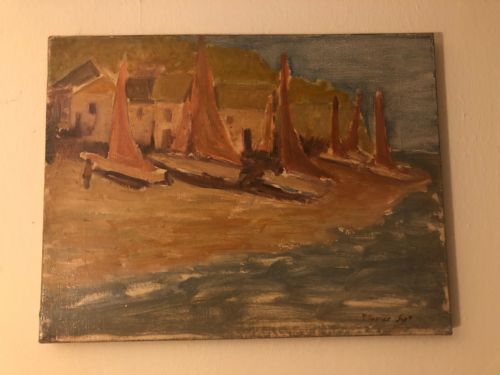


Brown Canvas Harbour Painting
A brown canvas harbour painting brings coastal industry and maritime atmosphere directly onto the wall through rich oil pigments and textured brushwork.
Brown Canvas Harbour Painting
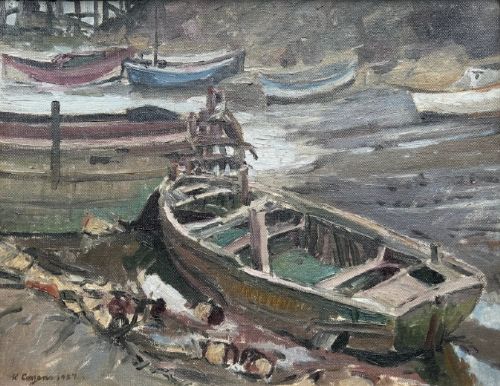
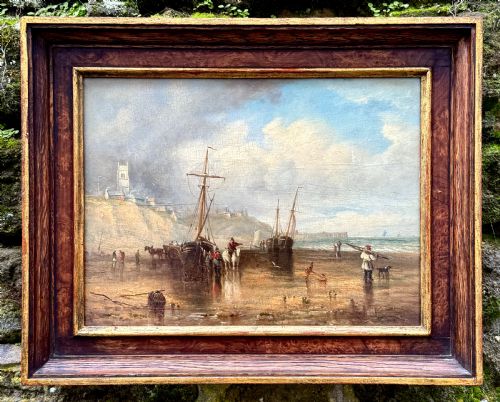
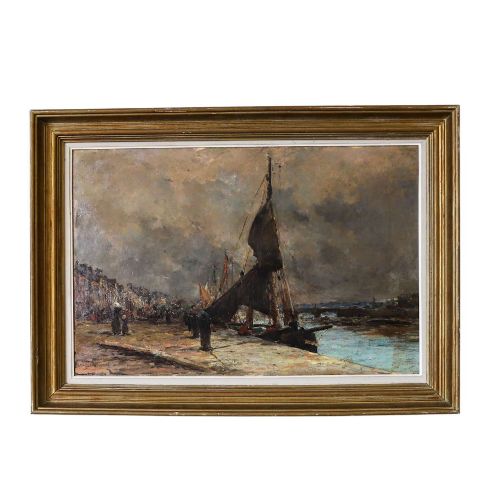
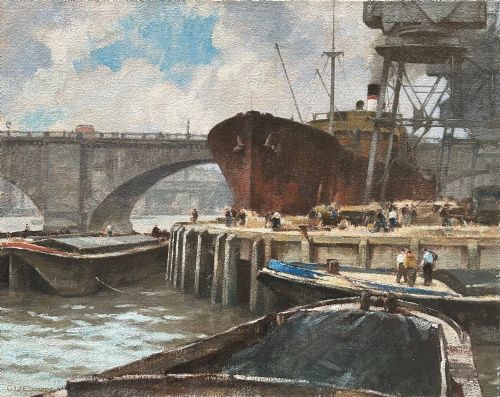
A brown canvas harbour painting captures maritime scenes, bustling ports, and estuary views rendered in oil paint across various periods. These works range from early nineteenth-century coastal vistas to mid-twentieth-century post-impressionist interpretations of working harbours.
Most examples found here combine traditional oil on canvas or board with historical framing, often featuring muted earthy tones alongside brighter passages of water and sky. Buyers encounter both British coastal locations and continental European ports produced by named artists and regional schools.
Materials and construction
These works rely primarily on oil paint applied to woven canvas or rigid board supports, sometimes accented with gesso layers beneath the pigment. Artists built up textures using brushwork and impasto to render water, shipping vessels, and stone quaysides.
Wooden frames, frequently gilded, house the painted surfaces, protecting the edges of the canvas and completing the presentation of the maritime artwork.
Brown Canvas Harbour Painting Retail Price Guide 2026
Typical asking prices for brown canvas harbour painting among the pieces listed under this phrase on Sellingantiques today, from the lower quarter to the upper quarter. They describe what is for sale here now, not the wider market.
Materials documented across the collection include oil paint, canvas, wood, board, and gesso.
Factors of distinction
Quality rests in the handling of light and atmospheric perspective across the water, distinguishing hurried commercial output from considered artistic observation. The confidence of the brushwork and the structural integrity of the paint layer determine the visual impact of each maritime scene.
The preservation of the original canvas support and the harmony between the painting and its period frame contribute significantly to the overall standing of an individual work.
Kenneth Cozens·Thomas Creswick·Cyril Walduck Edwards·Gyrth Russell·T.S. Wallis·Owen Bowen·Edward M. Elliott·Ernst Louizor·Hendrik Yan Wolter·Ludwig Hermann·Edward Fletcher·Johan Jens Neumann·Alec Caruthers Gould·Bertram Priestman·John W. Gilroy·Walter J. Hall·Maurice Sijs·Samuel Bough
The Brown Canvas Harbour Painting Glossary
- Canvas
- A heavy woven fabric stretched across a wooden frame to serve as a painting surface. It provides a flexible yet durable support for oil paint.
- Impasto
- Paint applied thickly to a canvas or board, standing out in relief from the plane. This technique adds tactile dimension to waves and architectural details.
- Gesso
- A plaster mixture applied to a panel or canvas to prepare the surface for painting. It creates a smooth and stable ground for oil pigments.
- Estuary
- The tidal mouth of a large river where the tide meets the stream. These waterways form a frequent subject for maritime painters depicting shipping and port activity.
Brown Canvas Harbour Painting: Frequently Asked Questions
What periods do these paintings date from?
The selection spans from the nineteenth century through the mid-twentieth century, encompassing Victorian works as well as later impressionist and post-impressionist interpretations.
Specific decades represented include the nineteen-tens, twenties, thirties, and fifties.
Are these works painted on canvas?
Many examples utilise traditional canvas supports, while others are executed on rigid wooden boards.
Both formats employ oil paint to capture maritime and industrial harbour subjects.
Which regions are depicted in the scenes?
The paintings record various British ports, rivers, and coastal towns alongside continental European harbours and Mediterranean ports.
Subjects range from busy London waterways to quiet Scottish and Cornish fishing villages.
How should an oil painting be displayed?
These works suit traditional wall placement away from direct sunlight and excessive humidity to protect the oil paint and canvas.
Matching the painting with its period wooden frame ensures proper edge protection and visual balance.