
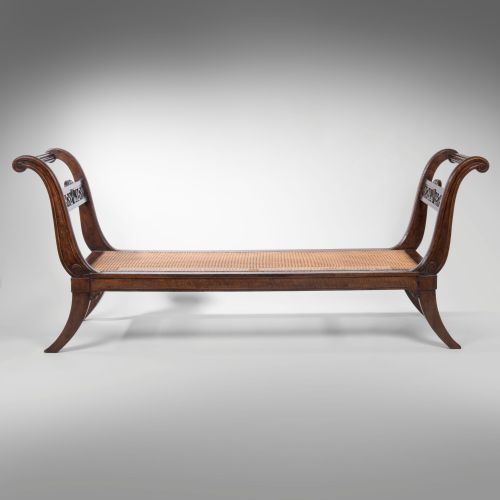
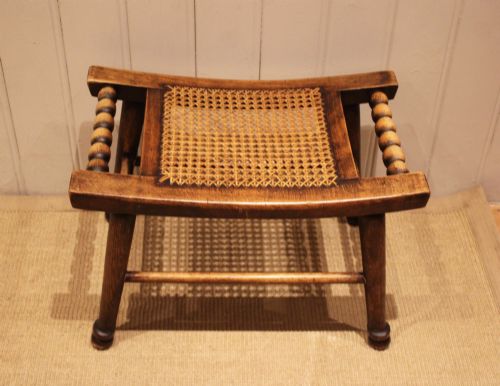


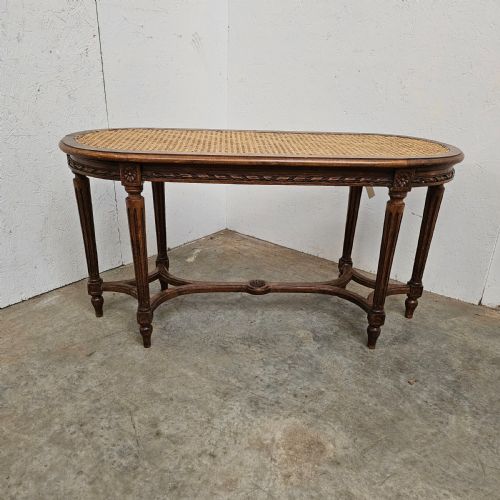


Brown Cane Stool
These brown cane stool examples combine woven seating with sturdy timber frames, offering practical charm and period character for any interior.
Brown Cane Stool
A brown cane stool brings traditional seating into modern spaces, often taking the form of low footstools, window seats, or compact benches. When searching for a brown cane stool, buyers encounter diverse iterations spanning the Georgian, Regency, and Victorian eras through to the early twentieth century.
The construction relies heavily on timber frames paired with woven seating surfaces. Pieces range from simple turned beech or oak examples to grander mahogany and bent beechwood designs decorated with carved details.
Origins vary from English country houses to French chateaux, resulting in silhouettes that serve equally well as auxiliary seating, coffee tables, or low benches in hallways.
Materials and construction
Makers utilised sturdy hardwoods such as mahogany, oak, and beech for the structural frames, occasionally employing bamboo or bent beechwood for lighter, more fluid silhouettes. Brass fittings and carved details frequently enhance the framework.
The seating panels utilise woven cane and bergère work, creating a resilient yet flexible surface that supports the user while maintaining visual lightness.
Materials recorded in this inventory include mahogany, oak, beech, brass, bamboo, and woven cane across multiple nineteenth and twentieth-century periods.
Assessing quality
The distinction between standard examples and superior pieces rests on the integrity of the timber frame and the precision of the woven seating. Finer items exhibit crisp carving, well-chosen mahogany or oak grain, and tightly woven cane that shows uniform tension.
Subtle proportions and restrained decorative elements separate utilitarian workshop items from sophisticated pieces commissioned for grand interiors.
Richard Hicks Bridgens·Thonet
The Brown Cane Stool Glossary
- Bergère
- A closed upholstered armchair or stool featuring woven cane panels in the wooden frame. This technique lightens the visual weight of heavy timber furniture.
- Caning
- The craft of weaving rattan or other plant materials into a mesh pattern for seats and backs. It provides a flexible yet supportive surface.
- X Frame
- A structural base formed by two intersecting diagonal supports resembling the letter X. This configuration offers both stability and architectural elegance.
- Metamorphic furniture
- Pieces designed to transform from one form of furniture into another, such as an armchair converting into library steps. These clever designs gained popularity during the Georgian period.
Brown Cane Stool: Frequently Asked Questions
How are these stools best used at home?
These pieces serve well as flexible low seating, footrests, or compact coffee tables in living rooms and bedrooms. Their portable nature allows them to move easily between rooms as needed.
Pairing a natural timber frame with woven seating adds texture and warmth to contemporary or traditional interiors without overcrowding the floor plan.
How do I care for the woven cane?
Keep the woven seating clean by gently dusting it with a soft brush and avoiding excessive moisture. Occasional light hydration helps prevent the natural fibres from becoming brittle.
Positioning the seating away from direct heat sources and harsh sunlight preserves the strength and flexibility of the cane over time.
What periods do these pieces span?
The available selection covers several decades and centuries, ranging from eighteenth-century Georgian designs through nineteenth-century Victorian workshops up to nineteen-twenties pieces.
Each era brings distinct stylistic touches, from grand Regency proportions to rustic farmhouse and bentwood forms.
What woods were commonly used?
Cabinet makers utilised a variety of durable timbers depending on the style and origin of the piece. Mahogany, oak, and beech appear frequently across the inventory.
Alternative materials like bamboo and bent beechwood also feature in specific nineteenth and twentieth-century designs.