
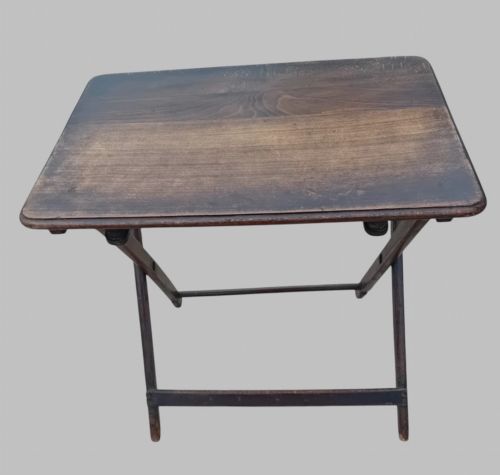

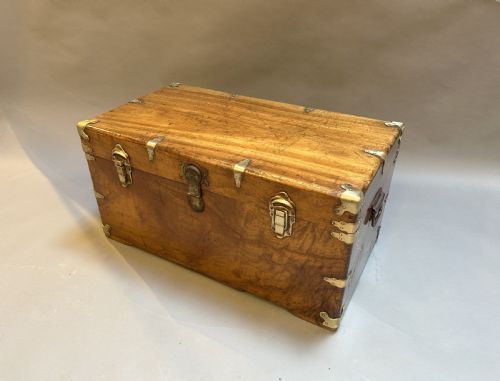
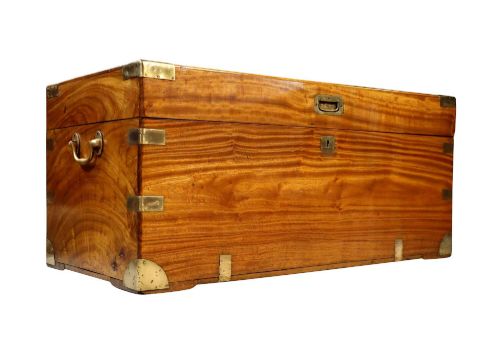
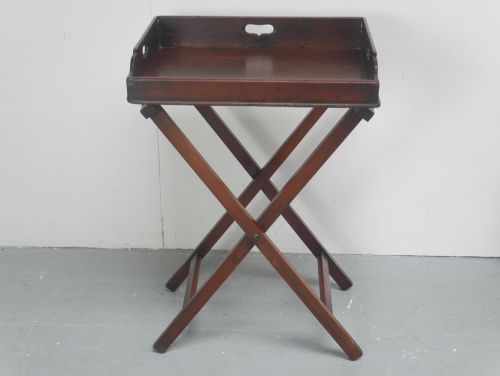
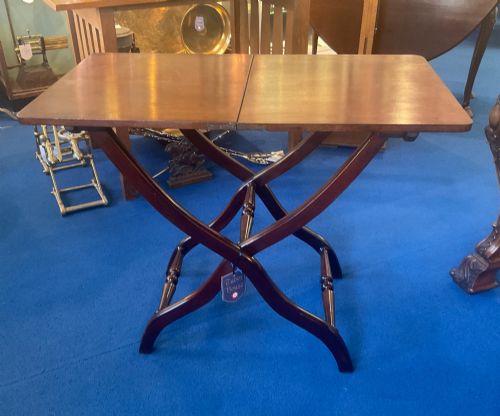
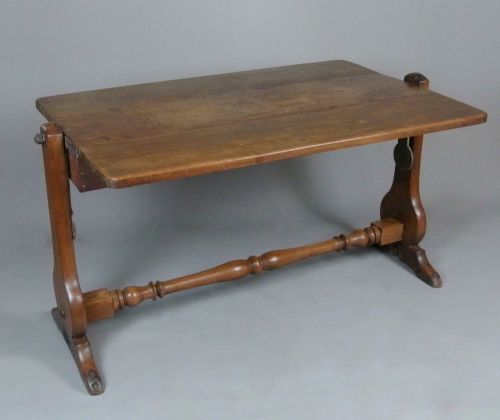
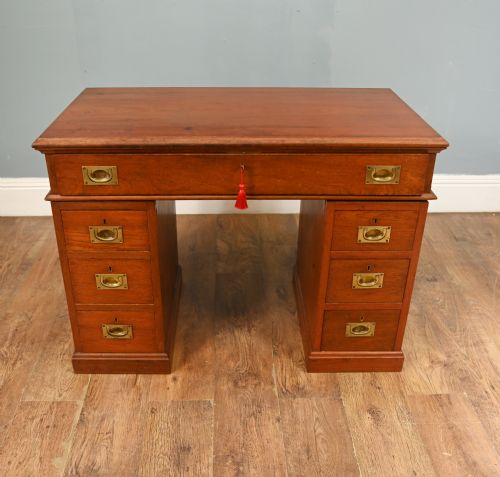
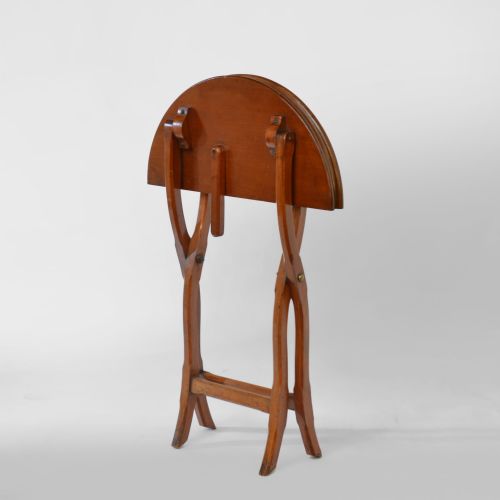
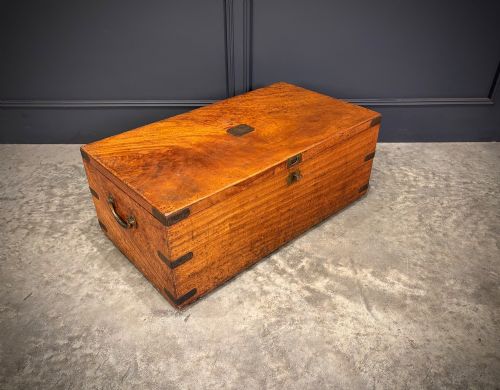


Brown Campaign Table
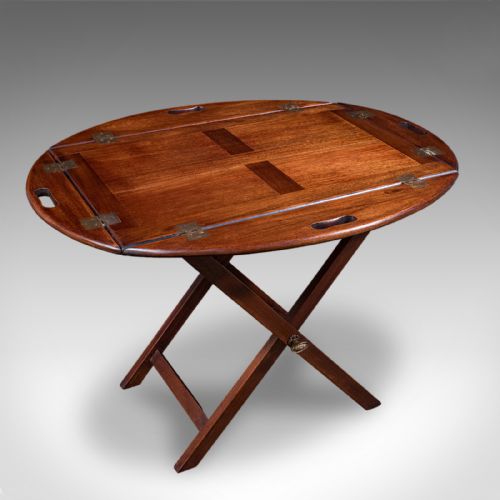
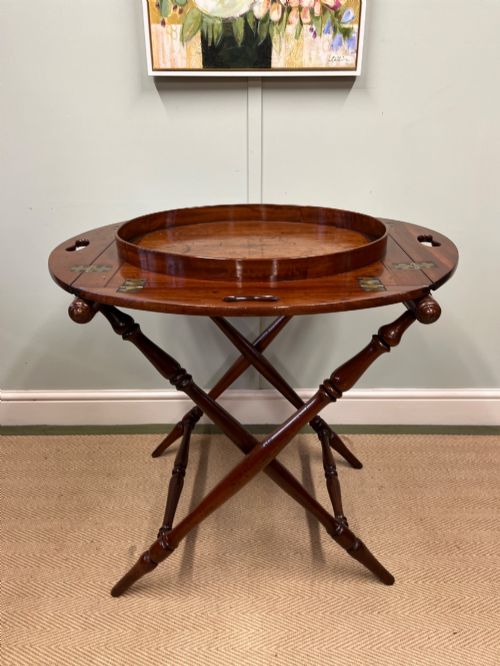
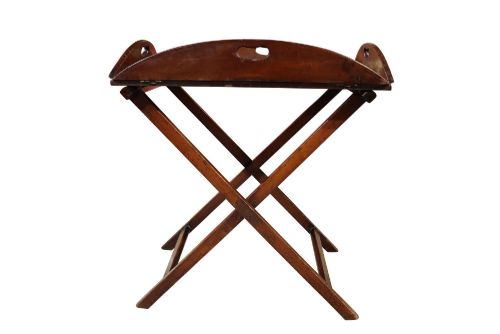
A brown campaign table packs down for travel and transport, offering sturdy timber surfaces and folding stands built for practical service.
Brown Campaign Table
A brown campaign table brings portable utility into domestic spaces, appearing as folding tray tables, coaching tables, and serving stands from the Georgian, Victorian, and Edwardian eras. Buyers search this phrase to find functional timber furniture designed originally for military movement and travel.
Mahogany forms the principal wood for these portable tables, often paired with folding wooden stands or configured as butler's trays. Trays lift off their supports easily, while folding frames collapse flat for storage.
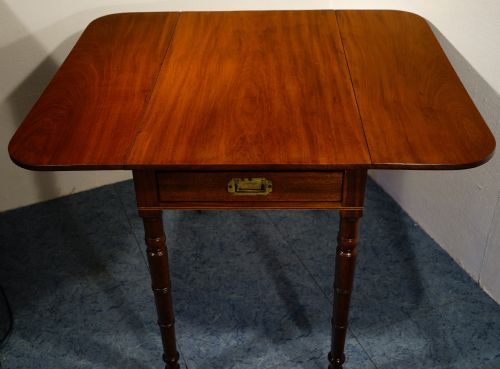
Examples on this page span the late eighteenth century through the early twentieth century, taking the form of occasional tables, coffee tables, and desks alongside traditional tray stands.
Materials and construction
Cabinet makers utilised dense hardwoods like mahogany, teak, oak, and camphor wood to withstand rigorous travel and shifting climates. These timbers provide both structural rigidity and rich dark grain patterns.
Brass fittings reinforce corners, edges, and hinges on these pieces, protecting vulnerable joints from impact during transit. Leather inserts and brass-bound edges appear on desks and writing surfaces.
Folding mechanisms rely on clever cross-frame hinges and drop-flap supports that lock securely when upright and fold completely flat when dismantled.
Listings feature pieces spanning from the Georgian period through the 1930s, constructed in mahogany, camphor wood, teak, and brass.
Quality variations in campaign furniture
The refinement of the brass hardware and the tightness of the joinery separate superior campaign pieces from standard utility items. High-quality examples feature flush-fitting brasses and well-executed dovetail joints that remain stable after repeated folding.
Timber selection dictates the visual weight of the piece, with figured mahogany and solid teak marking the upper end of the range compared to simpler beech or utilitarian pine frames.
The Brown Campaign Table Glossary
- Butler's tray
- A removable wooden tray with hinged or panelled sides designed to sit on a separate folding stand for serving food or drinks.
- Coaching table
- A portable folding table with an X-frame base used historically by travellers and officers on the move.
- Campaign style
- Furniture constructed with portability, folding elements, and protective brass hardware in mind for military service.
- Drop-flap
- A hinged table leaf that drops down when not in use to save space in compact quarters.
Brown Campaign Table: Frequently Asked Questions
What is a brown campaign table used for today?
These versatile tables function primarily as coffee tables, side tables, or serving stands in modern homes. Their folding nature makes them practical for flexible living spaces.
Many people use butler's tray configurations as low coffee tables or occasional surfaces where extra table space is occasionally required.
How do I fold a campaign table?
Most campaign tables feature removable trays that lift straight off their supporting wooden bases. The folding X-frame stands then collapse flat by pivoting on their central hinges.
Care should be taken to release any locking braces gently before attempting to fold the wooden support structure.
Which woods are common in campaign tables?
Mahogany is the predominant timber found in these portable furnishings, often complemented by teak, camphor wood, and walnut. These dense hardwoods resist warping during travel.
Some later or alternative folding frames utilise beech or oak for structural support.
How do I date a campaign table?
Dating relies on timber characteristics, brass mount styles, and construction methods associated with periods like the Georgian, Victorian, and Edwardian eras. Earlier pieces from the eighteenth century tend to feature solid teak or rich mahogany.
Later Edwardian and early twentieth-century examples often show lighter construction or revival styling.