

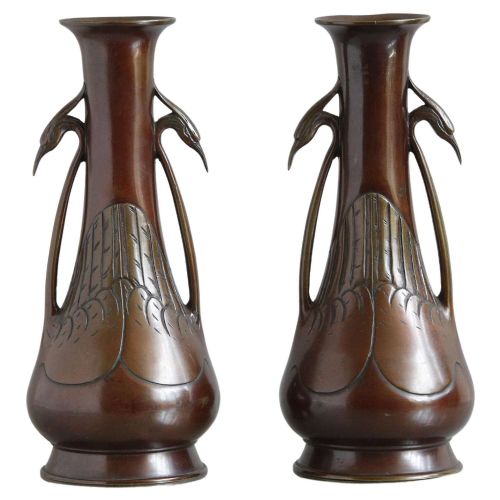


Brown Bronze Vase
These brown bronze vase examples span nineteenth-century France, Meiji Japan, and Qing China, offering rich patinas and classical or eastern forms.
Brown Bronze Vase
A brown bronze vase brings dark, metallic warmth to a room, drawing the eye with its deep patination and cast ornament. When you search for a brown bronze vase, you meet works shaped by nineteenth-century French makers, Japanese Meiji period artists, and earlier Chinese dynasties.
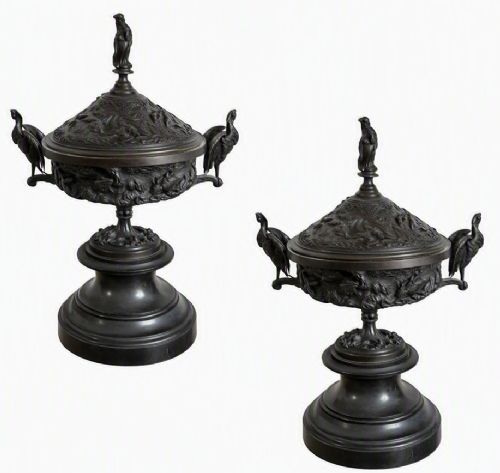
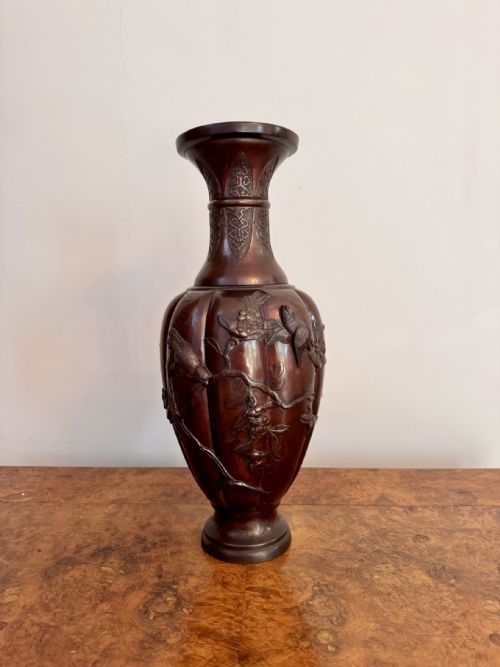
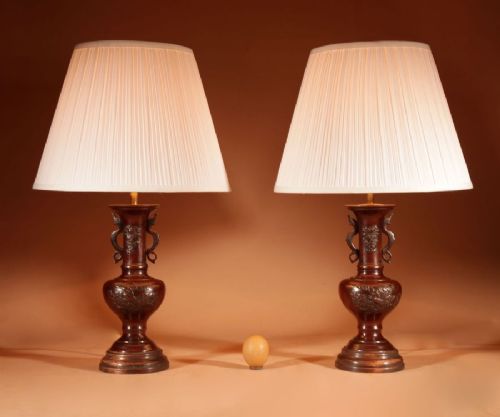
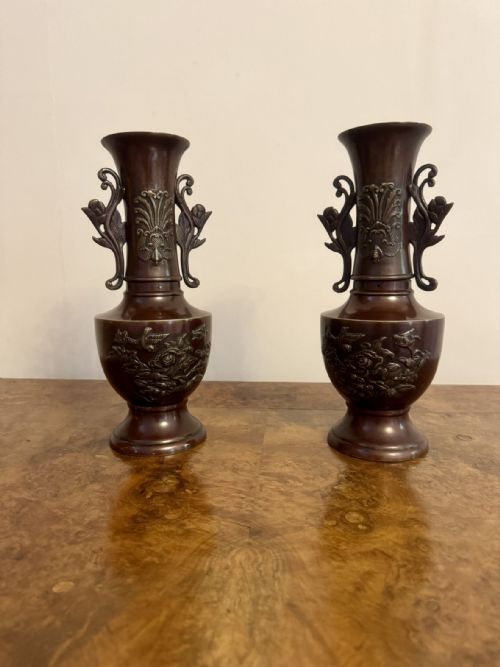
The objects take many forms, from campana urns and cassolettes to twin-handled vessels and altar vases. Japanese examples often feature birds, carp, or floral motifs, while European pieces lean towards French Neoclassical or Art Nouveau designs.
How they were made
Metalworkers used lost-wax casting or allied techniques to shape molten metal into complex vessels, sometimes incorporating mixed metals or enamel details. Artisans applied chemical patinas to achieve the rich brown surfaces seen across these objects, often highlighting relief decorations through careful polishing.
Makers occasionally combined bronze with brass, copper, or spelter, mounting heavy pieces on stone plinths or stepped bases. Cloisonné elements and inlaid wire sometimes enrich the metallic body, adding colour alongside the prevailing brown tones.
The listings include bronze, brass, enamel, copper, spelter, and mixed metal, spanning the nineteenth century, the Meiji period, and the Qing dynasty.
What varies in quality
The sharpness of the cast ornament and the depth of the patinated surface separate standard production from finer creations. Crisp detailing in feathers, scales, or floral relief indicates a skilled hand at the foundry or workshop.
Weight and balance also mark the difference between heavy, substantial altar vessels and lighter decorative pieces. Integrity in the metal finish without distracting modern repairs preserves the aesthetic weight of the object.
Jules Moigniez·Charles Korschann·Paul Dachsel
The Brown Bronze Vase Glossary
- Patinated Bronze
- Bronze treated with chemical solutions to produce a specific surface colour such as dark brown. This finish protects the metal and defines the visual character of the piece.
- Campana
- A bell-shaped vessel form popular in classical antiquity and revived during the Regency and nineteenth-century periods. These urns typically feature flared rims and footed bases.
- Meiji Period
- The era in Japanese history from 1868 to 1912 noted for exceptional metalwork exported to the West. Bronzes from this time frequently display detailed naturalistic motifs.
- Cassolette
- A decorative vessel shaped to serve either as a vase or a perfume burner with a pierced lid. French nineteenth-century makers frequently produced these in matching pairs.
- Gu Vase
- An archaic Chinese ritual bronze form characterised by a flared mouth and slender central section. Later nineteenth-century versions often emulate these ancient shapes.
Brown Bronze Vase: Frequently Asked Questions
How do I clean a brown bronze vase?
Dust the surface gently with a soft, dry cloth to protect the patinated finish from damage.
Avoid using water, chemical polishes, or abrasive cleaners that can strip away the historic brown colouring.
Where were most of these bronze vases made?
The listings show pieces originating primarily from Japan during the Meiji period, alongside nineteenth-century France and China.
European examples often reflect classical revival styles, while Asian pieces display traditional wildlife and floral iconography.
Can I use these vases for fresh flowers?
Most antique metal vessels were designed as decorative display objects rather than water-holding containers.
Using a hidden internal glass or plastic liner prevents moisture from harming the historic interior metal.
How do I date a nineteenth century bronze?
Examine the casting quality, the nature of the patina, and any signatures or workshop marks stamped into the base.
Stylistic cues such as Art Nouveau curves or Meiji period animal motifs also help narrow the production era.