
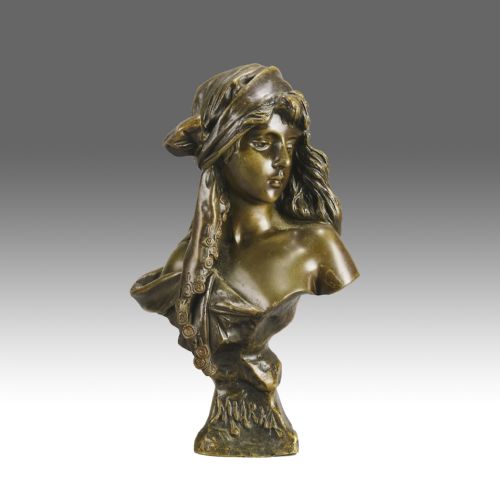





Brown Bronze Head
These brown bronze head sculptures and busts capture lifelike human subjects from the nineteenth and early twentieth centuries in solid metal.
Brown Bronze Head
A brown bronze head typically takes the form of a portrait bust or sculptural study depicting historical figures, literary characters, or anonymous sitters. These pieces capture individual likenesses through detailed facial expressions and period hairstyles.
The selections available range from French Art Nouveau studies by named sculptors to Edwardian and later representations in bronze, terracotta, and plaster. Buyers frequently encounter nineteenth-century French works alongside British and Italian examples.
Beyond standalone busts, the category includes functional objects and architectural hardware such as figural inkwells and door knockers. These items apply sculptural portraiture to everyday domestic accessories.
Materials and methods
Alternative materials such as plaster, terracotta, and cast iron appear alongside metal castings, often finished with paint or patination to emulate bronze. Marble bases frequently support the heavier metal and terracotta sculptures for stability and display.
The listings span the nineteenth century through the 1930s, incorporating bronze, terracotta, plaster, and cast iron materials.
Judging quality in these sculptures
The refinement of the casting and the crispness of the chiselling separate superior portrait studies from standard production pieces. Master sculptors achieved subtle shifts in expression and texture that lesser workshops missed.
The depth and uniformity of the bronze patination, combined with the integration of supporting elements like marble socles, determine the visual success of the piece.
Emmanuel Villanis·Giuseppe Moretti·Alajos Strobl·Adolphe Jean Lavergne·Leonhard Posch·Eutrope Bouret·Ernest Louis Adnin
The Brown Bronze Head Glossary
- Bust
- A sculpted or cast representation of a person from the chest up. This format focuses attention entirely on the facial expression and shoulders.
- Patination
- The surface treatment or colour applied to metal through chemical means or natural ageing. It produces the warm brown tones characteristic of these works.
- Socle
- A short plinth or pedestal supporting a bust. It elevates the sculpture and provides a stable visual base.
- Terracotta
- Fired clay used for sculptural modelling before or instead of metal casting. It offers a warm earthen texture distinct from bronze.
Brown Bronze Head: Frequently Asked Questions
How do I clean a bronze bust?
Dust the surface gently with a soft, dry brush to prevent dirt accumulation.
Avoid using abrasive cleaning agents or harsh chemicals that can strip the original patination.
Are all these pieces solid bronze?
The selection includes works cast in bronze alongside examples modelled in terracotta, plaster, and cast iron.
Each listing specifies the primary medium used to create the sculpture.
What is a patinated bronze head?
Patination is a chemical or thermal treatment applied to the metal surface to alter its colour.
This process creates the rich brown and dark finishes seen on nineteenth-century portrait pieces.
How do I date an antique bust?
Dating relies on stylistic markers such as Art Nouveau curves, clothing details, and recorded foundry marks.
Material choices like terracotta or patinated plaster also point to specific nineteenth and early twentieth-century periods.