
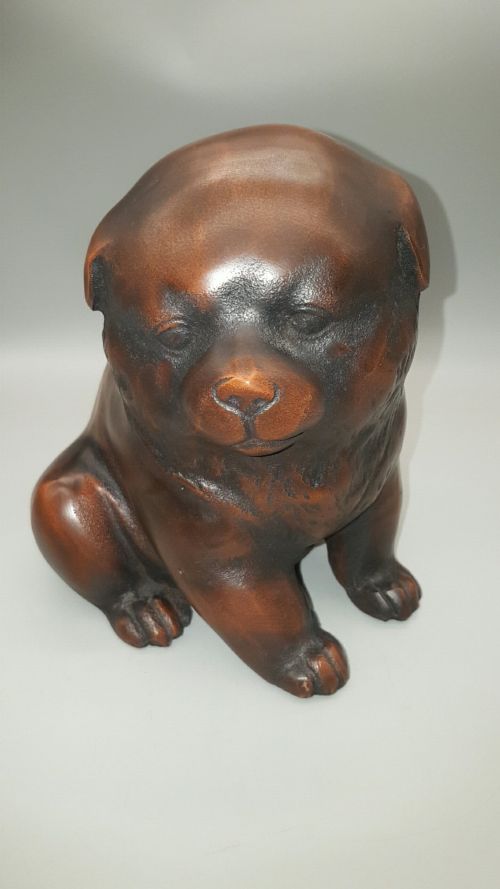
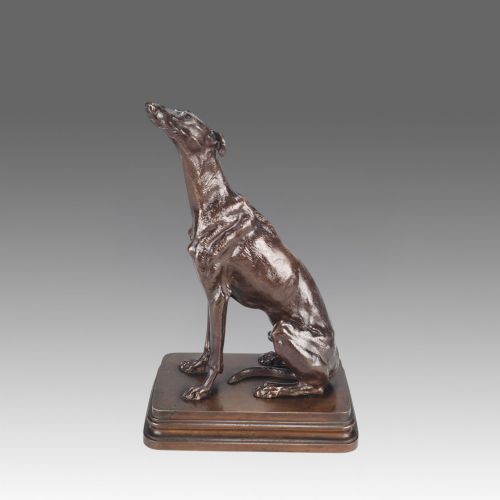
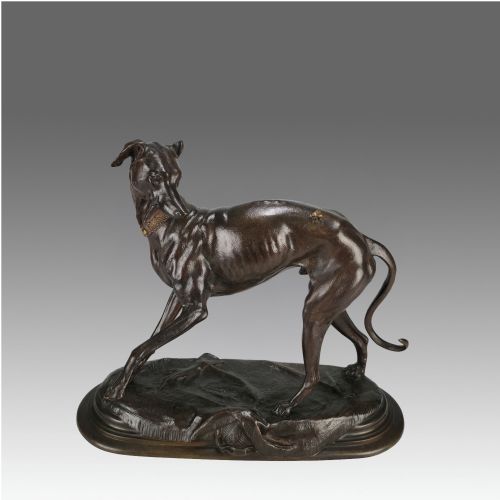
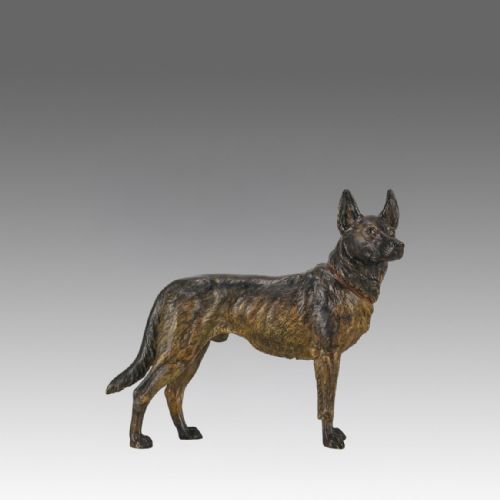
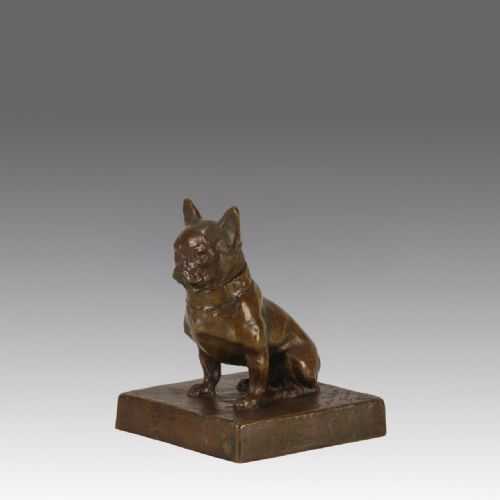
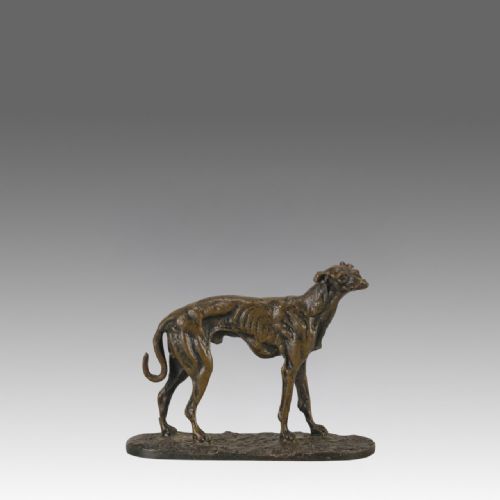

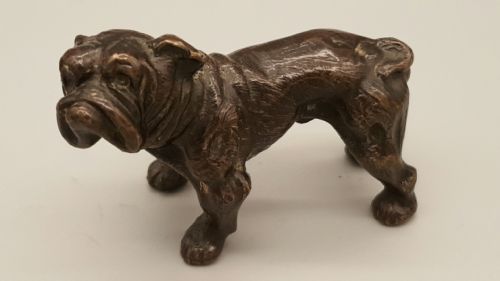


Brown Bronze Dog Figurine
A brown bronze dog figurine brings character and form to a mantelpiece, capturing hunting hounds and family pets in durable metal.
Brown Bronze Dog Figurine
A brown bronze dog figurine represents canine subjects cast in metal, appearing in forms ranging from small desk ornaments to larger sculptures and statues. These works frequently depict specific breeds such as greyhounds, setters, poodles, and terriers in seated, standing, or resting positions.
The selections span the nineteenth century through the early twentieth century, taking in Victorian and Art Deco design aesthetics. European workshops, notably French and Austrian foundries, produced many of these pieces alongside Japanese examples.
Buyers encounter sculptures mounted on marble bases, functional dishes, and car mascots alongside traditional free-standing figures. The material palette extends beyond solid bronze to include cold-painted surfaces and bronzed plaster.
Materials and Construction
Foundries utilised traditional casting methods to shape molten bronze into detailed animal forms, finishing the metal with patinas to achieve deep brown tones. Cold-painted bronze pieces received layers of polychrome paint over the metal surface by hand, a technique favoured by Viennese makers.
Alternative compositions include cast iron and bronzed plaster, which provided weight and form for decorative figures and larger statues. Integrated marble bases appeared on desk studies and cabinet sculptures to ground the heavy metal forms.
One exceptional racing scene pits a mischievous monkey against a determined greyhound in miniature bronze.
Evaluating Quality and Detail
The preservation of original cold-painted surfaces or rich patinas influences the desirability of a piece. Well-preserved patinas and intact polychrome pigments reflect careful handling over decades.
Alfred Dubucand·Alfred Barye·Franz Bergman·P J Mêne·Jules Moigniez·Edith Parsons·Antoine Louis Barye·Louis Riche·Alexandre Kelety
The Brown Bronze Dog Figurine Glossary
- Animalier
- A nineteenth-century artistic movement focused on the realistic depiction of animals. Sculptors in this tradition studied anatomy closely to capture creatures in motion or repose.
- Cold-Painted Bronze
- Bronze objects painted with polychrome pigments that were applied without high-temperature firing. This technique was widely utilised by Austrian workshops to create vivid, lifelike animal figures.
- Patina
- A thin layer that naturally or artificially forms on the surface of bronze through oxidation and chemical treatment. It creates the characteristic brown tones seen on historical metalwork.
- Okimono
- A Japanese decorative object intended for display on a shelf or in a tokonoma alcove. These sculptures often depict animals and figures with high attention to natural detail.
- Car Mascot
- An ornamental figurine mounted on the radiator cap of an automobile during the early twentieth century. These sturdy bronze pieces allowed motorists to display favoured dog breeds on the road.
Brown Bronze Dog Figurine: Frequently Asked Questions
What is an animalier bronze dog?
An animalier bronze dog is a nineteenth-century sculpture created by an artist specialising in realistic animal studies. These pieces capture the natural anatomy and characteristic poses of various dog breeds.
Foundries cast these works in bronze, often applying rich brown patinas to highlight the muscular form and fur texture of the animal.
Where were these dog figures displayed?
Historical dog figurines served as decorative ornaments on desks, mantelpieces, and library tables. Some pieces functioned as sculptural dishes or automobile mascots.
Heavier statues were placed on marble bases or integrated into fireside furniture to anchor the heavy metal composition.
How do I care for an antique bronze figurine?
Antique bronze requires gentle dusting with a soft, dry cloth to prevent the accumulation of dirt in the recesses of the casting. Avoid using chemical cleaners or abrasive polishes that can strip the original patina.
Maintaining a stable indoor humidity protects both the metal surface and any associated marble bases or painted details.