


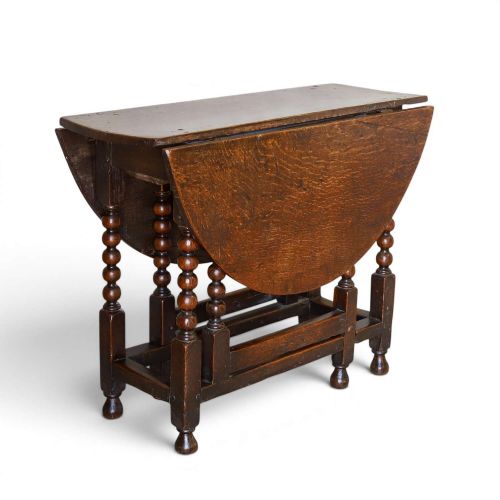
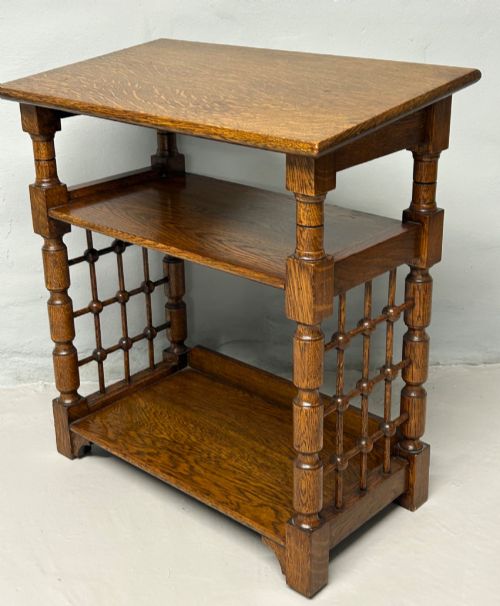
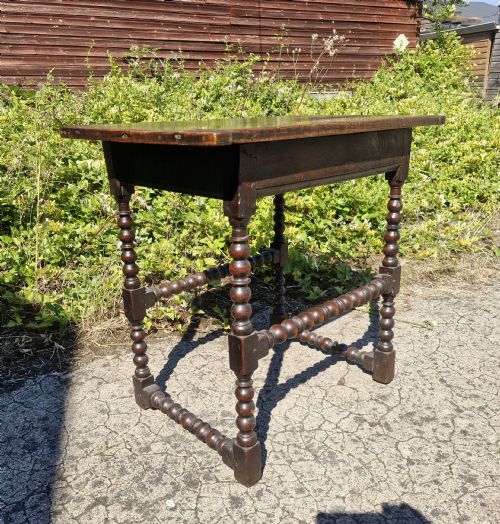
Brown Bobbin Table
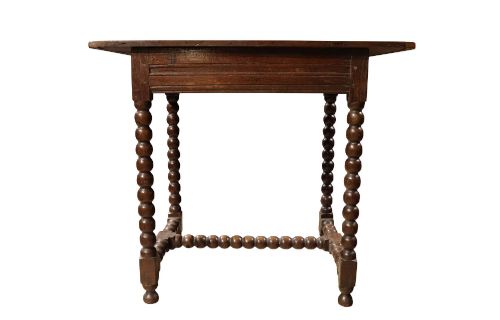
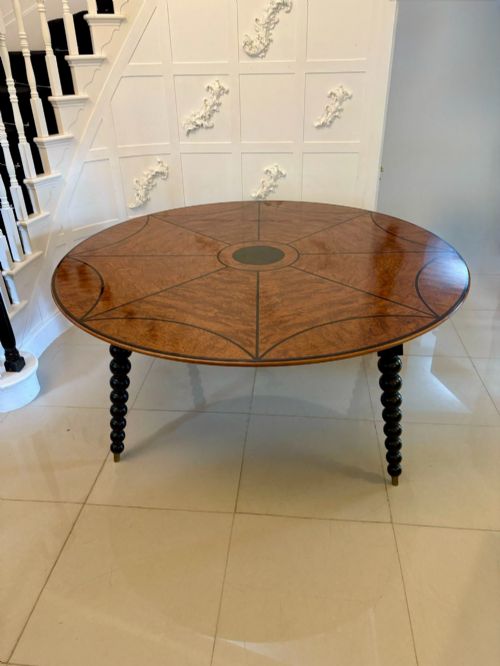
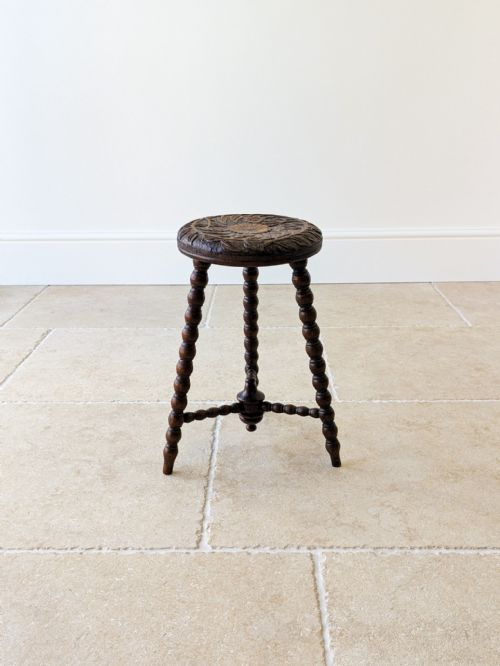
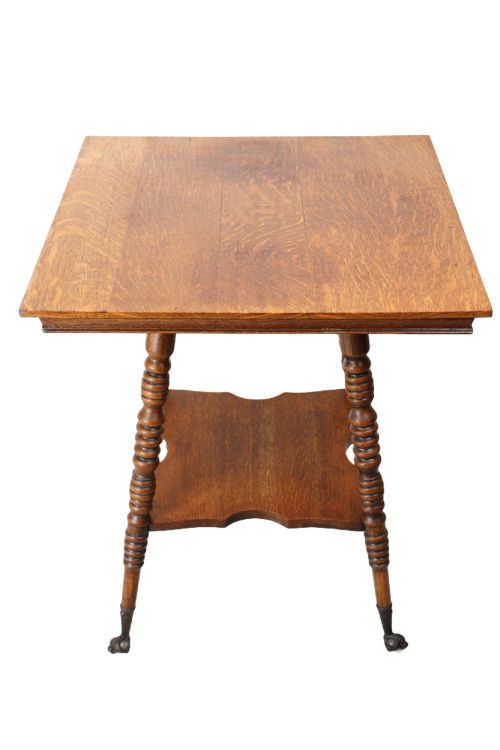
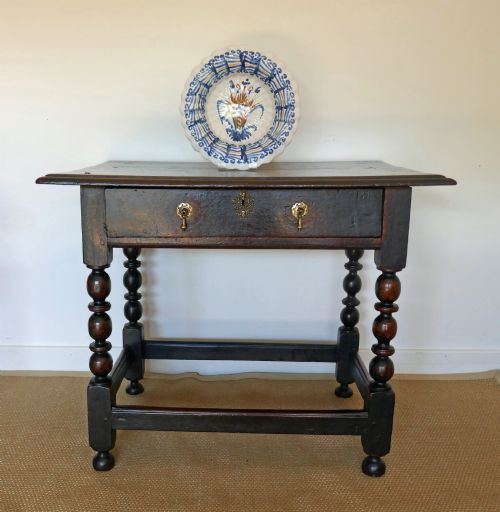
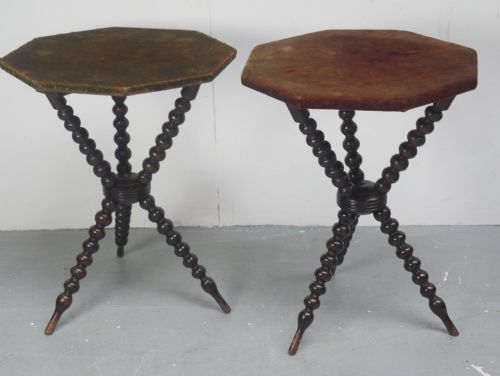
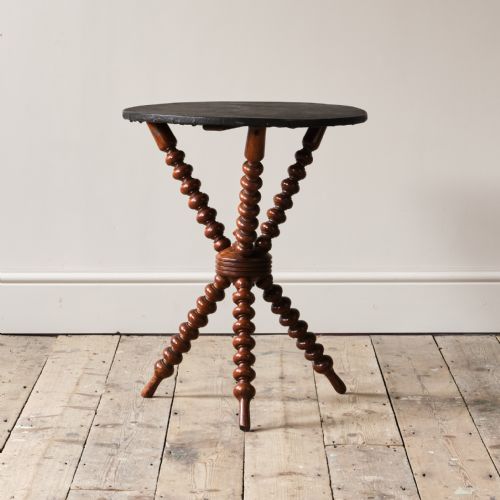
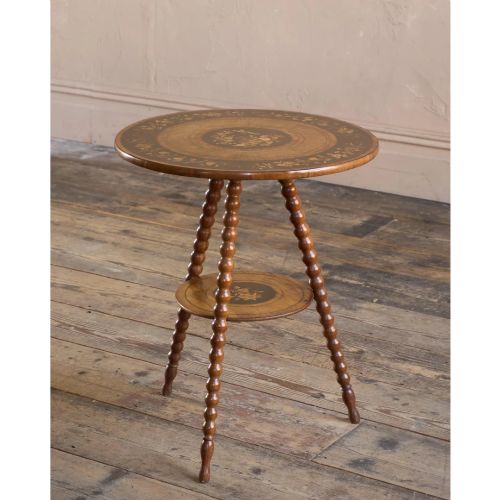
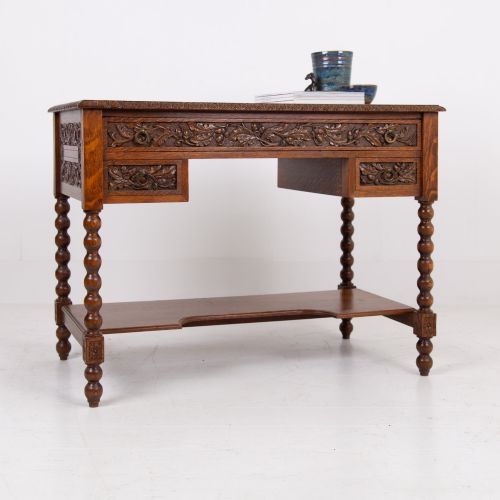
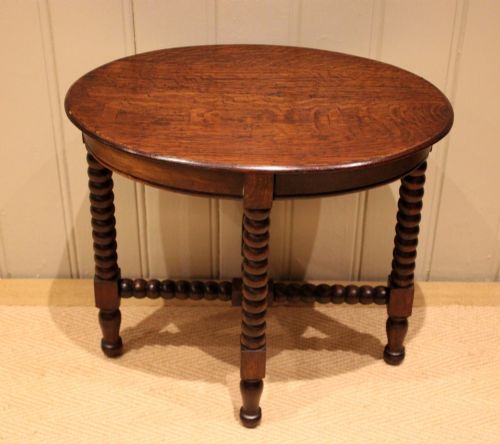
A brown bobbin table brings seventeenth-century character into a modern room through distinctive spool-turned legs.
Brown Bobbin Table
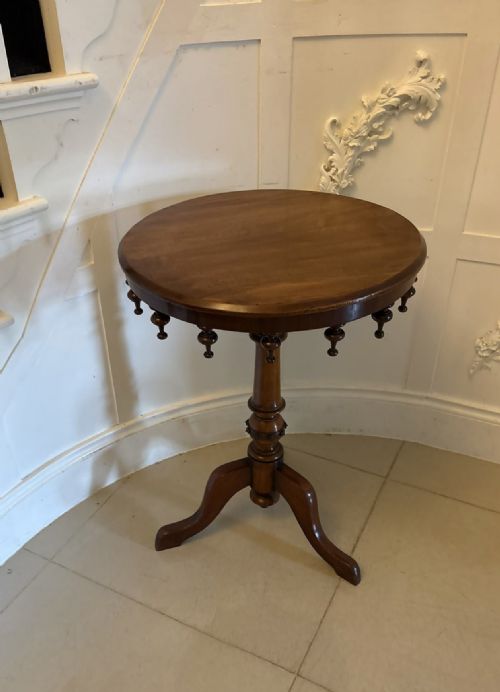
A brown bobbin table is fundamentally a wooden stand defined by turned uprights resembling reels or spools of thread. The pieces gathered here span centuries of British and continental joinery, moving from seventeenth-century originals through nineteenth-century revivals.
The form appears most frequently as a compact side table, lamp table, or gateleg dining table. Oak is the dominant timber, though walnut and elm also ground the selection.
Buyers look for these items to introduce rich surface texture and historical weight into domestic spaces. The turned profile creates rhythm and shadow beneath the tabletop, offering visual interest without heavy mass.
How they were made
Makers fashioned the characteristic spool legs on a pole lathe, turning solid timber into repeated convex rounds. This labor-intensive process required precise hand chisel work to maintain uniform rhythm down the length of each leg.
Frames typically rely on traditional mortise and tenon joinery to anchor the turned components into the top structure. Timbers like native oak and walnut provided the structural density needed to support daily use while taking a dark, polished finish.
Brown Bobbin Table Retail Price Guide 2026
Typical asking prices for brown bobbin table among the pieces listed under this phrase on Sellingantiques today, from the lower quarter to the upper quarter. They describe what is for sale here now, not the wider market.
Listings span periods from the seventeenth century through the 1920s, featuring oak, walnut, elm, and mahogany alongside styles like Jacobean Revival and Arts & Crafts.
What varies in quality
Quality rests primarily in the crispness of the turnings and the selection of the timber. Sharply defined spools with clean collar details show the hand of a skilled turner, whereas softened or worn profiles suggest heavy wear or lower initial execution.
The integrity of the frame construction dictates longevity. Tables that retain tight joints without excessive timber shrinkage or crude later repairs hold their structural honesty and visual balance much better over time.
The Brown Bobbin Table Glossary
- Bobbin turning
- A form of woodturning consisting of a series of cylindrical or spherical projections resembling spools on a string. It creates strong decorative texture on table legs and stretchers.
- Gateleg table
- A drop-leaf table featuring hinged flaps supported by swing-out legs that pivot like a gate. This design allows the surface to expand for dining or fold down for compact placement.
- Side table
- A small functional table designed to sit against a wall or beside seating. These pieces often feature a single drawer and serve as lamp or display surfaces.
- Refectory table
- A long dining table historically used in communal halls. Examples combining elm and oak appear within these historical periods.
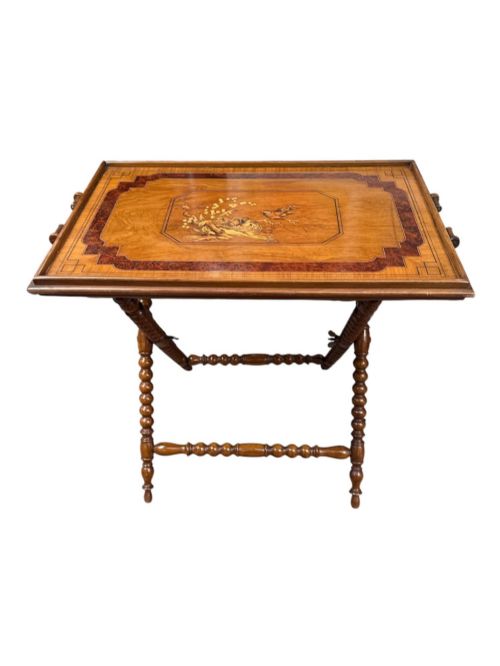
- Marquetry
- The art of applying fitted pieces of veneer to a structure to form decorative patterns. Sorrento examples utilise this technique for pictorial tabletop surfaces.
Brown Bobbin Table: Frequently Asked Questions
How do I use a brown bobbin table at home?
These pieces fit easily beside armchairs as lamp tables or against hallway walls as console surfaces. Their compact footprints allow them to add historical texture without crowding smaller rooms.
Larger gateleg versions serve well as occasional dining tables that fold down when floor space is needed.
How do I distinguish seventeenth-century pieces from later revivals?
Early pieces display authentic hand-tool marks, pegged joints, and timber patination developed over centuries of handling. Elm and native oak used in seventeenth-century joinery age with distinct surface shrinkage.
Nineteenth-century revival pieces often show machine-sawn elements and uniform finishes applied during periods of historical interest in earlier styles.
What timbers were used for these tables?
Oak is the primary wood found across these listings, valued for its durability and deep grain. Walnut and fruitwood also appear, particularly in pieces requiring finer turning detail.
Some later nineteenth-century examples incorporate mahogany or elm, reflecting the regional wood choices available to the maker.
Are these tables sturdy enough for daily use?
Solid hardwood construction ensures these tables handle standard domestic tasks reliably. The turned legs are structurally sound when the underlying frame joints remain tight.
Placing them away from extreme heat sources keeps the timber stable and prevents joint movement over years of service.