

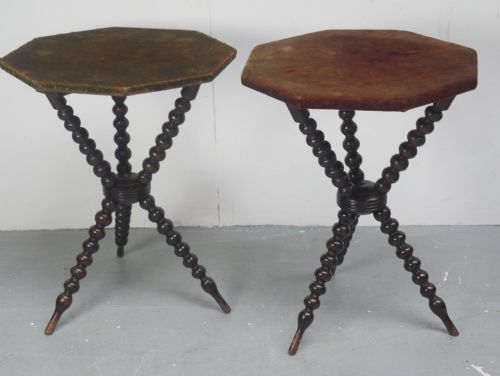


Velvet Top Side Table
These velvet top side table pieces bring tactile warmth and period character to a room, offering compact display surfaces shaped by Victorian, Edwardian and later hands.
Velvet Top Side Table
A velvet top side table brings together small-scale occasional furniture and soft textile surfaces, taking forms such as gypsy tables, kidney tables, and display cabinets. Buyers searching this phrase will find compact occasional tables designed for corners, parlours, and drawing rooms.
The versions most commonly met on this page span the Victorian and Edwardian eras, alongside later commercial pieces from the nineteen-thirties and nineteen-twenties. These objects function as side tables, display tables, and bijouterie cabinets, offering surfaces or glazed compartments for small ornaments.
Makers and workshops across Britain and France produced these pieces using diverse stylistic influences, including the Aesthetic Movement and French revival designs. Surviving examples range from simple turned-leg tables to elaborate brass-inlaid cabinets.
How they were made
Cabinet makers utilised woods such as mahogany, ebonised hardwoods, and giltwood to construct the frames and chassis of these tables. Structural elements frequently incorporate turned wooden components like bobbin turnings, alongside glazed panels for cabinet variants.
The defining textile element relies on velvet upholstered tops, occasionally finished with fringing, tassels, or decorative braid. Metalwork details in brass add structural and decorative accents to tabletops and cabinet edges.
Velvet Top Side Table Retail Price Guide 2026
Typical asking prices for velvet top side table among the pieces listed under this phrase on Sellingantiques today, from the lower quarter to the upper quarter. They describe what is for sale here now, not the wider market.
The listings here include materials such as ceramic, glass, and brass alongside traditional hardwood and velvet.
What varies in quality
The distinction between standard commercial output and finer examples rests on the choice of timber and the precision of joinery. Heavier hardwoods and refined cabinetmaking elevate an occasional table above simple utility.
Decorative embellishments also dictate the character of the piece, from basic turned frames to sophisticated brass inlay and specialised ebonised finishes. The integration of textile tops with the wooden frame demonstrates the maker's attention to detail.
John Taylor Edinburgh
The Velvet Top Side Table Glossary
- Gypsy table
- A lightweight occasional table featuring three turned or bamboo-style wooden legs, traditionally draped with a fabric top.
- Bijouterie table
- A display table featuring a glass-topped compartment designed for showcasing small valuable objects and curiosities.
- Aesthetic Movement
- A late nineteenth-century design style that emphasised visual beauty and artistic reform over heavy historicism.
- Ebonised
- Wood finished with a dark stain or paint to imitate expensive ebony.
- Bobbin turning
- A form of wood turning characterised by a series of rounded spheres resembling bobbins on a thread.
Velvet Top Side Table: Frequently Asked Questions
What is a velvet top side table used for?
These tables served primarily as occasional surfaces in nineteenth and early twentieth-century parlours and drawing rooms. They held small decorative objects, writing materials, or served as display pieces.
Today, they function well as compact bedside tables, hallway surfaces, or accent pieces in sitting rooms where a soft textile texture is desired.
How do I identify a Victorian velvet table?
Victorian examples often rely on dense timbers like mahogany or ebonised hardwood, sometimes featuring turned legs or bobbin details. Stylistic markers include Aesthetic Movement influences and traditional upholstery methods.
Examining the construction methods underneath the velvet top and checking the timber age helps confirm the nineteenth-century period.
What is a bijouterie table?
A bijouterie table is a specialised display table featuring a glazed compartment built into the top. It allowed collectors to exhibit small treasures such as medals, coins, and jewellery.
These pieces combine cabinetmaking with display furniture, appearing in Edwardian and late nineteenth-century forms.
How should I care for vintage velvet?
Vintage velvet requires gentle handling to protect the pile from crushing and dust accumulation. Regular light brushing with a soft brush helps maintain the nap.
Keep these tables away from direct sunlight to prevent fading of the textile top and drying out of the underlying timber.