





Victorian Bobbin Turned Stands
Victorian bobbin turned stands bring inventive nineteenth-century spindle work into a room to hold lamps, plants or books with genuine character.
Victorian Bobbin Turned Stands
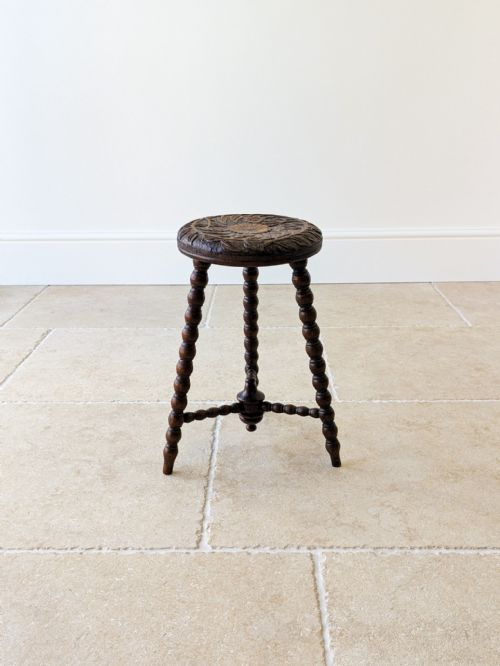
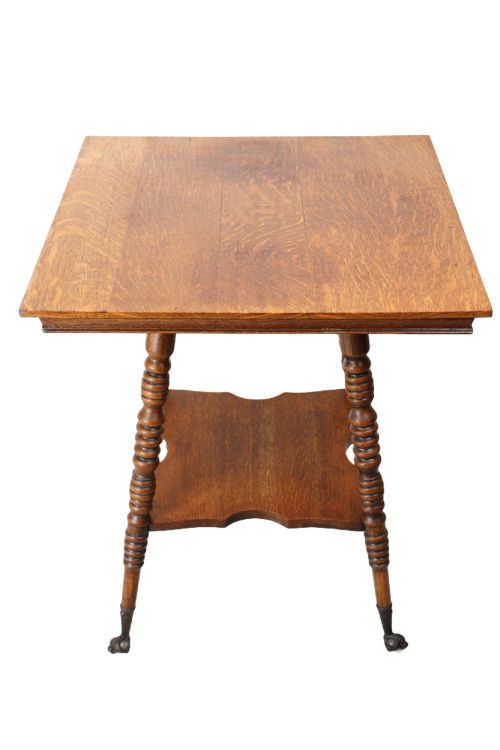
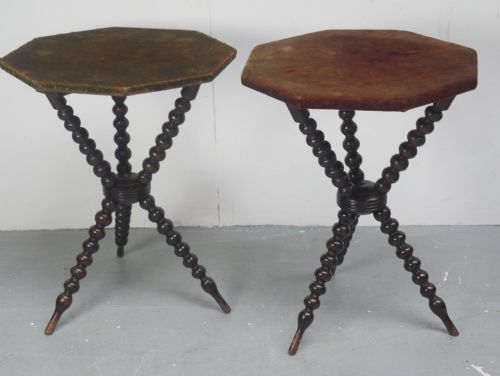
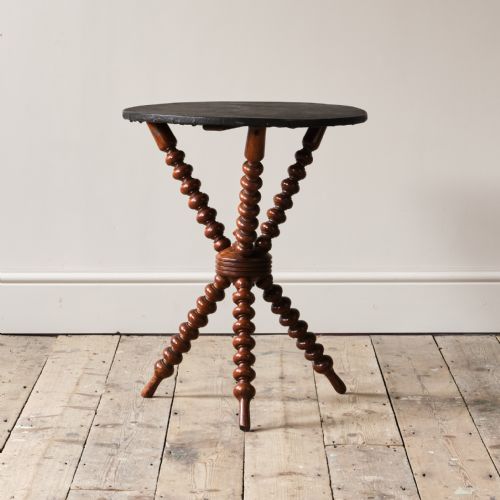
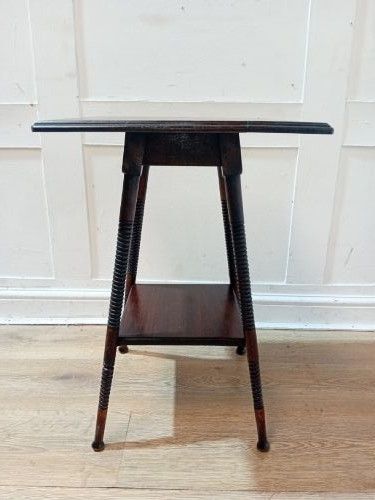
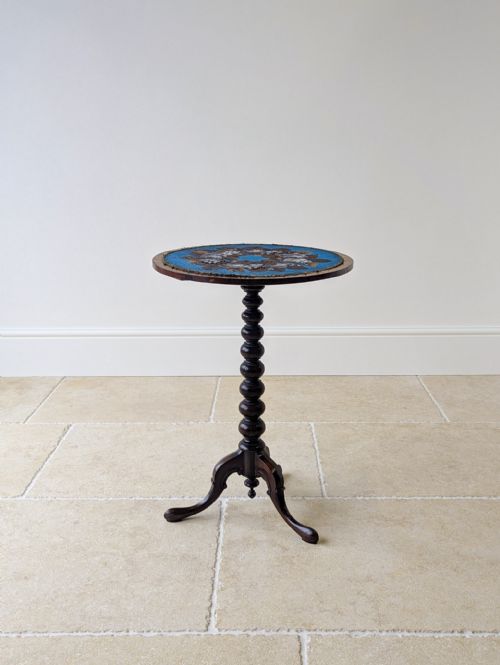
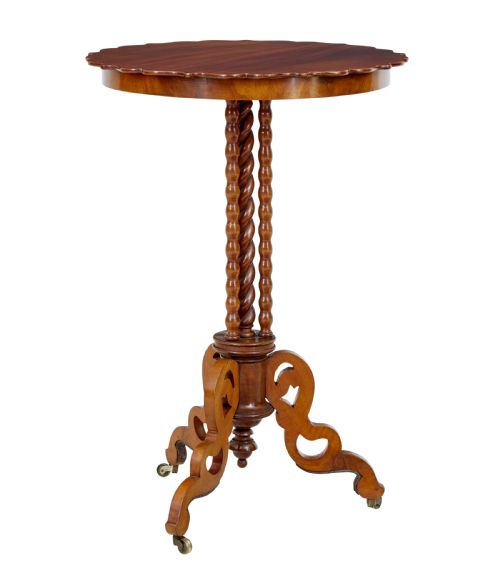
Victorian bobbin turned stands encompass small tables and occasional pieces constructed with distinctive rounded turnings resembling spools of thread. These pieces appear in forms such as side tables, console tables, and lamp tables, reflecting the domestic utility of the nineteenth century.
The selection on this page demonstrates how makers applied bobbin turning across various styles including the Aesthetic Movement and Arts and Crafts. Walnut, oak, and ebonised wood dominate the current group, bringing rich dark tones and tactile surfaces to domestic interiors.
Materials and construction
Makers shaped dense hardwoods such as oak, mahogany, and walnut on a lathe to create the repetitive rounded segments that define bobbin turning. Ebonised finishes were frequently applied to mimic more costly exotic timbers, providing a uniform dark surface suited to Aesthetic Movement interiors.
Joinery combined traditional pegged or dowel construction with precise turning to ensure stability in relatively slender frames. Tops ranged from simple timber boards to hand-painted surfaces and inset marble slabs, balanced on tripod or four-legged bases.
Victorian Bobbin Turned Stands Retail Price Guide 2026
Typical asking prices for victorian bobbin turned stands among the pieces listed under this phrase on Sellingantiques today, from the lower quarter to the upper quarter. They describe what is for sale here now, not the wider market.
One walnut wool winder stand includes an adjustable yarn swift, proving that nineteenth-century domestic utility could be delightfully complex.
Judging quality
Quality rests upon the crispness of the lathe work and the uniformity of the individual turned bobbins across each leg. Sharply defined collars and smooth, even spacing indicate superior craftsmanship compared to soft or hastily finished turnings.
Timber selection and the integrity of the joinery dictate the longevity of these slender tables. Dense hardwoods with rich natural grain or even ebonising display greater durability and finish retention than softer substitute woods.
William Birch·Liberty of London
The Victorian Bobbin Turned Stands Glossary
- Bobbin turning
- A form of lathe turning that produces a series of rounded, spool-like shapes along the length of a wooden spindle. This decorative technique became particularly popular during the Victorian era for furniture legs and stretchers.
- Ebonisation
- The process of treating timber, often fruitwood or beech, with chemical stains or dark paint to imitate expensive ebony. It is frequently seen on nineteenth-century Aesthetic Movement pieces.
- Occasional table
- A small, lightweight table designed to be moved easily and used for specific, temporary purposes such as holding a lamp or books. These tables appear in various forms throughout the nineteenth-century listings.
- Tripod base
- A three-legged support structure commonly found on nineteenth-century wine tables and gipsy tables. This configuration ensures stability on uneven floor surfaces without requiring a heavy frame.
Victorian Bobbin Turned Stands: Frequently Asked Questions
What were bobbin turned stands used for?
These small tables served practical functions in nineteenth-century homes as lamp tables, plant stands, or occasional surfaces for books and tea.
Their lightweight construction allowed them to be easily repositioned around a drawing room or parlour as daily needs required.
How do I identify a bobbin turned stand?
Look for legs and stretchers shaped on a lathe to resemble a succession of wooden bobbins or spools stacked end to end.
This distinct repetitive silhouette distinguishes them from straight-legged or reeded furniture of the same period.
What woods were used for these stands?
Makers utilised a variety of hardwoods including oak, walnut, and mahogany, alongside softer woods finished with an ebonised coating.
The choice of timber often aligned with the prevailing style, such as dark oak for Arts and Crafts pieces or ebonised finishes for Aesthetic Movement stands.
How do these stands fit into modern interiors?
Their compact scale makes them useful as bedside tables, plant pedestals, or small lamp surfaces in smaller rooms.
The dark turned wood provides a strong textural contrast against plain walls and contemporary furnishings.