



Brown Art Deco Statues
Brown art deco statues capture the stylised elegance and dynamism of the interwar period, offering buyers striking figurative bronze, wood and ceramic pieces.
Brown Art Deco Statues
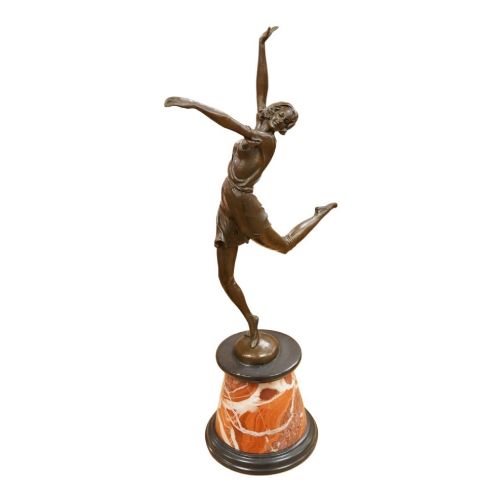
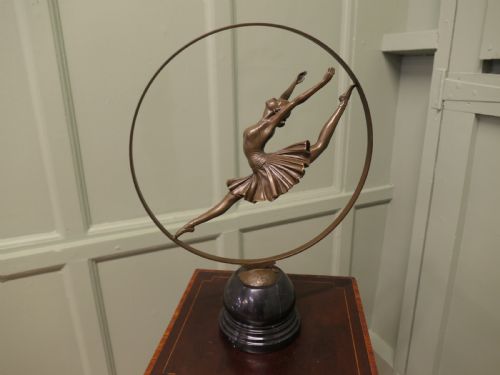
When searching for brown art deco statues, buyers encounter a diverse selection of sculptural objects spanning the 1920s, 1930s, and occasionally the Edwardian era. The forms range from stylised dancers and animal figures to busts and bookends, reflecting the international scope of the style.
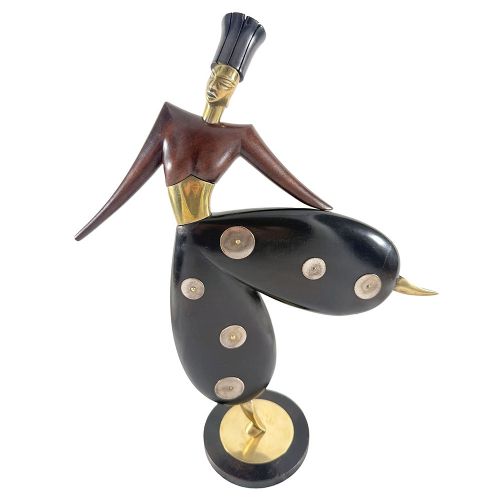
The objects listed show strong French and European modern influence, alongside Balinese and Indonesian subjects such as the Janger dancer. Common configurations pair bronze, carved wood, or painted finishes with marble and onyx bases.
How they were made
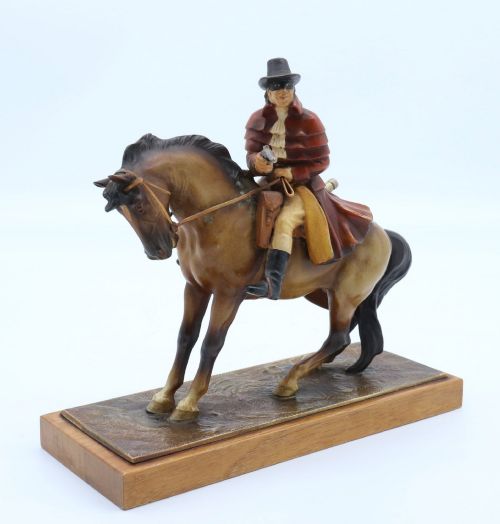
The manufacturing techniques rely heavily on metal casting, wood carving, and ceramic production as recorded in the evidence. Bronze and spelter figures are cast and patinated, while other pieces utilise hand-painted finishes on wood, porcelain, and plaster.
Many works combine contrasting media to achieve the characteristic aesthetic of the period. Sculptures frequently mount metal or wooden figures onto solid marble and onyx bases, occasionally incorporating brass details.
Materials documented across the pieces include bronze, marble, wood, paint, brass, porcelain, glaze, and plaster.
What varies in quality
Quality in these pieces is dictated by the crispness of the casting or carving and the fidelity of the sculptural detail. Works attributed to named sculptors or established foundries generally demonstrate superior execution in anatomy, expression, and surface patination.
The selection of base materials also distinguishes the range. Heavy, finely veined marble and onyx plinths paired with well-proportioned patinated bronze or expertly carved timber elevate a piece above simpler spelter or plaster iterations.
Aurore Onu Cymbal Dance·Sier Kunst·Eugene Emile Borga·Aristide Maillol·Maurice Guiraud Riviere·Laszlo Hoenig·Alexandre Kelety·Marion Willis Stanfield·Albert Hussmann·Pierre le Faguays·I. Rochard
The Brown Art Deco Statues Glossary
- Patination
- The surface treatment or colour applied to metal and wood sculptures, often achieved chemically or through hand-painting to enhance depth.
- Spelter
- A zinc alloy commonly used as a cost-effective alternative to bronze in decorative figures, usually given a dark patinated finish.
- Stylised
- A design approach that simplifies natural forms into geometric or streamlined shapes characteristic of the period.
- Plinth
- The solid base, often marble or onyx, upon which a sculpture or figurine is mounted for stability and display.
Brown Art Deco Statues: Frequently Asked Questions
What materials are used in these statues?
The pieces utilise a range of materials including bronze, spelter, carved wood, porcelain, plaster, and paint. Many figures incorporate brass accents and rest upon solid marble or onyx bases.
These varied substances define the tactile qualities of the objects, balancing heavy stone foundations with delicately patinated metal or painted surfaces.
How do I identify a 1920s or 1930s piece?
Dating relies on stylistic markers such as streamlined geometry, stylised postures, and specific subject matter like flappers, dancers, and sleek animals. Signatures, foundry marks, and material combinations also help establish the era.
Items from this timeframe frequently display the distinctive modernism associated with French and European sculpture of the interwar decades.
Where should I display a heavy marble base sculpture?
Due to the substantial weight of marble and onyx bases combined with bronze or wood figures, these objects require a sturdy, level surface. A dedicated console table or shelf ensures stability.
Positioning the pieces away from direct sunlight helps preserve the patination on the metal and the painted finishes on wood and plaster.
Are these figures signed by the artists?
Certain sculptures feature artist signatures inscribed directly into the bronze, metal, or wood, while others are attributed to specific workshops or makers based on design characteristics. Foundries and studios sometimes applied distinct marks.
Unsigned works still reflect the broader aesthetic movements of the period, relying on craftsmanship and material quality rather than a signature.