
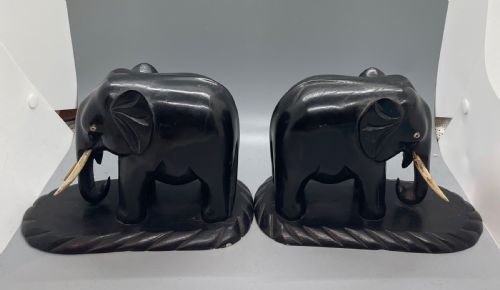
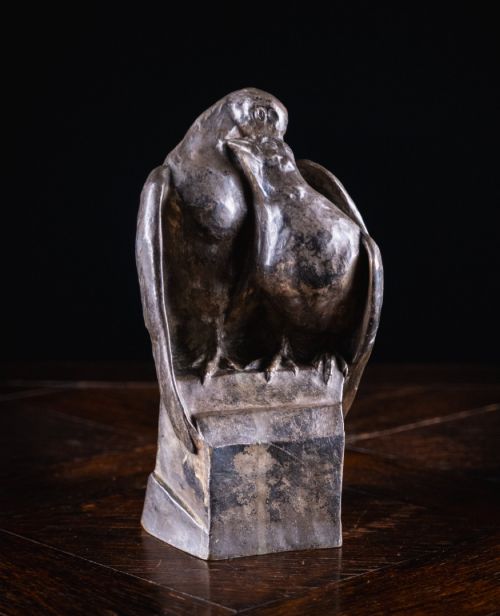
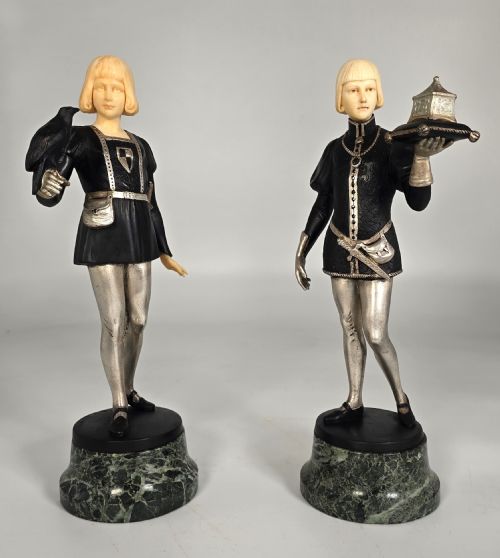


Pair of Art Deco Statues
These pair of art deco statues bring striking geometry and animal forms into a room, offering the bold decorative lines collectors want.
Pair of Art Deco Statues
A pair of art deco statues encompasses matched sets of sculptures, bookends, and figurative groups designed in twentieth-century modernist and classical idioms. Buyers hunting for these pieces frequently encounter animal subjects, human dancers, and architectural figures produced during the interwar decades.
The selections span materials from cold-painted metals to carved stone, reflecting the diverse output of European workshops during the period. Most examples take the form of functional bookends or twin display sculptures intended for mantelpieces and sideboards.
Production and Materials
Foundry casting methods shape the metal pieces in bronze, nickel bronze, and silvered bronze, capturing fine anatomical and textural details. Artisans combine these metals with carved ivory, bone, and hardwood elements to create sharp visual contrasts.
Masons and ceramicists shape natural materials including marble, alabaster, terracotta, and earthenware into heavy geometric or figurative supports. Guild workshops apply specialist patinas and glazes to finish the surfaces of these sculptural pairs.
Materials across the listings include marble, bronze, terracotta, ebony, hardwood, bone, nickel bronze, and ivory.
Assessing Quality and Execution
Superior examples demonstrate confident anatomical rendering and crisp chisel work across the chosen medium, whether carving stone or chasing metal. The handling of surface finishes and patination distinguishes master foundry output from standard commercial production.
The cohesion of the matched pair dictates overall desirability, as genuine original companions maintain identical proportions and balanced details. The integration of contrasting media, such as metal combined with carved bone or ivory, requires precise craftsmanship to succeed.
Frederique Cederlund-Ozanne·Gotthilf Jaeger·Compton Potters Art Guild·Karl Hagenaur·Royal Dux
The Pair of Art Deco Statues Glossary
- Art Deco
- A design style dominant in the 1920s and 1930s characterised by streamlined shapes, geometric patterns, and modern industrial materials. It replaced the organic curves of earlier movements with sharp angles and stylised motifs.
- Patina
- The surface sheen or colour that develops naturally over time or through applied chemical treatments on metals and stones. A well-preserved patina enhances the depth and visual character of a sculpture.
- Cold-painted bronze
- A bronze sculpture painted with oil-based paints that are not subjected to high-temperature firing. This technique allowed makers to introduce vibrant polychrome decoration to metal figures.
- Alabaster
- A fine-grained, translucent stone used extensively for carving decorative objects and sculptural bases. Its softness permits delicate detail work while diffusing light beneath the surface.
- Terracotta
- Fired unglazed clay used for modelling figures and architectural ornaments. The porous material accepts paints and patinas readily.
Pair of Art Deco Statues: Frequently Asked Questions
How do I display a pair of statues?
Matched figures work best when placed symmetrically on mantelpieces, consoles, or anchoring opposite ends of a row of books. Ensure they sit on stable, level surfaces that support their weight.
Keep them away from direct sunlight and excessive humidity to protect delicate patinas, mixed media elements, and stone surfaces from gradual degradation.
What materials were commonly used?
Sculptors utilised a broad range of materials including cast bronze, nickel bronze, silvered bronze, marble, alabaster, terracotta, and earthenware. Many works also incorporate carved ivory, bone, ebony, and other hardwoods for contrasting detail.
Each material requires specific care, particularly those combining metals with organic elements like bone or ivory.
How do I identify the period?
Dating relies on stylistic markers such as geometric streamlining, stylised animal forms, and the characteristic dress and posture of human figures. Maker marks, foundry stamps, and signatures inscribed into the base provide definitive attribution.
Materials and construction techniques typical of the early twentieth century also help confirm the era of manufacture.
Were these pieces always functional?
Many sculptural pairs served a dual purpose as heavy bookends designed to support libraries on open shelves, while others were created purely as decorative display sculptures. Functional bookends usually feature sturdy bases designed to bear weight.
Both functional and purely decorative versions received the same artistic attention from their makers.