

Brown Art Deco Furniture
Brown art deco furniture brings geometric warmth to interiors through rich woods and functional twentieth-century forms.
Brown Art Deco Furniture
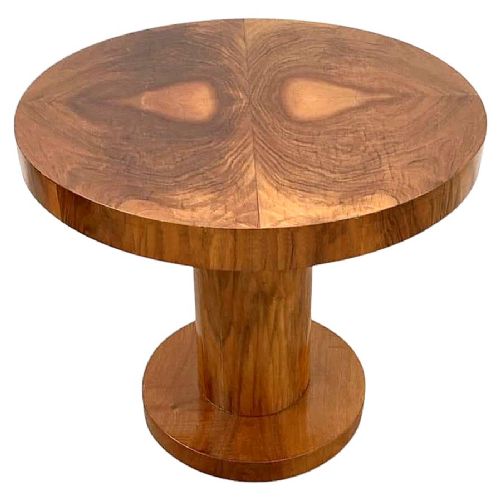
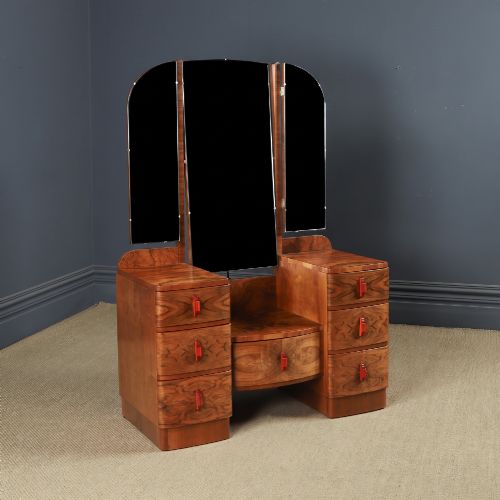
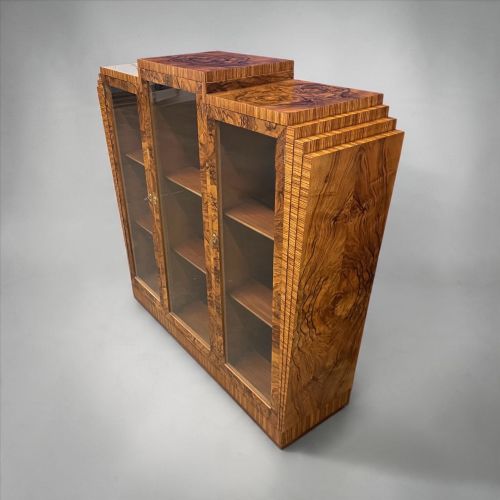
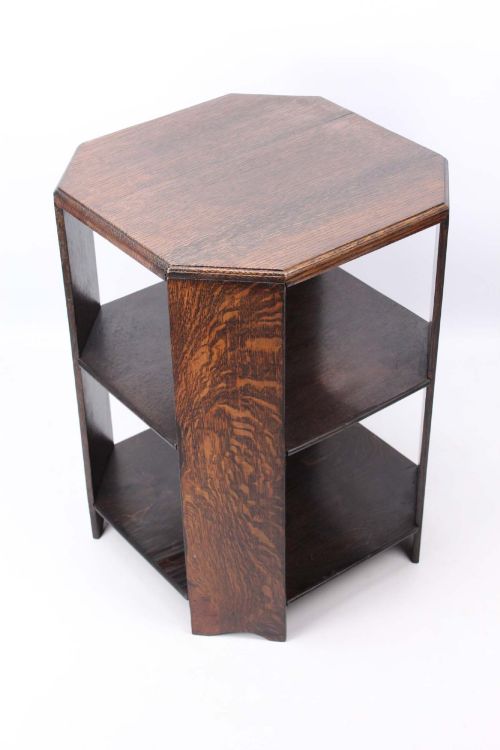
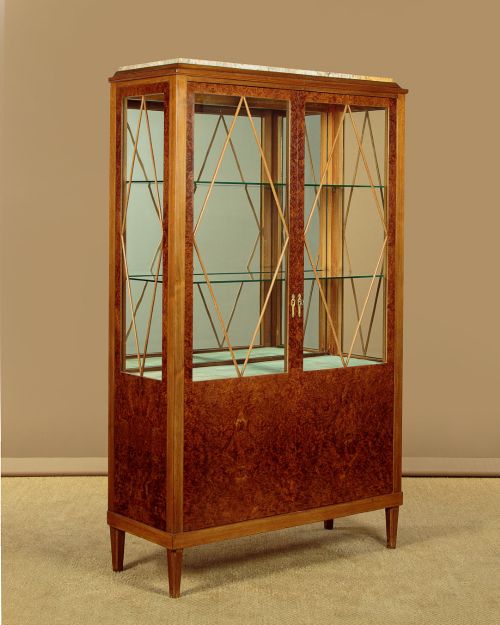
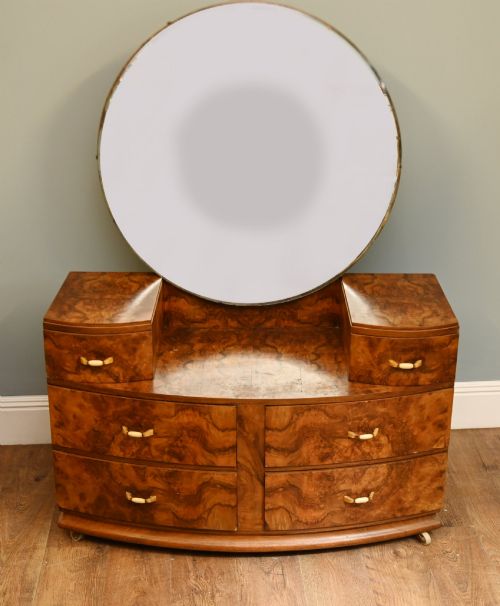
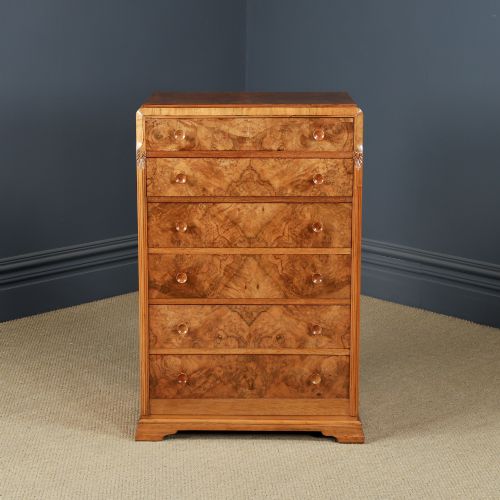
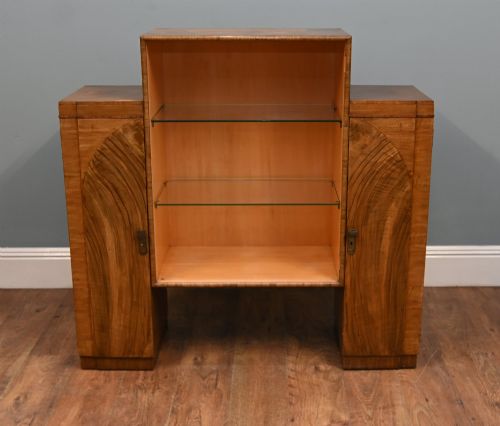
When searching for brown art deco furniture, buyers encounter functional pieces designed for daily living across the 1920s, 1930s, and 1940s. The selection on this page consists predominantly of walnut, burr walnut, and oak forms.
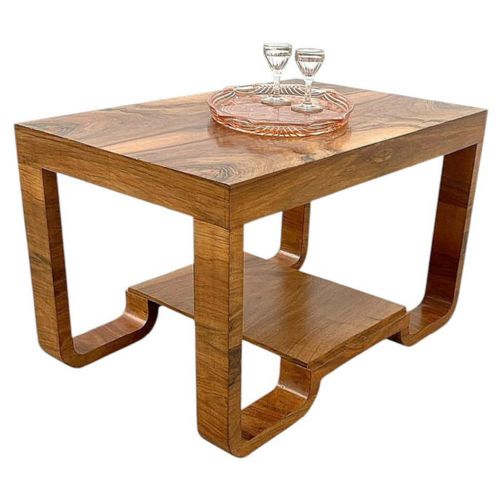
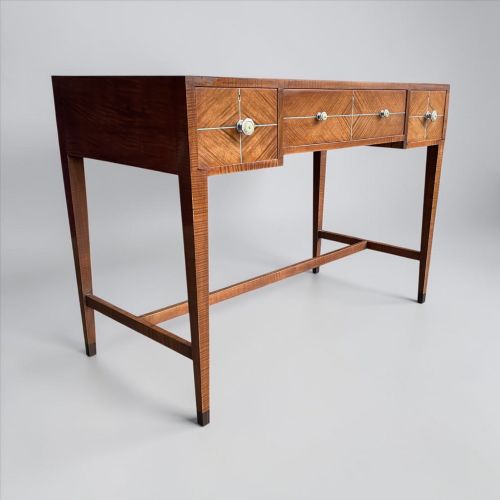
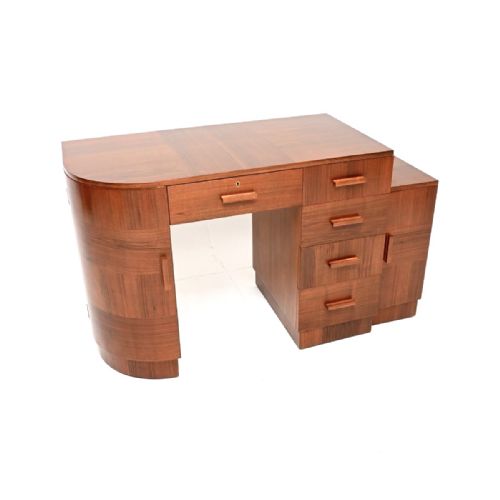
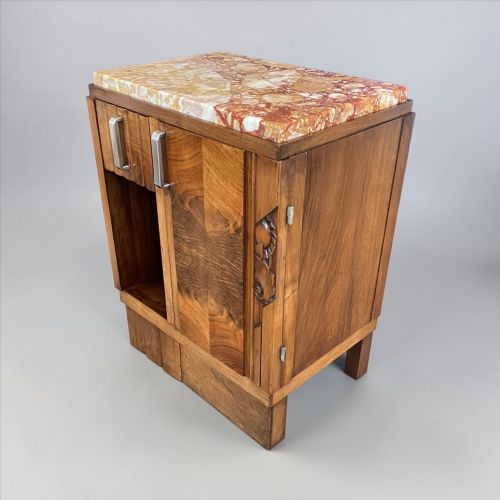
The inventory spans practical household items including bedside tables, chests of drawers, desks, coffee tables, and display cabinets. Pieces reflect both 20th Century British and French art deco design traditions.
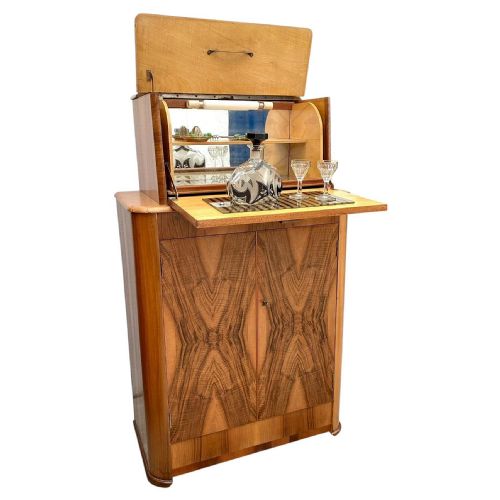
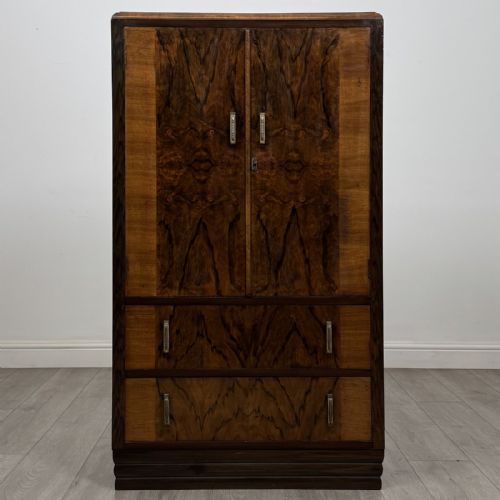
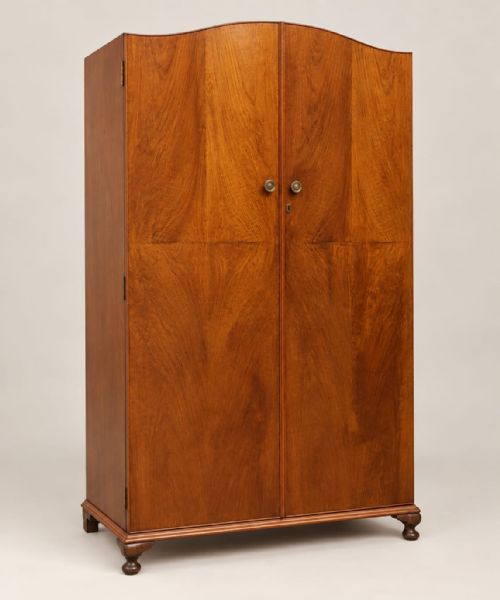
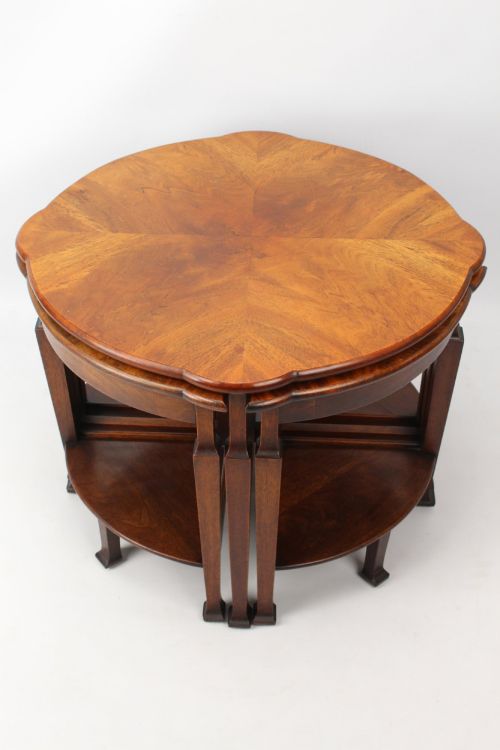
Sleeping and living spaces are well represented through wardrobes, double beds, single beds, nesting tables, and cocktail drinks cabinets. Oak items also bridge Edwardian utility and later deco styles.
How they were made
Makers utilised solid timbers alongside extensive veneer work, placing walnut, burr walnut, figured walnut, and rosewood over foundational woods to create striking grain patterns on flat surfaces and curved fronts. Glass, brass, metal, and leather were integrated into desks, cabinets, and tables for utility and contrast.
Construction techniques combined traditional cabinet-making joinery with modern geometric styling. Surfaces were polished to highlight the natural figuration of the wood, while specialised items incorporated sliding glass doors and extending mechanisms.
Brown Art Deco Furniture Retail Price Guide 2026
Typical asking prices for brown art deco furniture among the pieces listed under this phrase on Sellingantiques today, from the lower quarter to the upper quarter. They describe what is for sale here now, not the wider market.
Listings feature walnut, burr walnut, oak, mahogany, rosewood, and satinwood across tables, desks, beds, and cabinets from the 1920s to the 1940s.
What varies in quality
Quality separates through the selection and matching of wood veneers, where highly figured burr walnut creates deeper visual texture than plain timber surfaces. The harmony of grain continuity across multiple drawers and doors demonstrates superior cabinet-making skill.
Execution of detail defines the upper range, from balanced proportions in nested coffee tables to substantial hardware like original wooden handles, brass fittings, and inset leather tops on desks.
Liberty·Maurice Adams·Waring & Gillow·F.H. Marshall & Co Glasgow·Heal's
The Brown Art Deco Furniture Glossary
- Burr walnut
- A wood marking derived from the knotty growth of a walnut tree, yielding swirling patterns prized for cabinet fronts.
- Art deco
- A design style dominant in the 1920s and 1930s characterised by sleek geometric shapes, streamlined forms, and rich materials.
- Veneer
- A thin layer of superior wood adhered to a base timber to provide decorative grain patterns without solid construction costs.
- Nesting table
- A set of graduated tables designed to slide beneath one another for space-saving convenience.
- Cocktail drinks cabinet
- A dedicated storage unit designed for beverage preparation and glassware display, popular during the interwar period.
Brown Art Deco Furniture: Frequently Asked Questions
What rooms suit brown art deco furniture?
These pieces fit naturally into living rooms, bedrooms, and studies due to their practical domestic forms. Desks, bedside tables, and chests of drawers provide functional storage while introducing period character.
Larger items like double wardrobes and display cabinets anchor bedroom and dining spaces. Coffee tables and nesting sets offer versatile surface area for everyday use.
How do I identify walnut veneer?
Walnut veneer appears as a thin decorative layer applied to the exterior surfaces of chests, desks, and cabinets. Examining the edges reveals the grain continuing around corners or meeting at distinct centre seams.
Figured and burr walnut varieties show intense, swirling grain patterns that repeat symmetrically if book-matched across double doors or drawer fronts.
What periods do these pieces cover?
The listings span the Edwardian era through the 1920s, 1930s, and into the 1940s. The bulk of the furniture originates from the interwar art deco period around 1930.
Earlier Edwardian oak items sit alongside French and British art deco designs, showing the evolution of domestic furniture from traditional utility to streamlined modernism.
Are these pieces English or French?
The selection includes both 20th Century British and French pieces. English items often feature figured walnut and oak in forms like chests of drawers, bookcases, and desks.
French examples frequently utilise rosewood and distinct mahogany or oak combinations in bedside cabinets and extending dining tables, reflecting continental stylistic preferences.