





Bronzed Relief Medallion
A bronzed relief medallion brings classical depth and portraiture to a wall, offering rich metallic tones and sculptural interest.
Bronzed Relief Medallion
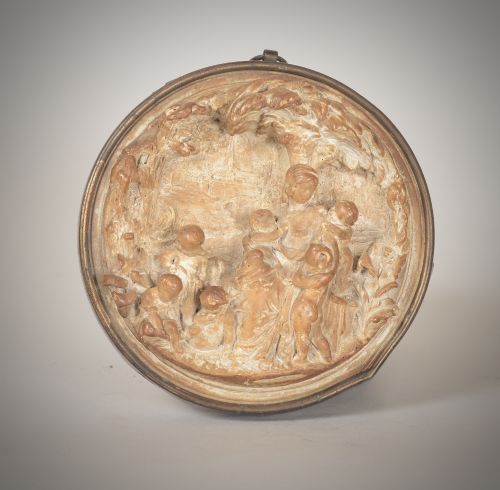
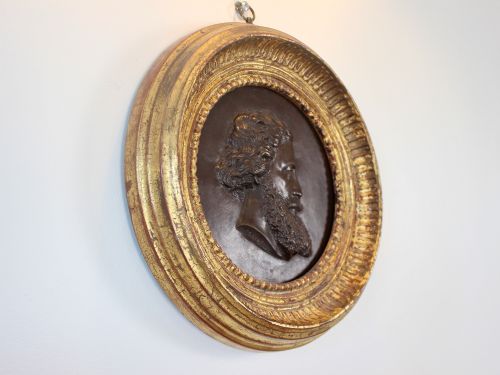
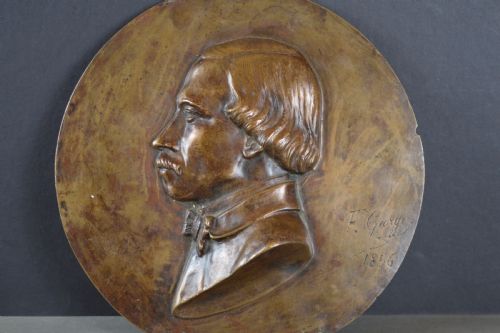
A bronzed relief medallion presents a raised sculptural portrait or scene, most commonly encountered here as circular or rectangular wall plaques and exhibition medals spanning the nineteenth and early twentieth centuries. These pieces translate historical figures, royalty, literary icons, and classical muses into lasting metalwork designed for interior display.
The selections on this page draw from Victorian, Neoclassical, and Renaissance Revival aesthetics, alongside French Empire and Art Deco movements. Collectors encounter everything from commemorative jubilee issues and international exhibition prizes to grand tour plaster casts and signed artist proofs.
How they were made
Makers utilised casting techniques in bronze, copper, brass, and cast iron, often applying patination to achieve deep, warm metallic tones. Some nineteenth-century examples incorporate giltwood or turned mahogany frames to mount and protect the central metal relief.
Signatures, foundry marks, and artist incisions frequently appear directly on the metal surface, indicating skilled workshop production. The interplay between high-relief modelling and dark patination gives these panels their distinct sculptural presence.
Bronzed Relief Medallion Retail Price Guide 2026
Typical asking prices for bronzed relief medallion among the pieces listed under this phrase on Sellingantiques today, from the lower quarter to the upper quarter. They describe what is for sale here now, not the wider market.
The documented periods range from the early nineteenth century through Victorian historicism and the Art Deco era.
What varies in quality
The framing also influences the piece, as original turned mahogany or giltwood surrounds enhance the integrity of the object. Signed works by recorded makers carry greater distinction than unsigned factory variants.
Mainfroy·Gustav Grohe·Coalbrookdale·J Lavergne
The Bronzed Relief Medallion Glossary
- Relief
- A sculptural technique where the figures project from a flat background. High relief stands out sharply, while low relief remains flatter.
- Patination
- The natural or artificial ageing of a metal surface through oxidation. This process creates deep colour variations and protects the material.
- Roundel
- A circular panel or plaque used for decorative wall display. They frequently house portrait profiles or classical scenes.
- Exhibition medal
- A commemorative award minted for international trade fairs and industrial exhibitions. These often recognise manufacturing excellence.
- Neoclassical
- An artistic style drawing inspiration from the classical art and culture of ancient Greece and Rome. It prioritises symmetry, restraint, and classical motifs.
Bronzed Relief Medallion: Frequently Asked Questions
How do I hang a heavy metal plaque?
Wall plaques require secure fixings into solid masonry or direct wall studs due to the substantial weight of cast bronze and iron. Use appropriate wall anchors and check that any surrounding wooden frame can support the hanging wire.
Avoid hanging pieces in areas subject to dampness or direct sunlight to preserve the metal patination and any wooden mounts over time.
What is the difference between a medal and a plaque?
Medals are typically smaller, portable objects struck for commemorative purposes or exhibition awards, sometimes mounted later for display. Plaques are larger panels conceived primarily as wall art.
Both formats employ similar relief-casting techniques, but plaques are proportioned specifically for architectural or interior mounting.
How can I date a nineteenth-century bronze relief?
Dating relies on stylistic clues, artist signatures, and foundry marks recorded in the metalwork. Subject matter, such as specific royal jubilees or international exhibitions, provides precise historical markers.
The backing materials, mounting style, and framing techniques also offer reliable indicators of the period of production.