

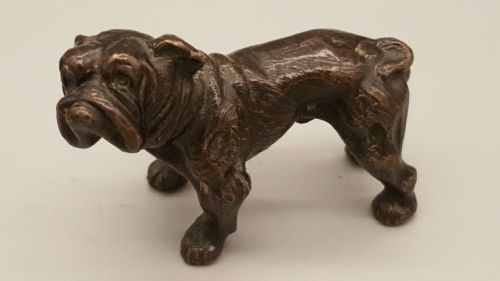


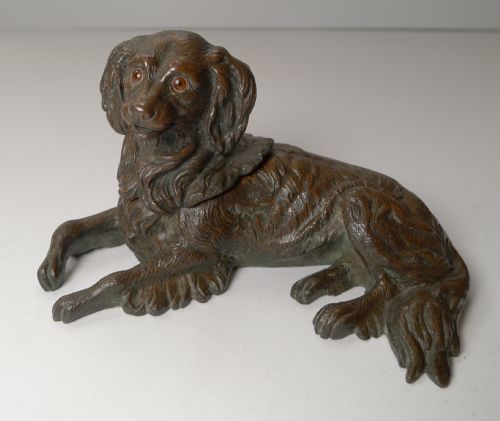

Bronzed Dog Desk Ornaments
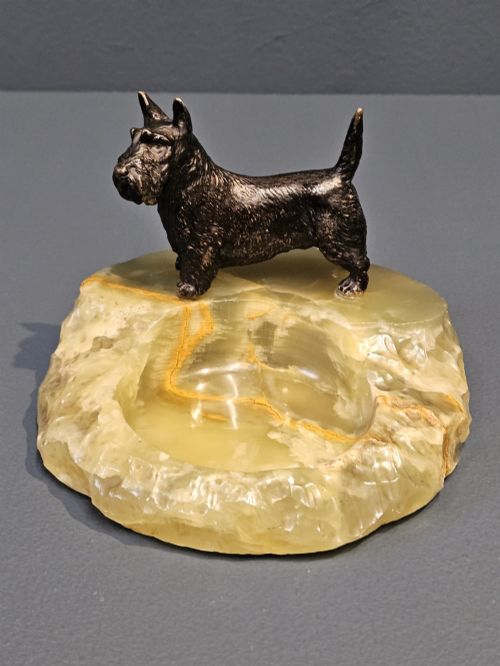
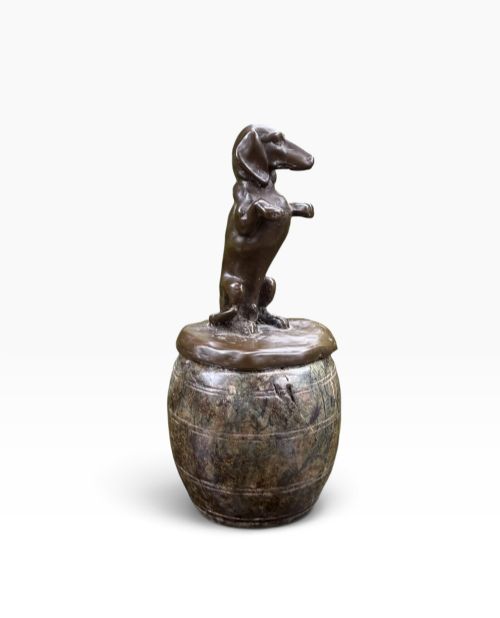
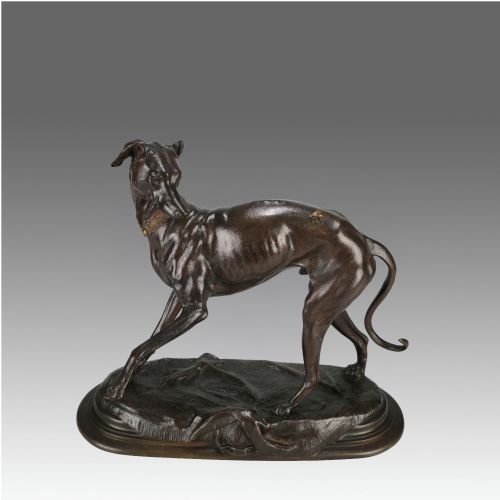
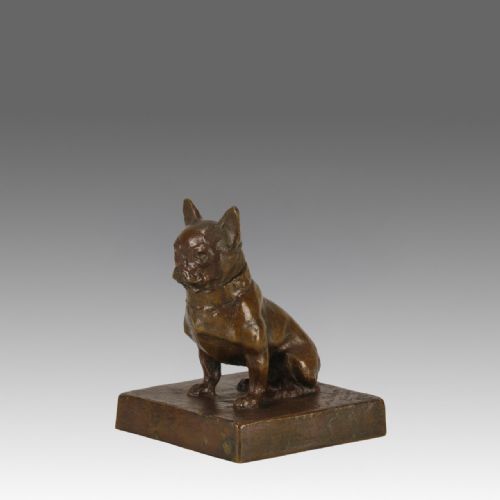
These bronzed dog desk ornaments bring character to a study, capturing the lively forms of poodles, terriers and greyhounds in solid metal.
Bronzed Dog Desk Ornaments
When you search for bronzed dog desk ornaments, you find heavy metal figures and inkwells designed to sit upon writing tables. These pieces take the form of faithful hounds, including poodles, terriers, greyhounds and pugs.
The versions most common on this page date from the nineteenth century and the early twentieth century, spanning Victorian and Art Deco tastes. Makers cast them primarily in bronze or spelter, frequently mounting them upon heavy marble or stone bases.
Many serve a double purpose as paperweights or inkwells, combining practical desk accessories with sculptural animal studies.
What varies in quality
The preservation of original cold-painted enamel surfaces or dark patination shifts the character of a piece considerably. Heavier bases of solid marble and signed foundry marks elevate certain items beyond standard utilitarian desk wares.
Bronzed Dog Desk Ornaments Retail Price Guide 2026
Typical asking prices for bronzed dog desk ornaments among the pieces listed under this phrase on Sellingantiques today, from the lower quarter to the upper quarter. They describe what is for sale here now, not the wider market.
Several dogs caught mid-action balance balls or stare intently at flies, reminding us that desk ornaments were meant to amuse busy writers.
Alfred Barye·Dora Heber·Edith Parsons·Arthur Waagen·P.de Soete·H. Bal·Joseph Francois Victor Chemin·Franze Bergman·Barbedienne
The Bronzed Dog Desk Ornaments Glossary
- Animalier
- A nineteenth-century artistic movement focused on the realistic depiction of animals, particularly in sculpture. Animalier bronzes capture beasts in motion or repose with careful attention to natural anatomy.
- Cold-painted bronze
- A technique where bronze figures receive paint applications without subsequent firing in a kiln. This method allowed makers to achieve vibrant polychrome finishes on small Austrian animal sculptures.
- Spelter
- A zinc alloy frequently utilised as a cost-effective substitute for bronze in decorative figures. Spelter models often received a bronze-coloured metallic coating to mimic genuine cast bronze.
- Inkwell
- A small container for liquid ink, kept on a desk for writing. Many Victorian desk ornaments integrate inkwells beneath hinged dog figures.
- Patina
- The surface sheen or colour acquired by metal through age and handling, or applied chemically by a foundry. A stable patina protects the underlying bronze and defines its visual depth.
Bronzed Dog Desk Ornaments: Frequently Asked Questions
What is an animalier bronze?
An animalier bronze is a nineteenth-century sculpture focused on realistic animal forms. These works capture dogs and other creatures with close attention to natural anatomy and posture.
Artists aimed to portray animals in dynamic or restful poses, often showing distinct breeds with accurate physical proportions.
How do I use a dog inkwell?
A dog inkwell serves as a desk accessory with a lidded compartment for liquid ink. The hinged dog figure often lifts to reveal the glass ink insert inside.
In daily use, writers dipped their pens directly into the central reservoir while keeping the heavy metal ornament stable on the blotter.
What is cold-painted bronze?
Cold-painted bronze is a manufacturing technique where metal figures receive hand-applied polychrome enamel finishes without kiln firing. This style became prominent in Austrian workshops during the late nineteenth and early twentieth centuries.
The bright painted details brought lifelike colour to small dog figurines and novelty desk items.
How do I distinguish bronze from spelter?
Bronze is a heavy copper alloy that develops a durable patination and rings with a clear tone when tapped. Spelter is a softer zinc alloy that feels lighter and shows a duller sound.
Spelter figures often display grey metal beneath worn areas where the surface coating has rubbed away over time.
What periods do these desk ornaments span?
These desk ornaments span the Victorian era, the Edwardian period, and the Art Deco years of the early twentieth century. Makers produced animal sculptures across these decades in varying regional styles.
French and Austrian foundries led much of the production, creating both naturalistic hunting dogs and stylised desk pieces.