





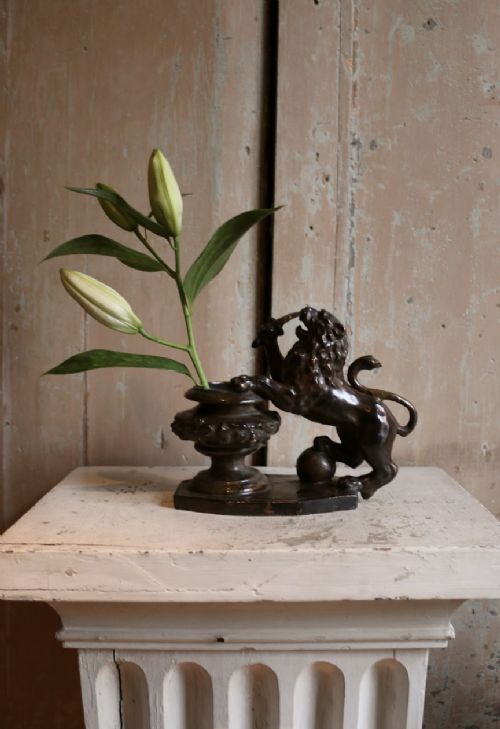

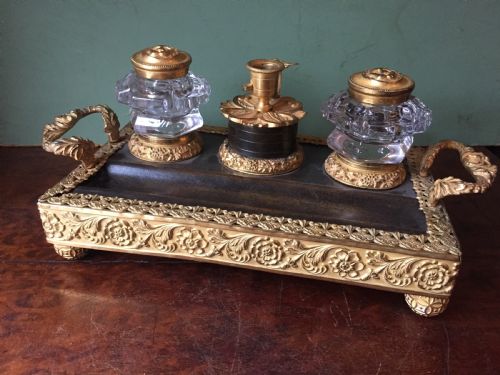


Bronze Writing Inkstand
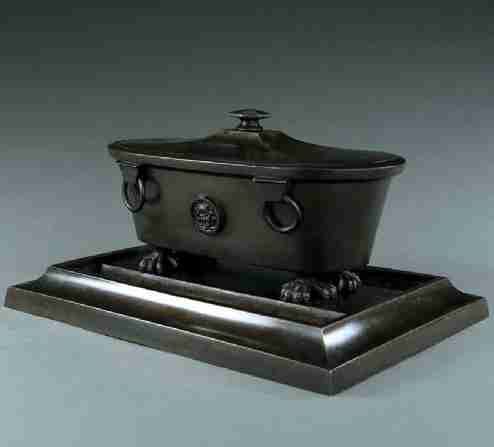
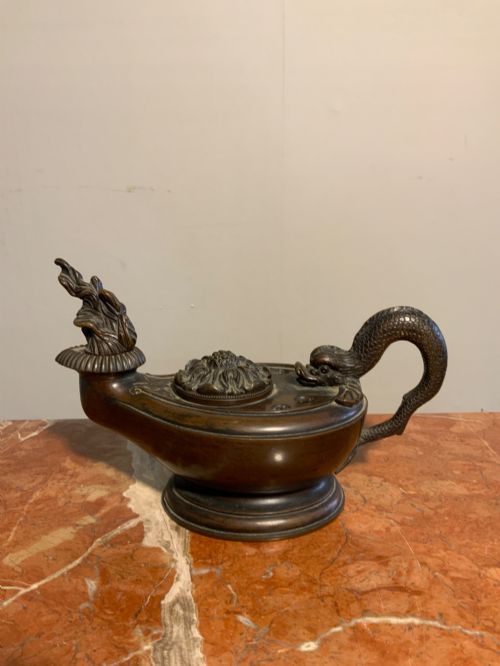
These bronze writing inkstand pieces bring nineteenth-century desk organisation to life with heavy cast metal and stone.
Bronze Writing Inkstand
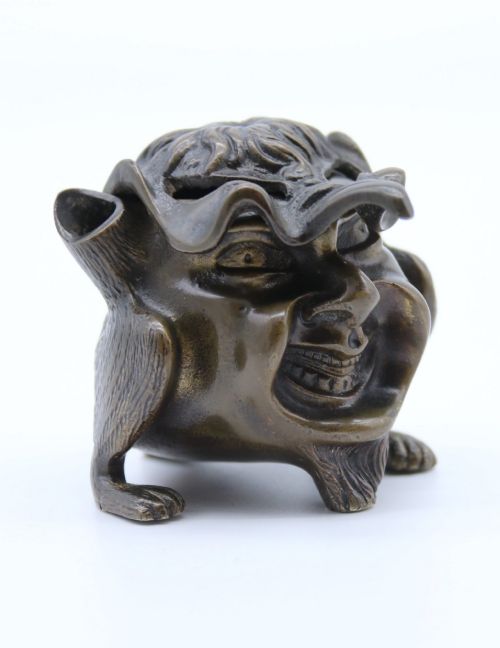
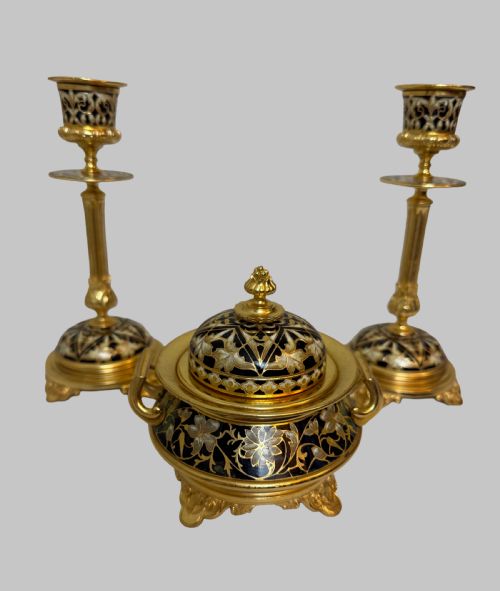
A bronze writing inkstand sits on a desk as a functional centrepiece for holding writing fluids and pens, appearing most frequently in nineteenth-century French and English designs. You encounter heavy marble or ormolu bases fitted with lidded glass or metal wells, sometimes expanding into full desk sets with matching candlesticks. The forms range from strict neoclassical architecture to playful animal figures and flowing art nouveau curves.
The objects combine utility with display, serving wealthy writers who required a permanent, stable desk accessory. Many examples incorporate pen rests or small trays alongside the main ink reservoir, while larger desk stands combine clocks or match holders into a single assembly. Makers utilised rich materials to signal status in studies and libraries.
Materials and Construction
Foundries cast the metal components in bronze, brass, or gilt bronze, often applying ormolu gilding or silvering to the finished surface. Artisans mounted these heavy metal castings onto bases carved from Sienna marble, vert marble, onyx, or mounted them alongside woods like mahogany and coromandel.
Detail work involved chasing the cast bronze, enamelling via champleve techniques, and integrating blown glass inserts for the ink reservoirs. Figural models often incorporated glass eyes or carved stone elements to add realism to animals and human characters.
Bronze Writing Inkstand Retail Price Guide 2026
Typical asking prices for bronze writing inkstand among the pieces listed under this phrase on Sellingantiques today, from the lower quarter to the upper quarter. They describe what is for sale here now, not the wider market.
Listings feature materials spanning gilt bronze, ormolu, Sienna marble, coromandel-wood, and champleve enamel across the nineteenth and early twentieth centuries.
Distinctions in Quality
The fineness of the cast metalwork separates standard production pieces from exceptional ones, particularly in the crispness of chased details on figures and floral motifs. Superior items feature heavier stone bases, substantial mounts of genuine ormolu, and original glass inserts that fit precisely into their housings.
Artistic attribution and complexity drive the upper tier, where named makers or distinct sculptural subjects like figural animals elevate the work beyond simple utility. The integration of multiple materials, such as champleve enamel combined with fire-gilded bronze, indicates higher ambition in the workshop.
Lefebvre of Belgium·Albert Marionnet·Jules Dalou·Maurice Dufrene
The Bronze Writing Inkstand Glossary
- Ormolu
- Gilded bronze produced by applying a mixture of gold and mercury to a metal base and heating it. This historic technique creates a durable, golden finish found on nineteenth-century desk stands.
- Encrier
- A French term for an inkstand or inkwell. You see this word used frequently on continental desk accessories.
- Champleve
- An enamelling technique where troughs are dug into a metal surface and filled with vitreous enamel before firing. Pieces featuring this method display colourful geometric or floral patterns.
- Grand Tour
- A cultural journey undertaken by wealthy young Europeans in the eighteenth and nineteenth centuries. Souvenirs from these trips often included classical bronze desk items.
- Vert marble
- A rich green decorative stone used extensively as a weighty base for French bronze inkwells. The natural veining varies across each piece.
Bronze Writing Inkstand: Frequently Asked Questions
How do I clean a bronze writing inkstand?
Dust the metal and stone gently with a soft, dry brush to prevent accumulation in recessed chased details. Avoid commercial metal polishes, which can strip historic gilding or ormolu.
Wipe marble bases with a slightly damp cloth and dry them immediately. Keep moisture away from any remaining original fabric linings or paper labels underneath.
Were these used for everyday writing?
These desk accessories belonged in formal studies, libraries, and offices where correspondence required dip pens and liquid ink. Their substantial weight prevented them from tipping during use.
Poorer households relied on simpler ceramic or glass pots, while these heavy metal examples served affluent writers.
How can I date an antique inkstand?
Examine the style of the cast ornament, such as the flowing organic lines typical of the turn-of-the-century art nouveau period or the strict symmetry of earlier empire designs. The construction of the hinges and the type of glass insert also offer clues to the era of manufacture.
Signatures or foundry marks stamped into the bronze help narrow down the origin.
Are the glass inserts usually original?
Original glass ink inserts survive in many pieces, often showing minor nibbles or bubbles from nineteenth-century production methods. Replacement glass pots appear frequently where the originals broke through daily use.
A snug fit inside the bronze collar usually indicates an authentic period component.