

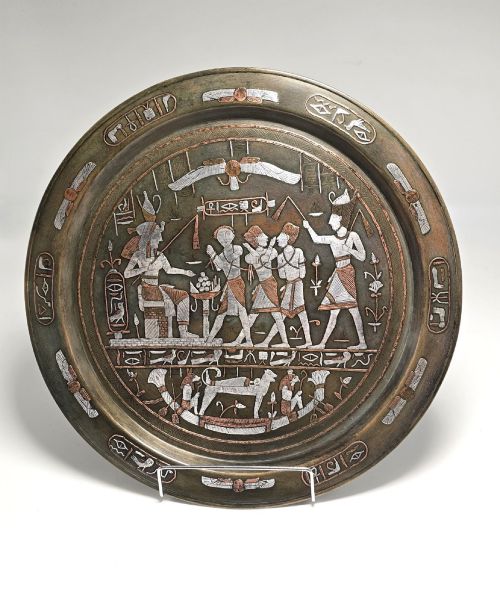



Bronze Wall Charger
These bronze wall charger selections range from Japanese cloisonne and Meiji period plates to European neoclassical and Egyptian revival wall plaques.
Bronze Wall Charger
A bronze wall charger provides a substantial decorative plate or plaque intended primarily for display rather than dining use. The versions you meet most frequently on this page originate from the Japanese Meiji period, often featuring intricate cloisonne enamel work alongside European neoclassical and revival designs from the nineteenth century.
These decorative objects take several distinct forms, including large platters, shallow dishes, and deep wall plaques. The physical presence varies from intimate brass and mixed-metal Chinese plates to huge four-kilogram bronze centrepieces and repousse shields hung directly on walls.
Distinctions in quality
Quality rests upon the precision of the metalwork and the complexity of the decorative scheme. Superior examples exhibit intricate, multi-coloured enamel shading or deeply detailed repousse figures that demonstrate exceptional technical mastery from workshops.
The sophistication of the design execution separates standard decorative plates from masterworks. Signed pieces with balanced compositions, flawless cloisonne wire boundaries, and well-preserved patination command closer attention from collectors.
Bronze Wall Charger Retail Price Guide 2026
Typical asking prices for bronze wall charger among the pieces listed under this phrase on Sellingantiques today, from the lower quarter to the upper quarter. They describe what is for sale here now, not the wider market.
Materials recorded across current items include bronze, copper, brass, terracotta, and cloisonne enamel with wirework.
Ernst Wahliss·Faulkner Bronze Company
The Bronze Wall Charger Glossary
- Cloisonne
- A technique where thin metal wires are soldered to a metal body to create compartments that hold enamel paste before firing. This method produces vibrant, patterned surfaces seen on many Japanese decorative plates.
- Meiji Period
- The era in Japanese history spanning from 1868 to 1912, characterised by a flourishing of fine metalwork and enamel crafts exported to Western markets. Pieces from this time often display naturalistic motifs like dragons and chrysanthemums.
- Repousse
- A metalworking method where an artisan hammers metal from the reverse side to form a raised design in relief on the front. This technique creates three-dimensional textures on shields and wall plaques.
- Totai Shippo
- A Japanese technique involving porcelain bases decorated with cloisonne enamel to simulate traditional metal vessels. It merges ceramic shaping with wirework enamel decoration.
- Grand Tour
- A cultural journey undertaken by nineteenth-century Europeans to collect classical antiquities and souvenirs. Pieces associated with this tradition often feature classical mythological decoration.
Bronze Wall Charger: Frequently Asked Questions
How do I hang a heavy bronze wall charger safely?
Heavy bronze wall chargers require robust wall fixings anchored directly into masonry or secure wall studs. Wire hangers must be rated well above the weight of the specific plate to prevent accidental slips.
Ensure the mounting bracket supports the entire base rim rather than relying solely on a single decorative loop. Period plaques often feature integrated rear suspension fixtures designed for secure hanging.
What distinguishes Meiji period cloisonne chargers?
Meiji period cloisonne chargers exhibit meticulous wirework outlining detailed natural subjects such as dragons, koi, and chrysanthemums. The enamel colours transition smoothly within tightly controlled wire cells.
Earlier nineteenth-century examples often utilise distinctive background patinas and complex symbol arrangements. Signed pieces further indicate a higher standard of workshop production during this era.
How should I clean antique bronze and enamel plates?
Antique bronze and enamel surfaces require gentle dusting with a soft, dry cloth to remove surface particles. Avoid chemical polishes or abrasive cleaners that strip patination and damage fragile cloisonne enamel wires.
Enamel sections need particular care to prevent moisture seepage beneath the wire boundaries. Professional conservation advice is recommended for pieces showing active tarnish or structural vulnerability.
Where were nineteenth-century decorative wall plaques displayed?
Nineteenth-century decorative wall plaques were typically displayed in drawing rooms, libraries, and studies as statements of refined taste. Grand Tour souvenirs and classical revival pieces reflected the owner's cultural education.
In Japanese export markets, these chargers served as premier decorative art objects for Western interiors. They were mounted on prominent walls or displayed on specialised cabinet plate stands.