

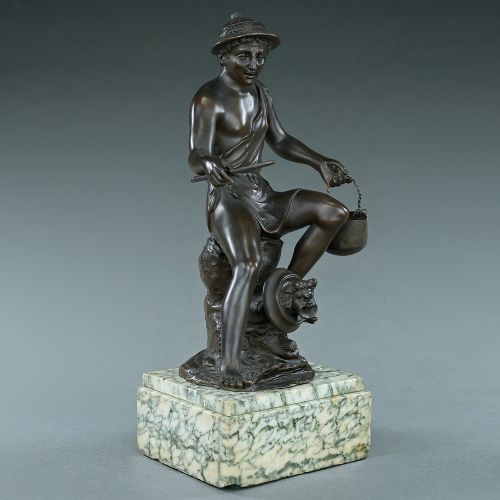
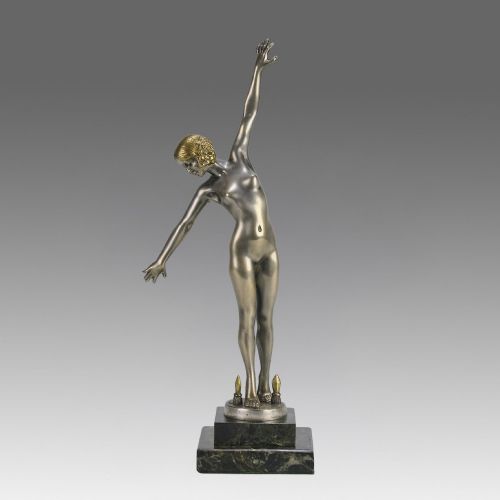
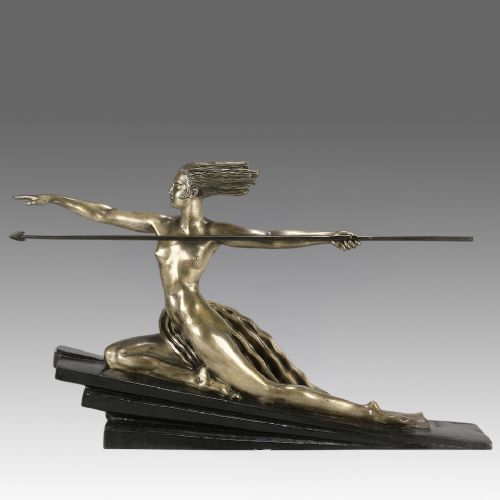
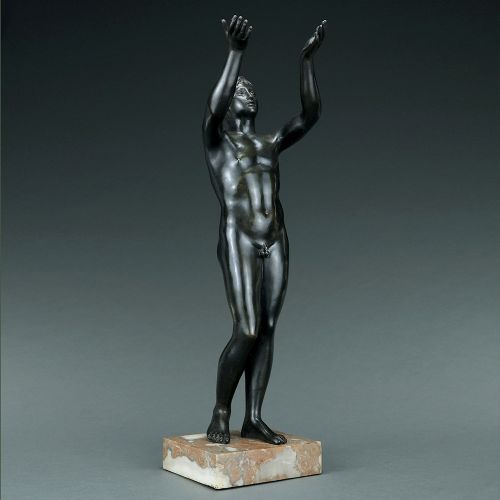
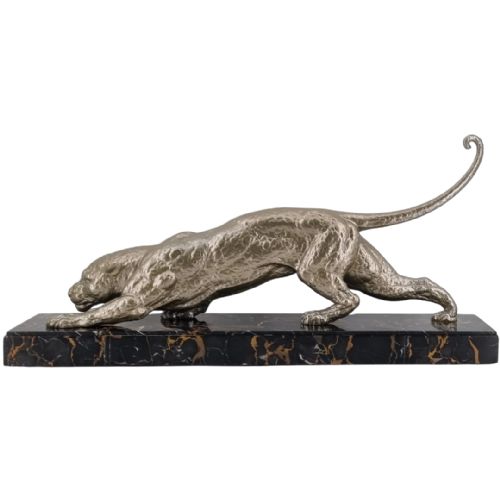
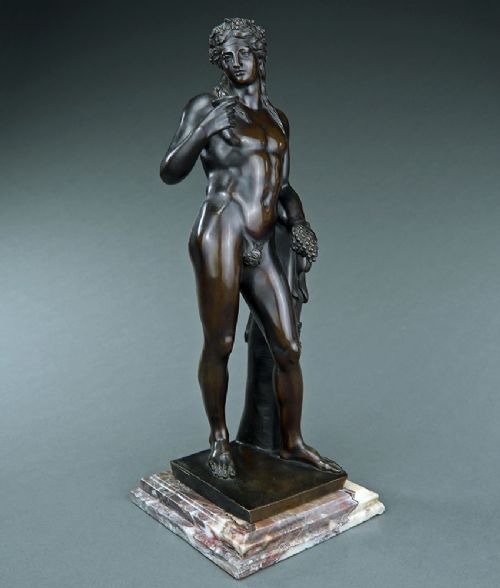
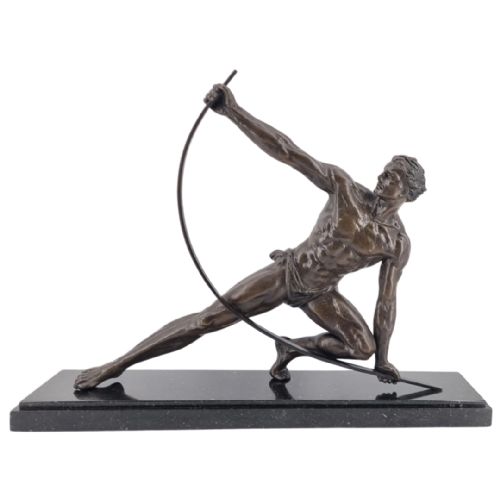
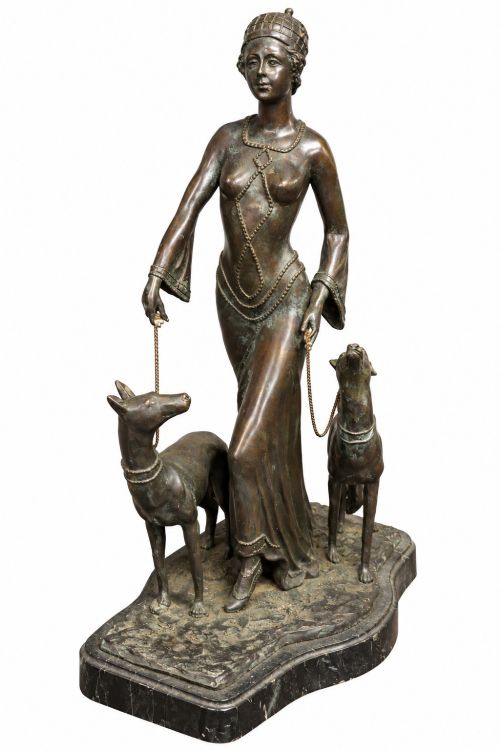
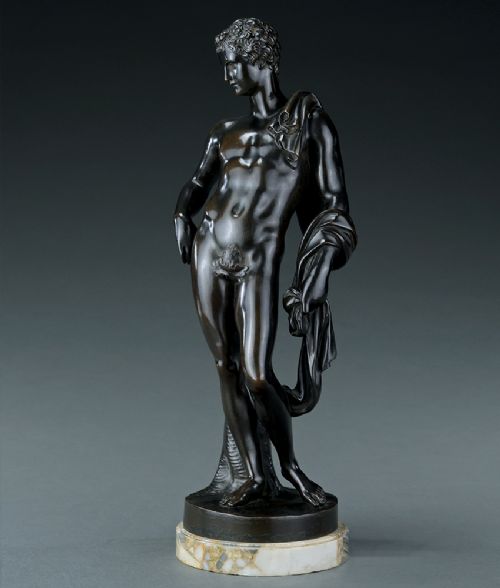
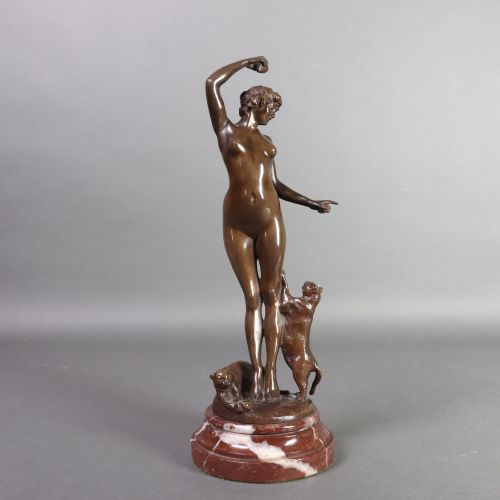
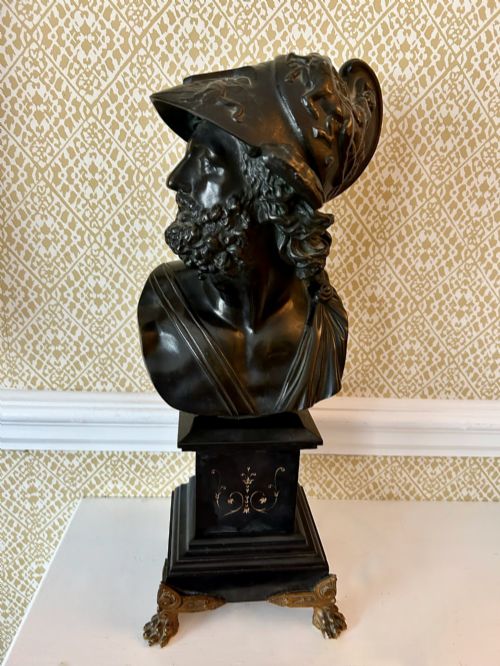
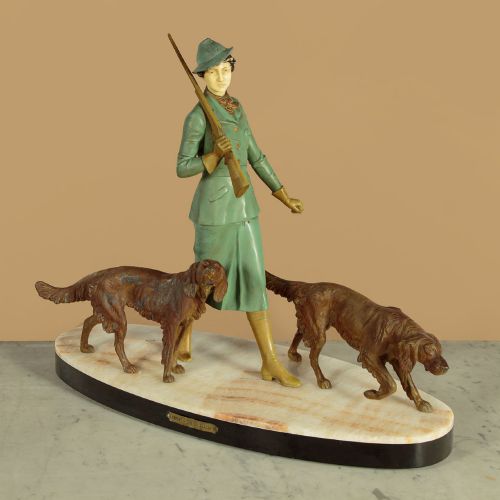
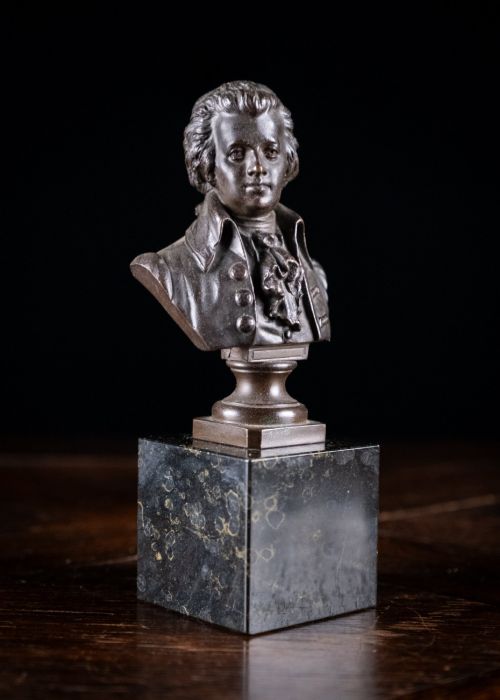

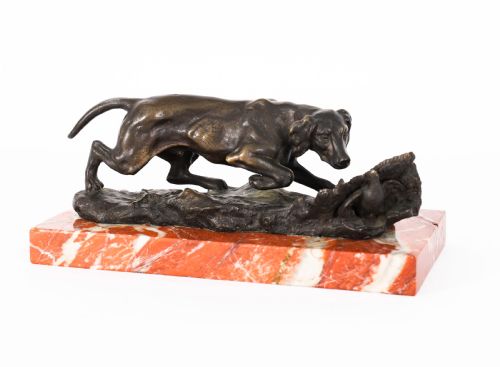
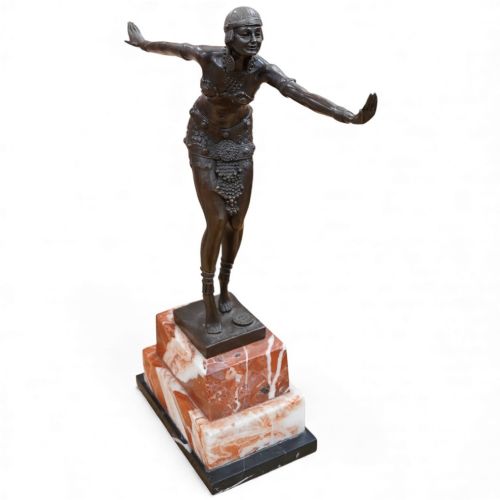
Bronze Statue with Marble
A bronze statue with marble combines cast metal figures with stone plinths or architectural bases, offering a solid weight and classical presence.
Bronze Statue with Marble
When you search for a bronze statue with marble, you encounter figures mounted on heavy stone plinths, bases, or columns. These objects range from mythological groups and classical animals to Art Deco dancers and provincial figures.
The pieces on this page span the nineteenth century through the Art Deco era of the nineteen-thirties. French and Austrian workshops predominate, alongside Grand Tour souvenirs originating from Italy.
Mantel clocks and pedestals also appear alongside standalone sculptures and statuettes. Marble serves variously as a simple mounting plinth or as integrated architectural columns with ormolu collars.
Materials and construction methods
Foundries cast the metal components using traditional methods, utilising bronze, silvered bronze, gilt bronze, or spelter. Patination treatments create varied surface tones, while metal is frequently secured directly onto carved stone bases.
Marble and onyx provide dense, stable foundations for the metal figures. Secondary materials such as ormolu add decorative collars and mounts to stone columns and clock cases.
Bronze Statue with Marble Retail Price Guide 2026
Typical asking prices for bronze statue with marble among the pieces listed under this phrase on Sellingantiques today, from the lower quarter to the upper quarter. They describe what is for sale here now, not the wider market.
Object types include standalone sculptures, figural mantel clocks, architectural pedestals, and Grand Tour souvenirs mounted on stone plinths.
Factors of execution and design
The crispness of the metal chasing and the depth of the patination dictate the visual standard of the figure. Smoother, more detailed musculature and drapery distinguish finer studio castings from simpler provincial statuettes.
The selection and finish of the stone base affect the overall presence of the piece. High-grade marble and neatly fitted ormolu mounts demonstrate careful workshop assembly.
Georges Gori·Gustave Dussart·Hans Müller·Emile Carlier·Alexandre Kelety·Geo Maxim·Pierre le Faguays
The Bronze Statue with Marble Glossary
- Patinated bronze
- Metal treated with chemical solutions to produce a specific surface colour. This finish protects the alloy and highlights sculptural details.
- Ormolu
- Gilt bronze mounted onto furniture, clocks, or stone columns. The technique involves applying a gold amalgam to a bronze base.
- Grand Tour
- Nineteenth-century travel souvenirs purchased by Europeans in Italy. These small-scale bronze studies depict classical antiquities and lions.
- Spelter
- A zinc-based alloy utilised as an economical alternative to bronze. It receives similar patination treatments to imitate heavier metals.
Bronze Statue with Marble: Frequently Asked Questions
How do I clean a bronze statue with marble?
Dust the metal surface gently with a soft dry cloth to remove daily particles without disturbing the patination.
Keep stone bases free from moisture and avoid harsh chemical cleaners that can etch the polished surface.
Are these figures solid bronze?
Many examples are cast as hollow forms using traditional foundry methods to reduce weight and material costs.
Some smaller statuettes and alternative pieces utilise spelter rather than bronze while retaining a similar surface finish.
Where were these pieces made?
The recorded evidence points primarily to French and Austrian workshops active during the nineteenth and early twentieth centuries.
Italian studios also produced specific souvenirs for travellers touring classical sites.
How are the figures attached to the marble?
Sculptures typically secure to the stone plinth using threaded bolts or pins running through the base of the metal casting.
The heavy stone acts as a secure anchor that prevents top-heavy figures from tipping over.