


Bronze Relief Planter
A bronze relief planter brings weight and texture to a room, offering a sculptural home for foliage rooted in nineteenth-century craftsmanship.
Bronze Relief Planter
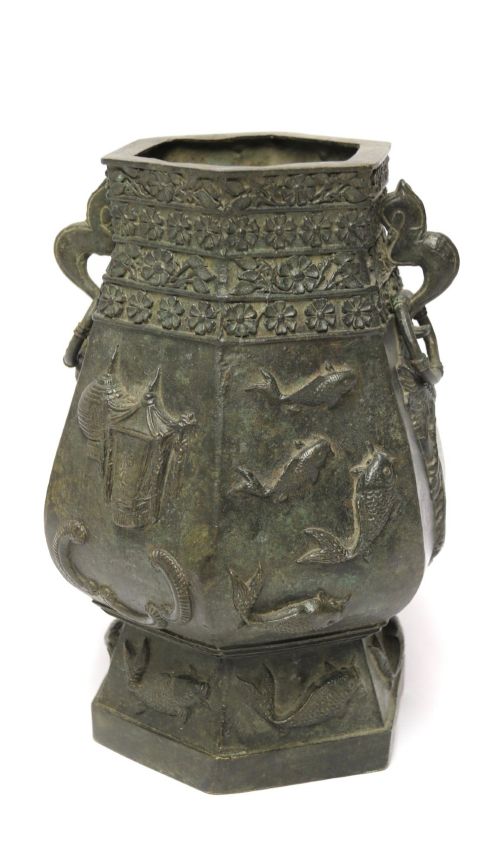
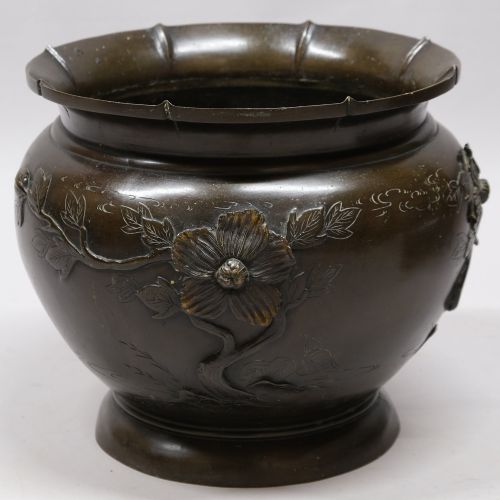
When you search for a bronze relief planter, you encounter heavy metal vessels designed to hold plants or stand as decorative objects in their own right. The pieces gathered here span the nineteenth century, taking forms such as jardinieres, campana urns, and hexagonal vessels.
Most examples originate from Japan during the Meiji period or from China, alongside European interpretations influenced by the Grand Tour and Neoclassical styles. You will frequently meet Japanese jardinières featuring detailed cast decoration alongside Chinese vessels dating from the mid-nineteenth century.
European makers also contribute significant works, notably French neoclassical designs cast in the manner of classical antiquities. These objects function equally well as table bowls, desk pots, or floor-standing jardinières.
How they were made
The objects listed utilise solid or cast bronze, occasionally enhanced with patination or gilding to accentuate the modelled surface. Makers employed lost-wax casting or sectional construction to achieve complex, three-dimensional relief ornament.
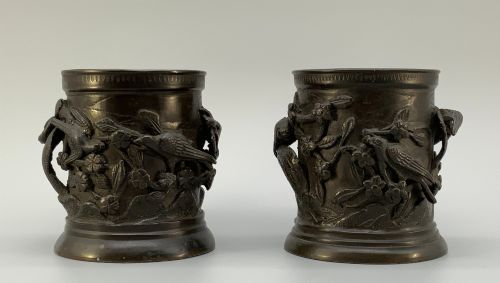
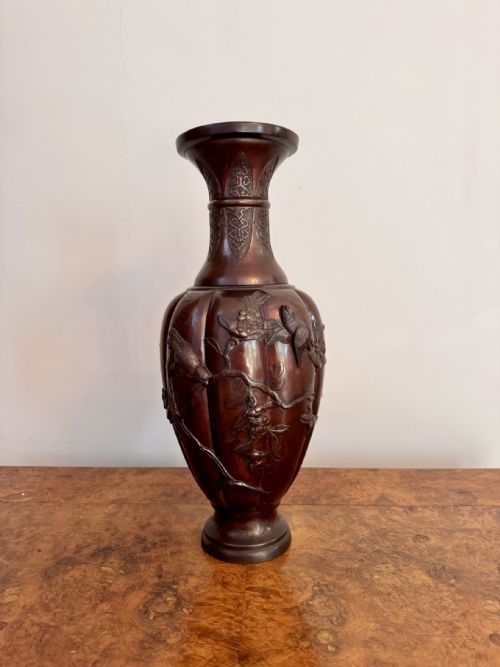
Surface detail is paramount, achieved through high-relief casting, chasing, and applied patinas that bring out depictions of birds, blossom, and classical figures. Brass appears alongside bronze in certain decorative elements, while larger vessels are built in sections for structural stability.
Listings feature Chinese and Japanese bronzes alongside nineteenth-century European neoclassical urns cast in the French tradition.
What varies in quality
Quality rests in the crispness of the relief casting and the depth of the metalwork, distinguishing exceptional sculptures from simpler production pieces. Superior examples exhibit fine hand-chasing on motifs such as birds and blossom, ensuring the surface reads sharply from every angle.
Weight and wall thickness also separate the finer vessels from lighter alternatives, as substantial bronze provides both durability and balance. The nuance of the patination - whether rich and dark or deliberately brightened with gilding - determines the visual sophistication of the finished object.
Barbedienne Paris
The Bronze Relief Planter Glossary
- Jardiniere
- An ornamental pot or stand for holding plants or flowers. These vessels often feature deep bowls supported by decorative bases.
- Campana
- A bell-shaped vessel form originating in classical antiquity. French makers frequently utilised this silhouette for neoclassical wine-coolers and urns.
- Meiji Period
- The era in Japanese history spanning from 1868 to 1912. Metalwork from this time is celebrated for intricate cast relief decoration depicting nature.
- Patination
- The ageing or chemical treatment of a metal surface to produce a coloured skin. Bronze vessels display patinas ranging from deep brown to verdigris.
- Grand Tour
- A traditional journey through Europe undertaken by upper-class Europeans in the eighteenth and nineteenth centuries. Souvenirs from these travels included classical bronze urns and planters.
Bronze Relief Planter: Frequently Asked Questions
What is a bronze relief planter used for?
These vessels serve primarily as decorative jardinières for housing potted plants or small trees within a domestic interior. Their ornate cast surfaces also allow them to stand empty as sculptural focal points on side tables or pedestals.
Historically, larger campana shapes functioned as wine-coolers during dining occasions, while smaller bowls served as desk accessories or cabinet pieces.
How do I distinguish between Japanese and European pieces?
Japanese examples from the Meiji period typically display naturalistic relief motifs such as birds, branches, and floral arrangements. Their patination often emphasises dark bronze tones enriched with subtle metallic highlights.
European pieces generally draw upon neoclassical or Grand Tour traditions, incorporating architectural elements like handles, gadrooning, and classical figures derived from antiquity.
Are these planters suitable for direct planting?
Many antique bronze vessels lack drainage holes, meaning direct planting can trap moisture against the interior metal surface over time. Placing a separate plastic or ceramic liner inside the vessel protects the bronze while allowing regular watering.
Using a liner also prevents soil acidity from altering the internal patination of the bronze.
How should I clean a bronze relief planter?
Dusting the surface gently with a soft, dry brush or cloth preserves the historic patina and protects the high-relief details. Avoid chemical polishes, abrasive cloths, or water immersion, as these treatments strip away centuries of accumulated finish.
Applying a very light coat of microcrystalline wax can help protect exposed bronze surfaces from atmospheric moisture.