
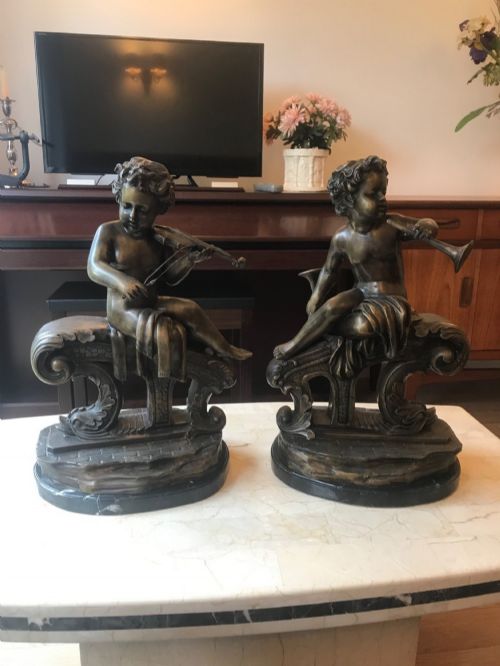
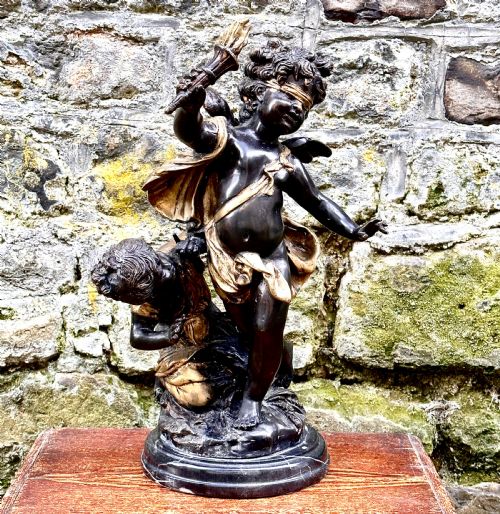
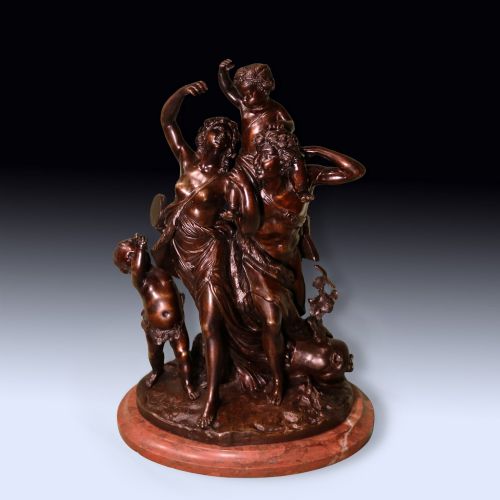
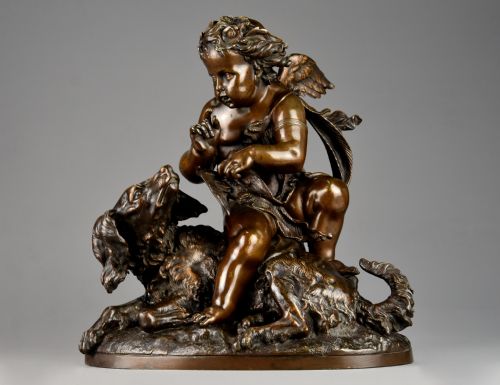


Bronze Putti Figurines
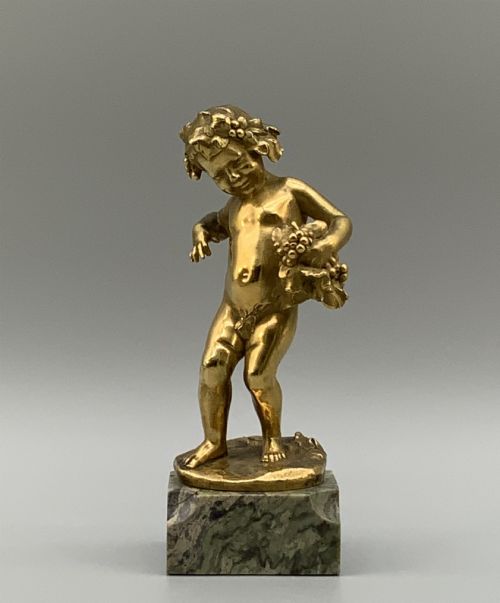
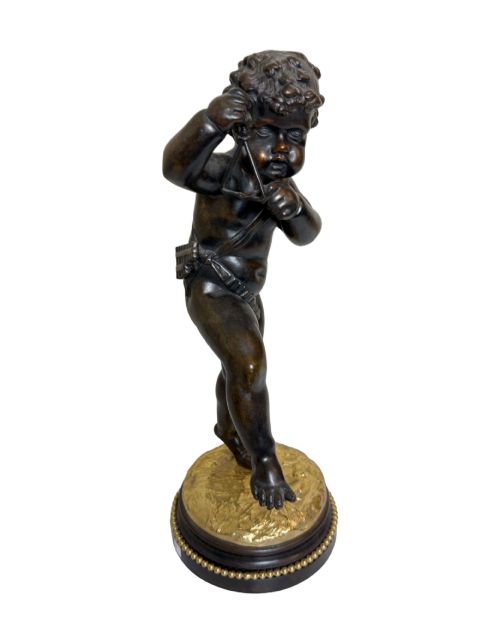
Bronze putti figurines bring classical grace to a room, depicting winged infants and cherubs in bronze, marble, and gilt bronze.
Bronze Putti Figurines
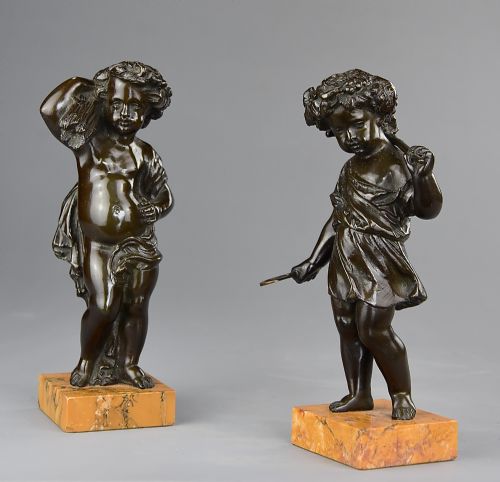
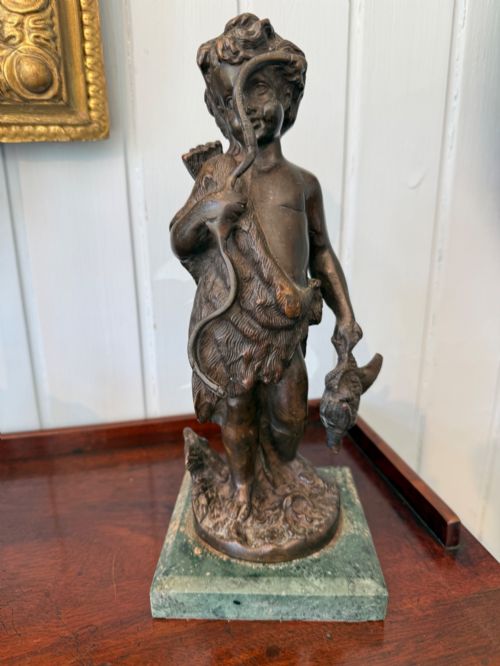
When you search for bronze putti figurines, you encounter sculptural works depicting winged infants, cherubs, and children engaged in mythological or allegorical pursuits. These figures appear singly, in pairs, or as part of larger groups involving grapes, musical instruments, and animal companions. They emerge across the nineteenth and early twentieth centuries through French and Italian traditions.
The objects take many forms beyond standalone statues, appearing mounted on marble or inlaid wood bases, integrated into mantel clocks, and converted into table lamps. French examples often reflect Neoclassical and Rococo Revival styles inspired by classical sculptors. You frequently meet pieces associated with the Grand Tour or modeled after works by Claude Michel Clodion.
How they were made
The physical construction relies on casting metal, utilising bronze, gilt bronze, patinated bronze, and ormolu. Artisans combined these metallic elements with solid mounts of marble, wood, and occasionally porcelain or enamel details. Surface finishes range from bright gilding to deep patination that highlights the musculature and facial expressions of the figures.
Many works incorporate secondary materials such as fabric shades on lamps or variegated stone bases that anchor the metal sculpture. Founders and artists signed specific castings, while others emerged from workshops producing decorative mantel clocks and sculptural groups.
Listings feature works from the nineteenth and early twentieth centuries, spanning periods from the 1860s through the 1960s.
What varies in quality
The selection of supporting materials also sets pieces apart, particularly the weight and grain of the marble bases or the complexity of the integrated clock movements and gilt mounts. Signed works by recognised sculptors command attention for their sculptural fidelity and proportion.
Charles Louis Malric·Susse Frères·Claude Michael Clodion·Louis Auguste Moreau·Dumond·Ferrand·Pigale
The Bronze Putti Figurines Glossary
- Putto
- A plump, naked child depicted in classical art, often winged and sometimes representing Cupid or cherubs. They populate Renaissance and revival sculpture.
- Ormolu
- Ground metallic bronze applied to objects through a mercury gilding process or finished with gold paint. This technique creates a rich golden surface on clock cases and decorative mounts.
- Patinated bronze
- Metal treated with chemicals to produce a specific surface colour and tone. This finish protects the bronze while enhancing shadows and contours.
- Grand Tour
- A cultural journey undertaken by wealthy Europeans to view classical antiquities. Figures acquired during these travels often drew inspiration from ancient sculpture.
- Rococo Revival
- A nineteenth-century design movement favoring asymmetry, scrolls, and playful natural motifs. It heavily influenced French decorative arts and bronze casting.
Bronze Putti Figurines: Frequently Asked Questions
What are bronze putti figurines?
These pieces represent winged infants and cherubs cast in metal, frequently associated with classical mythology, harvest scenes, and music. They appear as standalone sculptures, lamp bases, and clock components.
Most examples date from the nineteenth century and reflect French and Italian revival styles inspired by earlier classical traditions.
How were they used historically?
Statues and sculptural groups served primarily as interior decorative objects for studies, drawing rooms, and mantelpieces. Figures holding instruments or grapes brought allegorical themes into domestic spaces.
Clock mounts and lamps integrated these sculptural forms into functional household objects that combined utility with classical ornamentation.
How do I care for bronze putti?
Maintenance requires gentle dusting with a soft, dry cloth to prevent the accumulation of grit on patinated or gilt surfaces. Avoid harsh chemical cleaners and moisture, which can damage the underlying metal and stone bases.
Keep pieces away from direct heat sources and strong sunlight to preserve the integrity of patinas, marble, and wood mounts.
How can I tell the period?
Dating relies on stylistic cues, casting techniques, and the materials used for secondary mounts like marble or wood. Nineteenth-century pieces often display specific revival characteristics linked to French studios and Grand Tour travels.
Signatures, foundry marks, and the ageing of the metal patination provide additional indicators of when a particular casting was produced.