
Bronze Mounted Writing Desk
When you handle a bronze mounted writing desk, you meet the pinnacle of nineteenth-century cabinet-making where rich timber meets gleaming metalwork.
Bronze Mounted Writing Desk
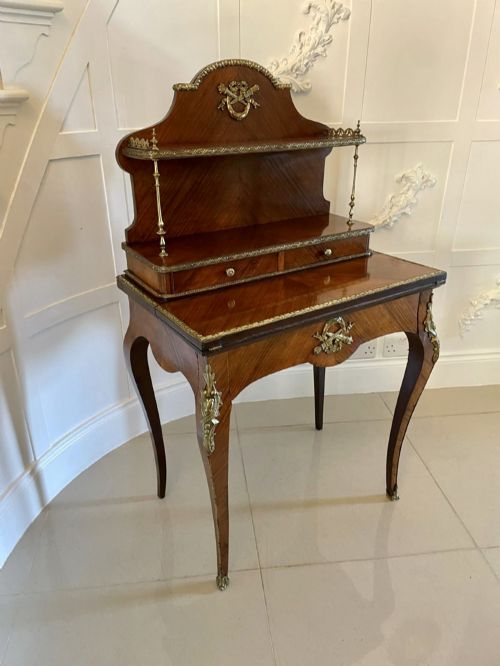
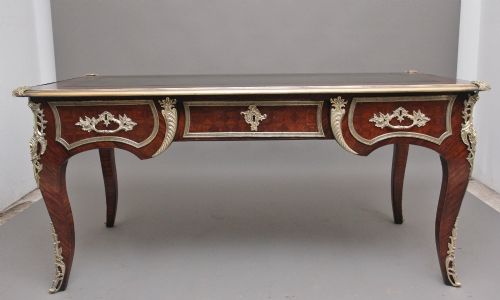
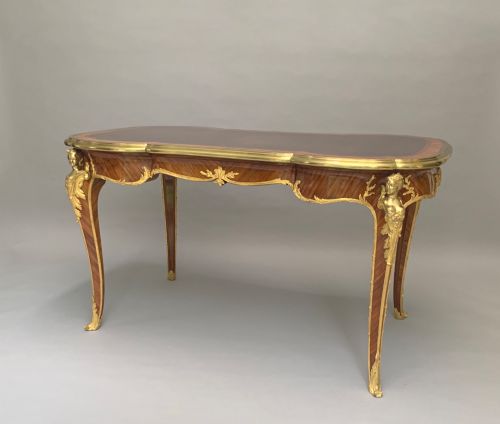
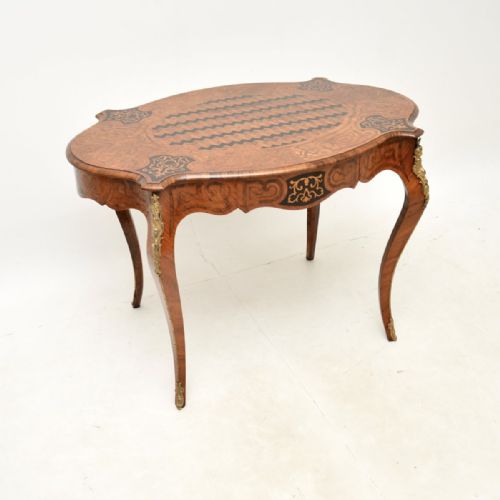
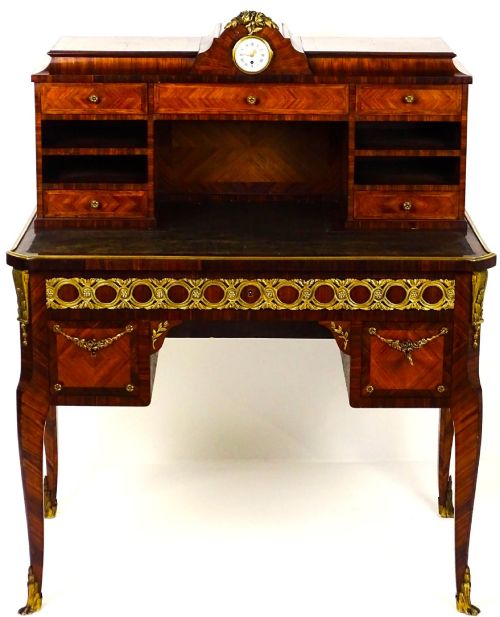
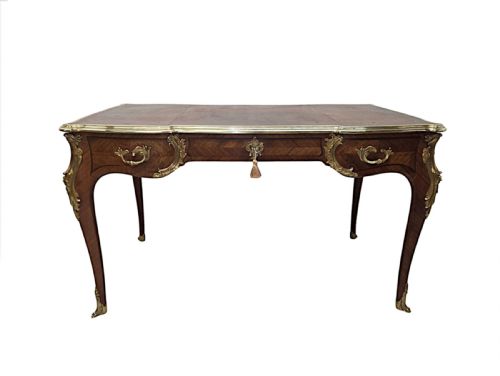
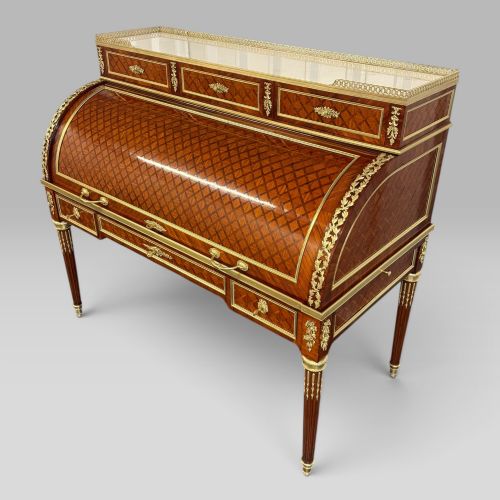
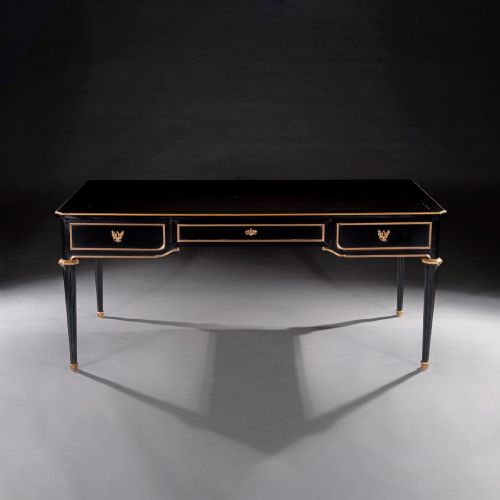
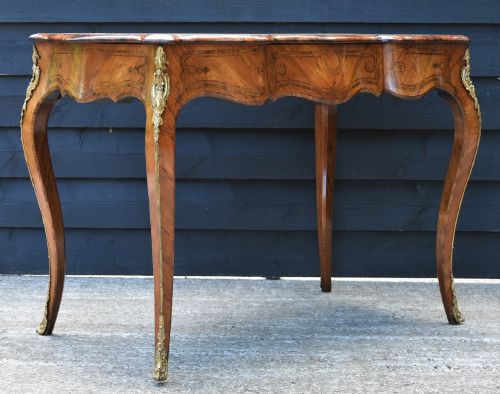
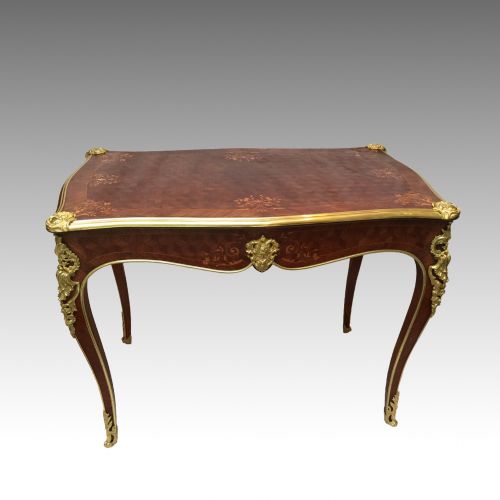
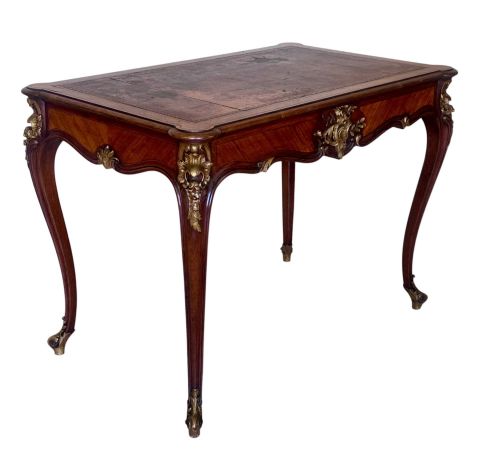
A bronze mounted writing desk is typically a nineteenth-century French creation, heavily influenced by Louis XV and Louis XVI revivals, designed for writing and correspondence. The pieces meeting you here include bureau plats, cylinder desks, and kidney-shaped ladies' writing tables.
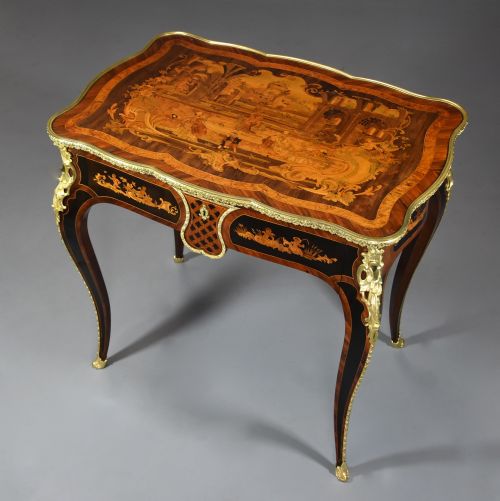
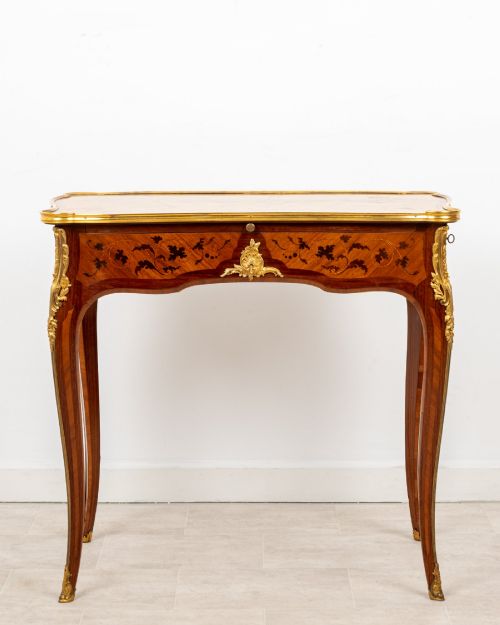
Makers utilised exotic timbers like kingwood, rosewood, and tulipwood, shaped into serpentine or straight forms often finished with marquetry and parquetry. These desks served elite domestic and study interiors, combining practical writing surfaces with elaborate display value.
How they were made
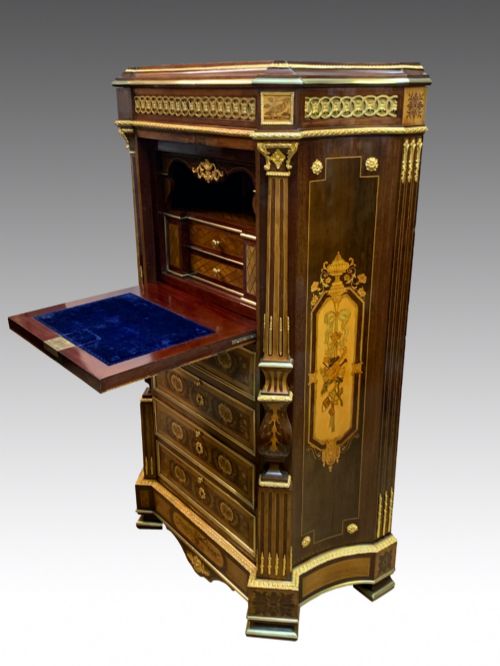
Cabinet-makers constructed carcases from solid woods overlaid with carefully cut veneers of kingwood, rosewood, and mahogany arranged in geometric parquetry or floral marquetry patterns. Leather inserts frequently formed the writing surface, bordered by gilt tooling.
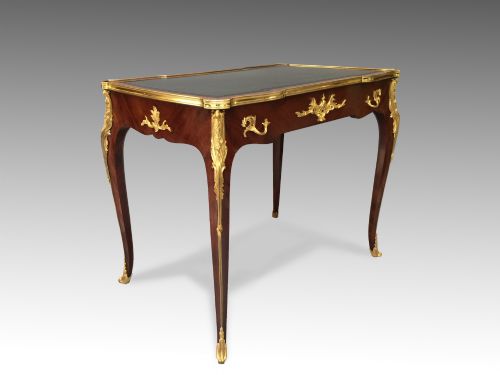
Mounts in ormolu, gilt bronze, and brass were cast separately, chased by hand to sharpen the detail, and then fire-gilded before being fixed to the timber frames.
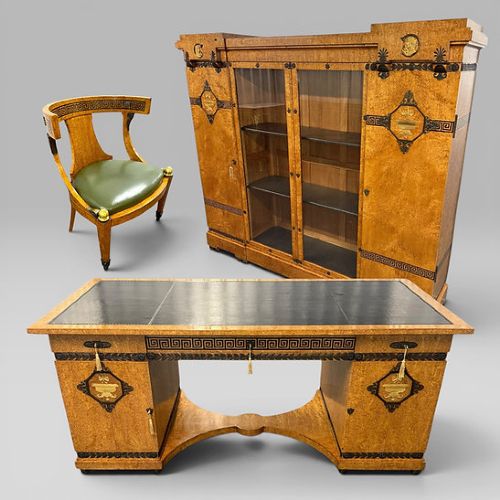
Listings feature pieces spanning the Victorian era and the nineteenth century, utilising kingwood, rosewood, mahogany, and walnut.
What varies in quality
Quality rests primarily in the crispness of the bronze or ormolu mounts and the precision of the underlying veneer work. Lesser pieces rely on mechanical casting and repetitive veneers, while superior examples exhibit hand-chased mounts with deep relief and intricate parquetry laid by master workshops.
The choice of secondary timbers, the integration of Sevres porcelain plaques or Vernis Martin panels, and the fluidity of serpentine curves further distinguish the standard of production.
Francois Linke·Edwards and Roberts·Paul Sormani·Maison Krieger·CH Jeanselme and Co·Mercier Freres·Durand·Blake London·Millet
The Bronze Mounted Writing Desk Glossary
- Bureau Plat
- A double-sided freestanding writing table fitted with drawers across the frieze. This form sits away from the wall as a centrepiece.
- Ormolu
- Finely chased bronze that has been coated in a liquid mercury and gold amalgam and heated to drive off the mercury. This leaves a durable gold layer.
- Parquetry
- Geometric wood inlay arranged in patterns such as cubes, lozenges, or chequers. It differs from marquetry by using strictly geometric shapes.
- Bonheur Du Jour
- A small light ladies' writing desk featuring a small cabinet or set of drawers on top of the writing surface. These appeared frequently in the mid nineteenth century.
- Marquetry
- Decorative veneer work forming pictorial or floral designs using various coloured woods. Craftsmen cut these designs from thin sheets of timber.
Bronze Mounted Writing Desk: Frequently Asked Questions
How do I clean a bronze mounted writing desk?
Dust regularly with a dry, soft cloth to prevent particle build-up on the timber and metal mounts. Avoid modern aerosol polishes, which can damage historic French polish and discolour the gilt bronze.
Treat the leather writing surface with care, keeping it away from direct sunlight and moisture. Professional conservation wax may be applied sparingly to nourish the wood veneers.
What is the difference between a bureau plat and a partner desk?
A bureau plat is a freestanding writing table with drawers in the frieze, typically finished on all sides so it can float in the middle of a room. Partners desks are traditionally pedestal desks built with drawers and cupboards on both opposing sides for two people to work face-to-face.
On this page, the bureau plat dominates the selection, reflecting nineteenth-century French drawing room preferences.
How can I tell a nineteenth-century revival desk from an eighteenth-century original?
Nineteenth-century revival pieces often utilise machine-sawn veneer thicknesses and standardised construction methods hidden beneath historicizing styles. Examination of the drawer linings, screw types, and internal secondary woods reveals the later nineteenth-century manufacturing techniques.
Stylistic proportions and the quality of the ormolu casting also point towards the major exhibition eras of the 1800s rather than the original Louis reigns.
Were these desks used for daily writing?
Wealthy households used these desks for correspondence, managing estate accounts, and writing letters rather than heavy daily administrative work. The inclusion of delicate kingwood veneers, leather inserts, and ornate ormolu mounts prioritized elegance and social status.
Many examples feature pull-out slides to extend the writing area temporarily while keeping the main surface clear.