
Bronze Mounted Chest
When you search for a bronze mounted chest, you are looking at substantial case furniture given sculptural weight by cast metal enrichment.
Bronze Mounted Chest
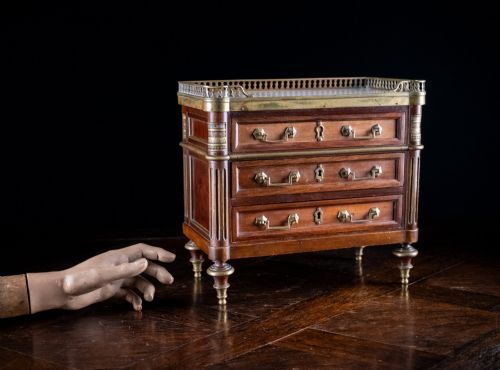
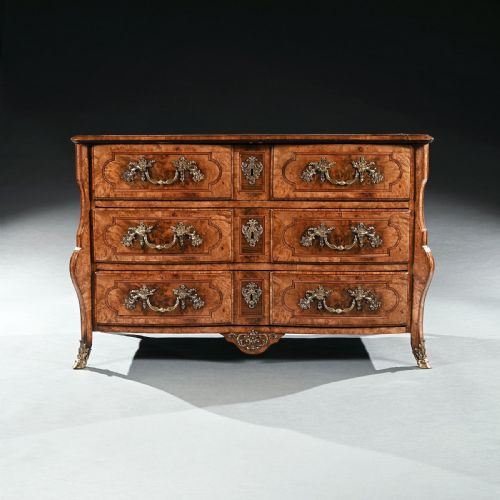
A bronze mounted chest encompasses case furniture ranging from grand commodes and bedside cabinets to miniature chests of drawers, predominantly originating from French workshops across the seventeenth, eighteenth and nineteenth centuries.
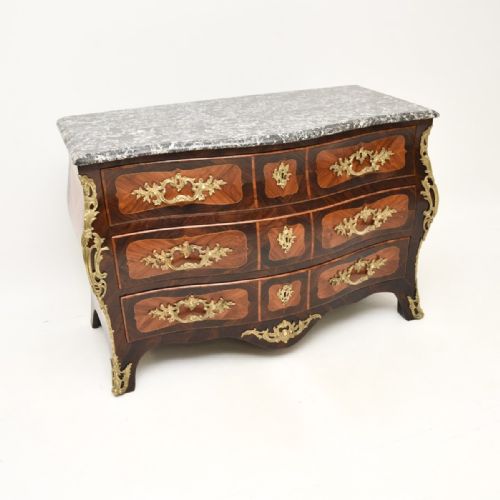
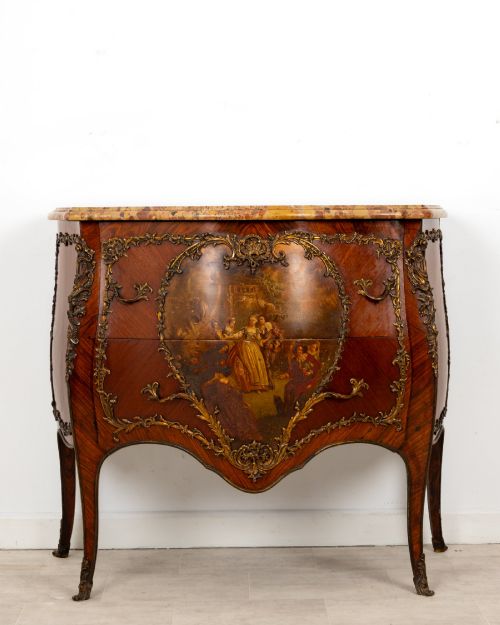
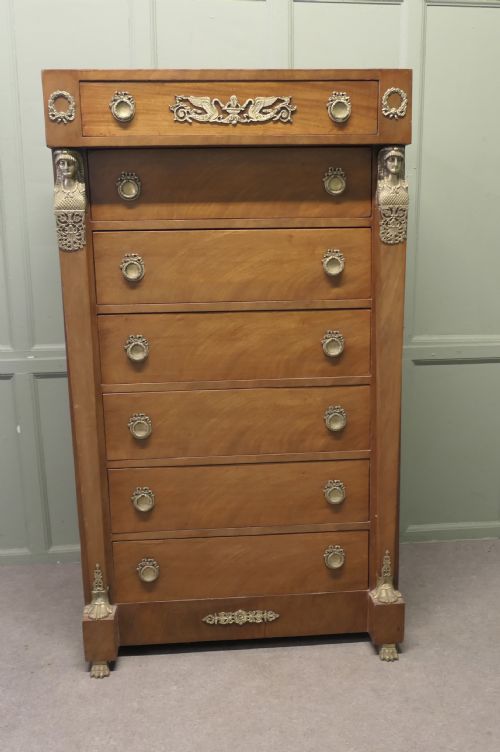
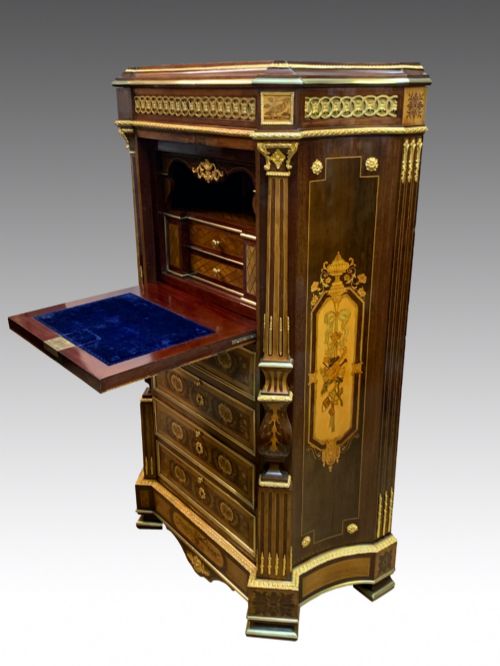
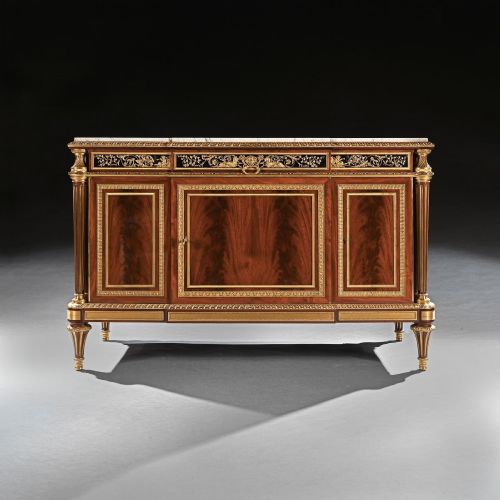
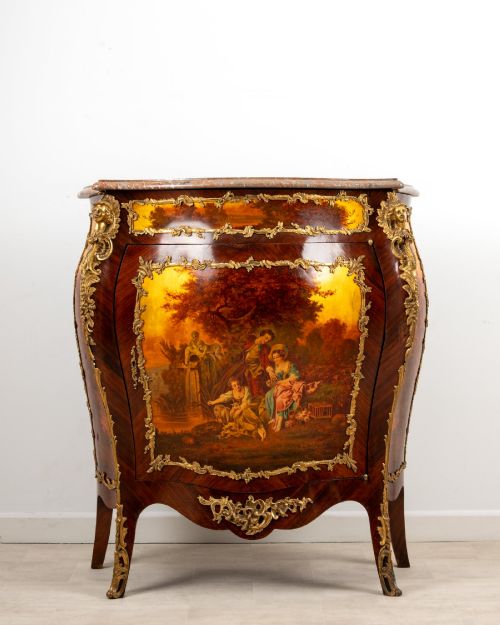
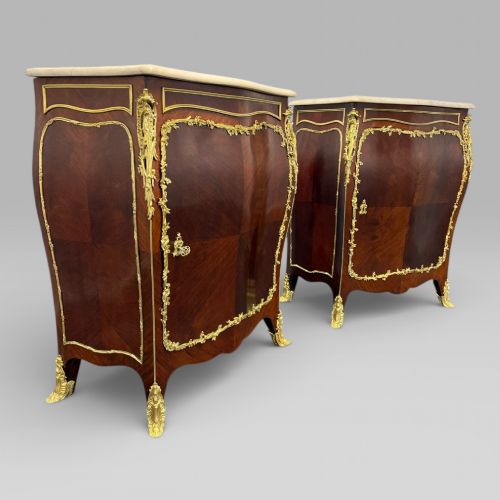
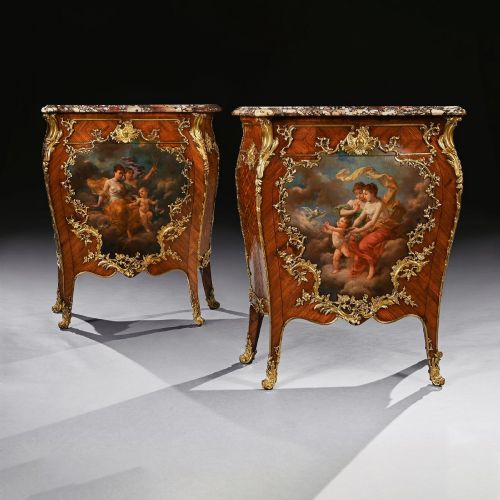
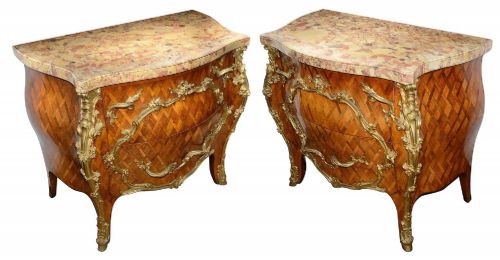
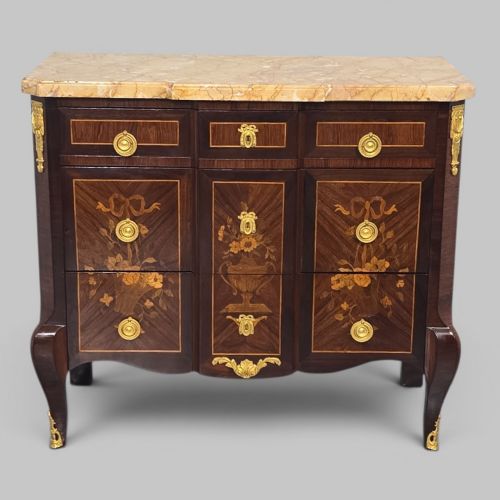
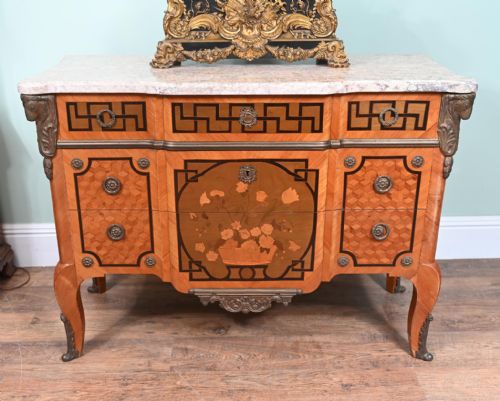
The version you are most likely to meet on this page is the nineteenth-century revival commode, often featuring serpentine or bombé forms topped with marble and finished with detailed gilt bronze or ormolu mounts.
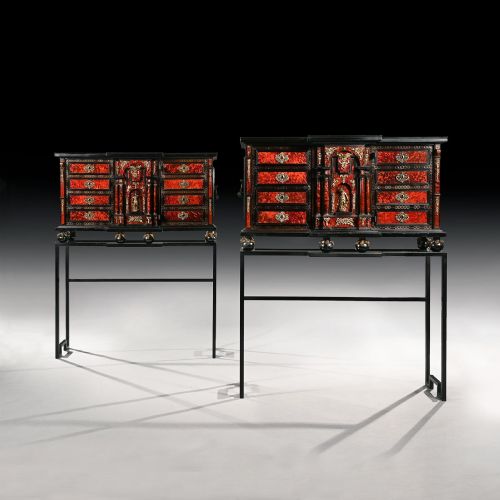
Earlier examples stretch back to seventeenth-century Spanish and Flemish architectural cabinets on stands, while eighteenth-century pieces display the curvilinear grace of the Regence and Louis periods.
Materials and Technique
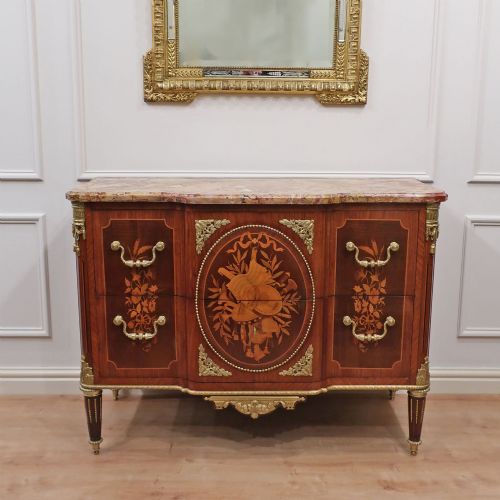
Carinthian walnut, kingwood, tulipwood and mahogany form the foundational carcass woods, frequently laid with intricate marquetry and parquetry veneers or enriched with panels of Vernis Martin.
Mounts of cast ormolu, gilt bronze and brass are chased by hand and pinned to the angles, feet and aprons, accentuating the contours of the timber work.
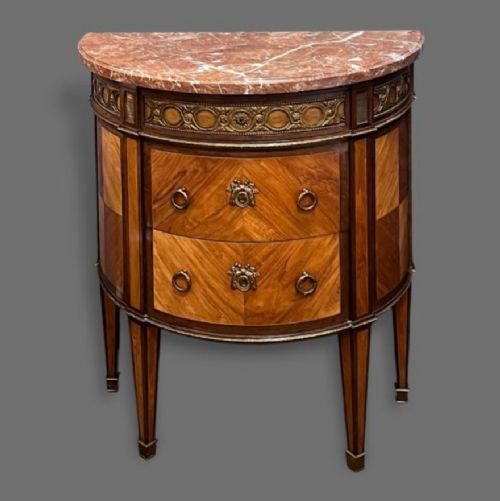
Slab marble tops, in shades of white, grey and flesh tones, are deeply bevelled and fitted precisely to the upper surface of the chest.
Listings incorporate woods such as kingwood, rosewood, walnut and satinwood combined with marble and gilt bronze across multiple centuries.
The Measure of Craftsmanship
The distinction between ordinary and exceptional work lies in the crispness of the bronze chasing and the harmony between the metal mounts and the underlying wood structure.
Fine pieces display fluid symmetry in their marquetry patterns and tight joinery in the drawer construction, whereas lesser examples show rigid veneer layouts and loosely fitted hardware.
Jacques Bircklé·Maison Krieger·Henry Dasson·Thomas Hache·Jean-Henri Riesener·E Kahn·Tahan of Paris
The Bronze Mounted Chest Glossary
- Ormolu
- Gilded bronze used for decorative mounts on furniture, applied to corners, handles and feet. The technique involves a mercury amalgam burned onto the bronze base.
- Bombé
- A bulging, swelling contour found on commodes and cabinets of the eighteenth and nineteenth centuries. This curved shape requires considerable skill in veneer work.
- Marquetry
- Decorative patterns formed by laying thin slices of exotic wood, shell or ivory onto a carcass. It creates pictorial or geometric designs across the drawer fronts.
- Vernis Martin
- A European imitation of Japanese lacquer developed in France during the eighteenth century. It employs multiple layers of resin varnish to produce a glossy, translucent finish.
- Commode
- A low chest of drawers that emerged in France during the late seventeenth century. It typically stands on short legs and serves both utility and display.
Bronze Mounted Chest: Frequently Asked Questions
What is a bronze mounted chest?
A bronze mounted chest is a wooden case piece, such as a commode or cabinet, embellished with cast metal mounts of ormolu or gilt bronze. These mounts serve both to protect vulnerable corners and edges and to elevate the decorative scheme.
They appear across various periods, most notably in French cabinetmaking from the seventeenth through the nineteenth centuries.
How were these chests used?
These pieces functioned primarily for storage in formal salons, bedrooms and antechambers, holding linen, clothing or precious personal items. The broad marble or wooden tops also provided surfaces for displaying clocks, candelabra and decorative objects.
Over time, their decorative presence often outpaced their purely utilitarian role in domestic interiors.
How do I care for marble and wood?
Maintain the polished timber surfaces by dusting with a dry cloth and applying traditional wax sparingly to nourish the grain. Protect the marble top from acidic liquids and harsh cleaning agents that can etch the stone.
Keep the furniture away from direct heat sources and dramatic humidity shifts to prevent the wood veneers from lifting.
How can I tell original periods apart?
Distinguishing periods relies on examining construction methods, timber choices and the style of the bronze mounts. Eighteenth-century pieces exhibit hand-cut dovetails and vernacular woods appropriate to their specific decade, while nineteenth-century revival pieces often utilise machine assistance alongside hand-chased ormolu.
The evolution of design from the heavy architectural stands of the seventeenth century to the flowing curves of the Louis periods guides accurate dating.