
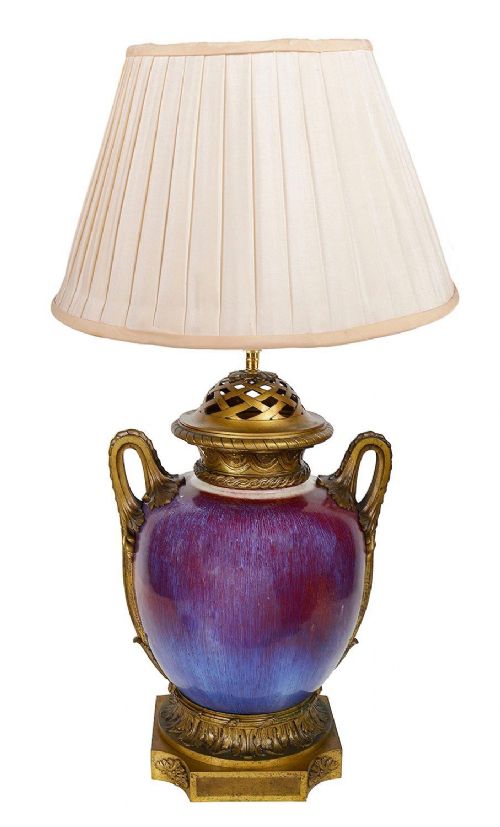


Bronze Mounted Ceramic Lamps
Bronze mounted ceramic lamps bring together hand-painted porcelain bodies and cast metal mounts to illuminate interiors with antique character.
Bronze Mounted Ceramic Lamps
When you search for bronze mounted ceramic lamps, you encounter decorative table lighting formed from converted vases and urns fitted with metal bases and collars. These pieces combine historic ceramic bodies from Chinese export kilns and European factories with decorative metalwork.
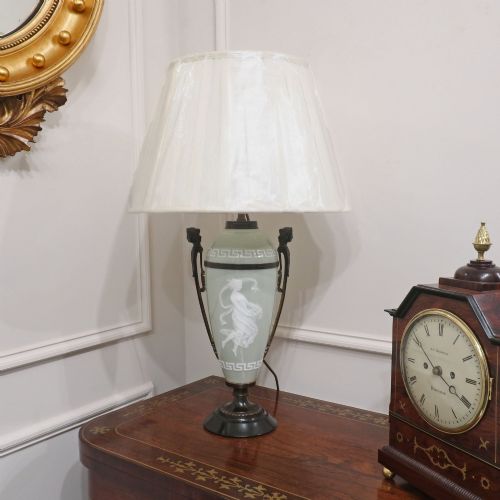
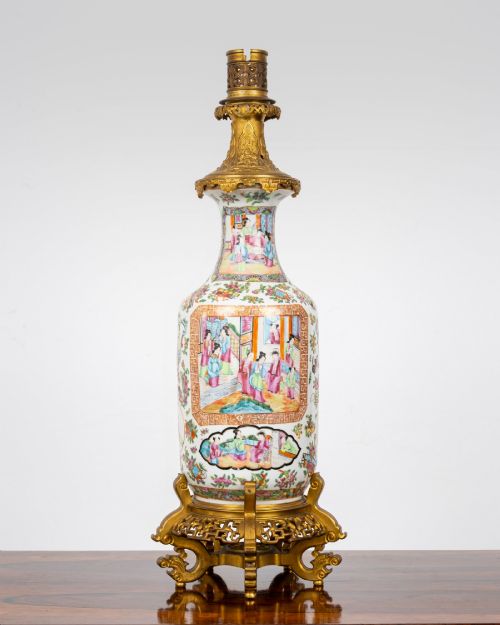
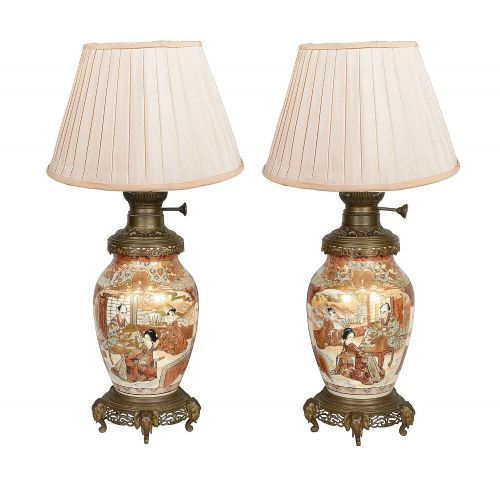
The most common versions on this page are nineteenth-century Chinese porcelain vases, including Satsuma, Rose Medallion, and celadon wares, paired with French ormolu or gilt bronze mounts. You also find European ceramics styled after French neoclassical designs or made in factories such as Sèvres, Paris, and Gien.
Makers adapted older vessels into lamps by drilling the ceramic bases and adding electrical fittings, often preserving handles, covers, and intricate painted scenes. The styles span from Chinese Chinoiserie and Qing dynasty aesthetics to nineteenth-century French chateau designs and Japanese Meiji period motifs.
How bronze mounted ceramic lamps were made
The construction of these lamps relies on combining fired ceramic bodies with cast metal mounts fashioned from bronze, brass, or ormolu. Artisans shaped porcelain, earthenware, and faience vessels using traditional throwing and moulding techniques before applying hand-painted enamels, celadon glazes, or pâte-sur-pâte relief decoration.
Metalworkers then cast bronze and brass mounts to fit snugly around the rims, necks, and bases of the ceramic vessels. These mounts were frequently fire-gilded to create ormolu finishes, securing the porcelain components and adding structural stability as well as ornamental detail.
Listings feature porcelain, earthenware, and faience ceramics paired with gilt bronze, brass, and ormolu mounts across the nineteenth century.
What varies in quality
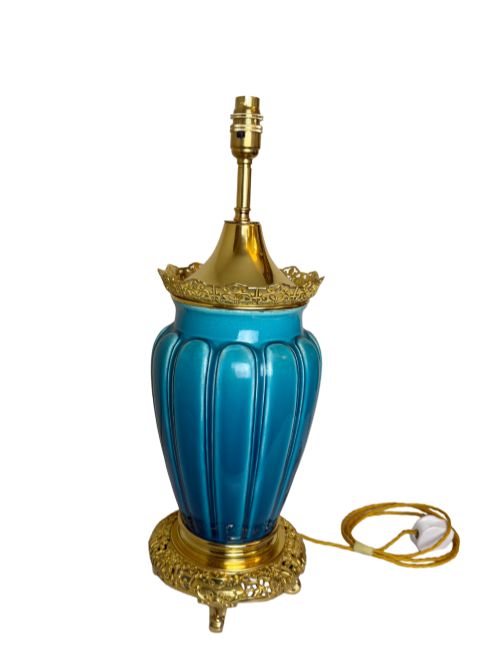
The quality of these lamps rests heavily on the artistry of the ceramic body and the precision of the metal mounts. Finer pieces feature crisp, hand-painted porcelain details, deep glazes such as sang de bœuf or powdered blue, and heavy cast ormolu mounts that complement the contours of the vessel rather than overpowering them.
Lower tiers often involve simpler earthenware or mass-produced porcelain styles fitted with lighter brass or unrefined bronze hardware. The harmony between the proportions of the ceramic base and the decorative metal mounts distinguishes the finer examples from standard conversions.
The Bronze Mounted Ceramic Lamps Glossary
- Ormolu
- Finely ground high-carat gold mercury-gilded onto a bronze object. This technique creates a rich, lasting metallic lustre found on the mounts of many nineteenth-century lamps.
- Pâte-sur-pâte
- A ceramic decorating method where wet porcelain slip is applied layer upon layer in low relief onto a contrasting clay body. It creates cameo-like decorative scenes on the lamp surface.
- Celadon
- A term for pottery denoting both wares glazed in jade green and the specific translucent green glaze itself. It originates from historic Chinese kilns and appears frequently on nineteenth-century vase lamps.
- Satsuma
- Japanese earthenware pottery characterised by a ivory-coloured cracked glaze decorated with intricate enamel and gilt patterns. These vessels were frequently mounted as lamps during the nineteenth century.
- Sang de bœuf
- A deep red oxblood glaze developed in Chinese kilns that relies on copper reduction during firing. The rich red coloration varies across the body of the lamp vessel.
Bronze Mounted Ceramic Lamps: Frequently Asked Questions
Are these lamps converted from old vases?
Many examples on this page started life as decorative vases, jars, or ewers before being adapted into functional table lamps. Artisans added electrical wiring and metal hardware while retaining the original ceramic bodies.
This conversion process preserves historic porcelain and earthenware pieces for modern interiors, allowing antique ceramics to serve as practical lighting sources.
How do I identify French neoclassical style lamps?
French neoclassical style lamps typically feature symmetrical porcelain bodies decorated with classical motifs, urn shapes, or hand-painted pastoral scenes. They incorporate refined ormolu mounts with acanthus leaf, scroll, or beaded detailing.
These designs draw inspiration from eighteenth-century classical antiquity tastes, reinterpreted by nineteenth-century European factories like Sèvres and Paris.
What fabric shades suit these lamps?
Fabric shades in silk or neutral textiles complement the detailed painted surfaces and metallic finishes of ceramic lamp bodies. The choice of shade balances the visual weight of the heavy porcelain and bronze mounts.
Selecting simple, understated shades ensures that the intricate patterns on Rose Medallion, Satsuma, or blue and white porcelain remain the focal point.