


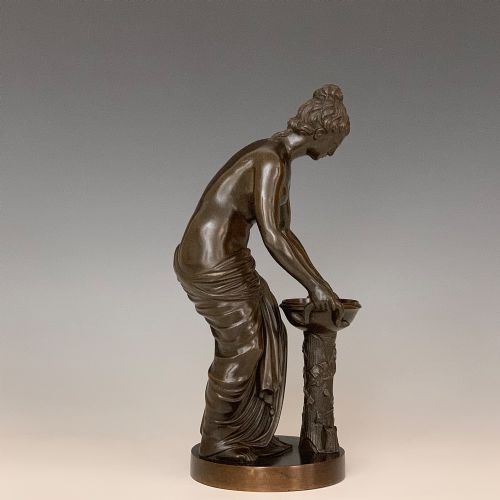


Bronze Maiden Statue
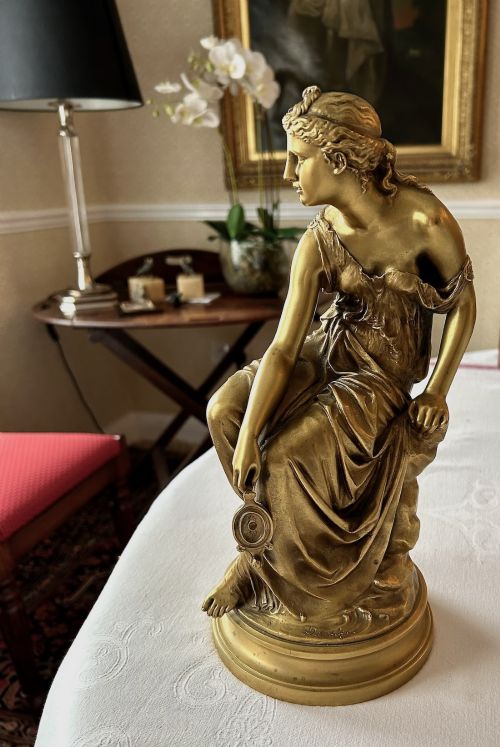
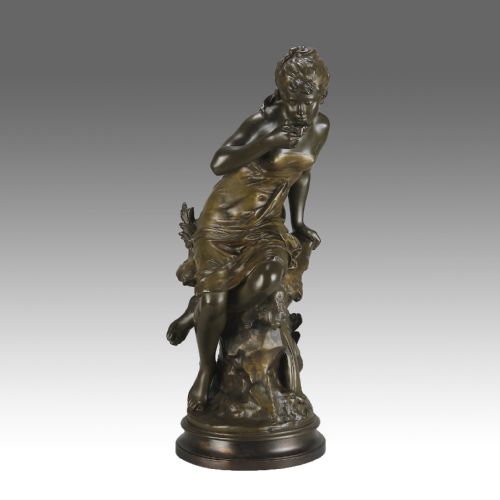
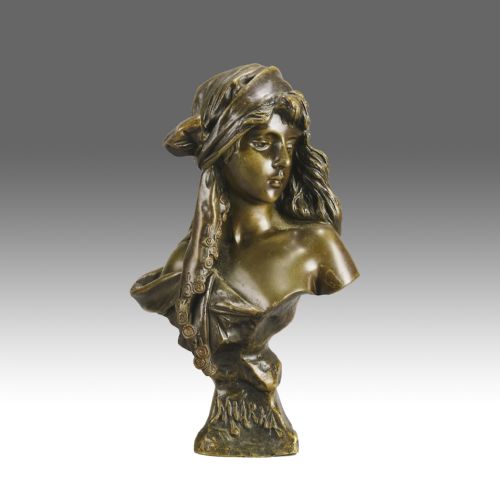
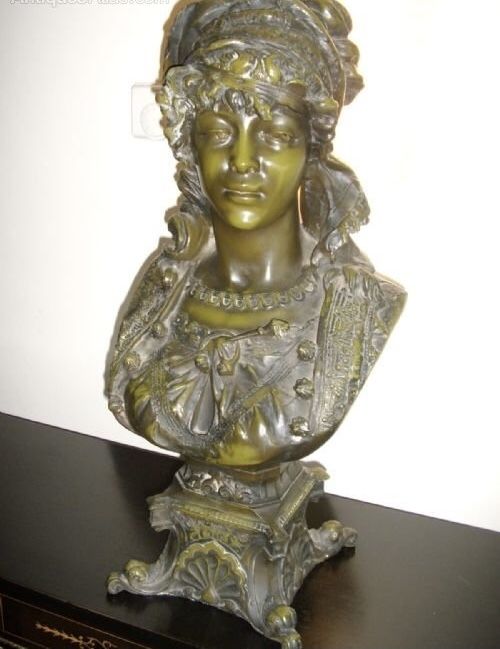
A bronze maiden statue brings nineteenth-century foundry craft and classical poise directly into a room.
Bronze Maiden Statue
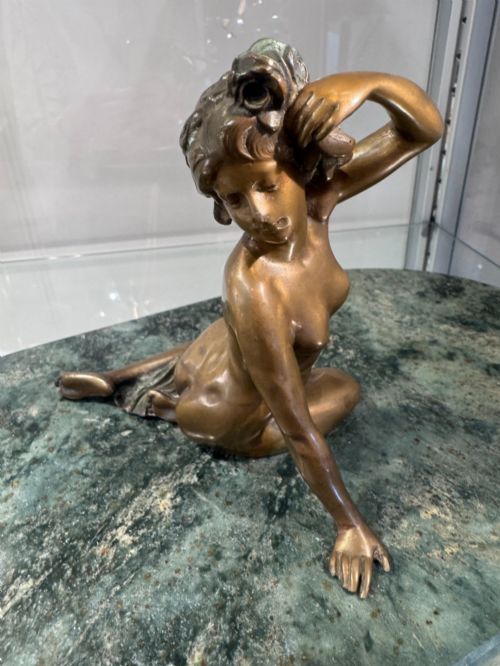
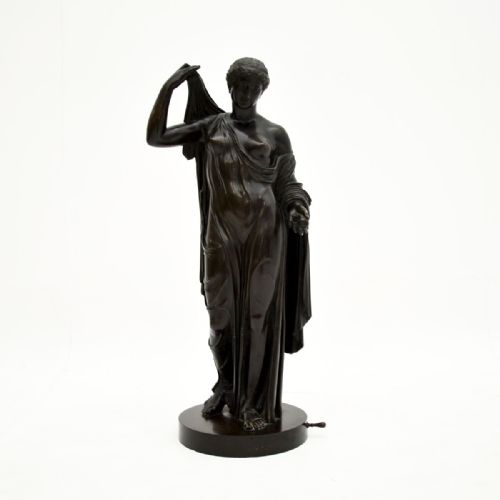
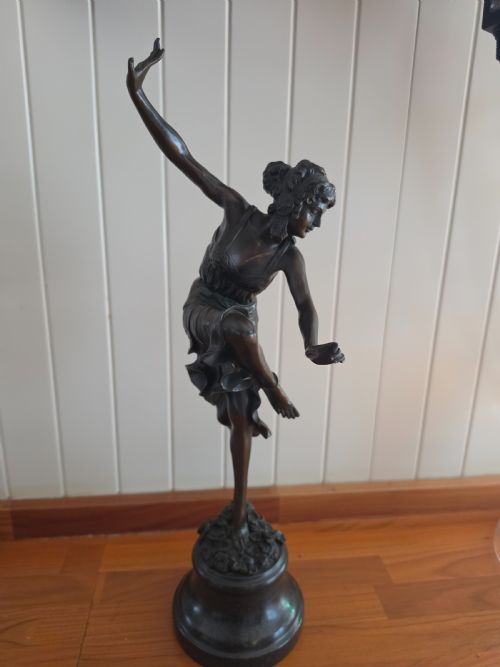
A bronze maiden statue captures historical female figures, allegorical subjects, and mythological characters rendered in metal during the nineteenth and early twentieth centuries. Collectors encounter standing figures, seated studies, dancers, and robed ladies produced across French and European workshops.
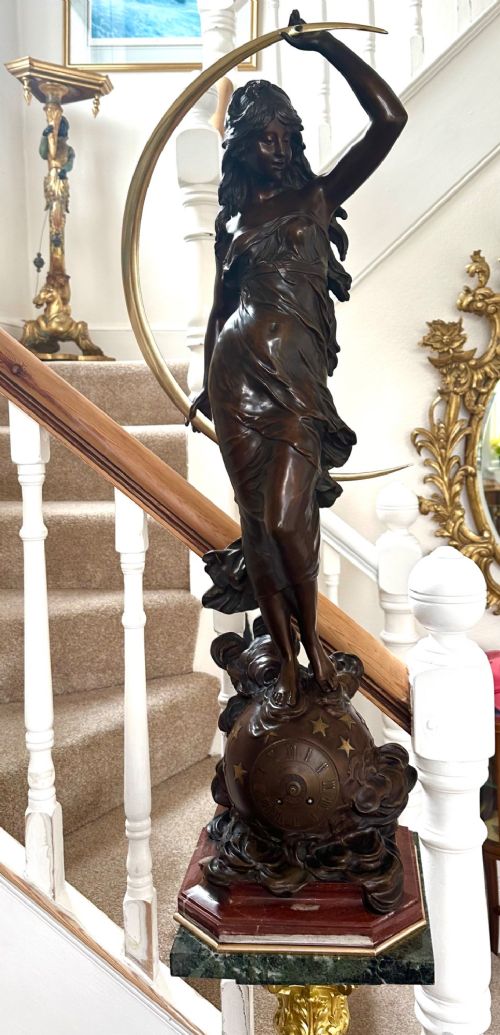
The selection ranges from neoclassical reductions of antiquity to flowing Art Nouveau forms and geometric Art Deco studies. Many pieces incorporate functional elements such as lamp mountings or clock housings alongside purely decorative sculptures.
Makers utilised various alloys and bases, mounting heavy metal figures on marble plinths or integrating them into larger mantel garnitures. The domestic scale of these works suited nineteenth-century drawing rooms and libraries.
Materials and casting methods
Foundries employed the lost-wax casting method or sand casting to achieve intricate detail in bronze, patinated bronze, and gilt bronze. Metalworkers applied chemical patinas to create varied surface tones, ranging from deep brown to golden highlights.
Alternative materials appear alongside cast metal, including spelter, bronzed terracotta, earthenware, and bronzed plaster. Marble bases provide stability and contrast for the metallic figures.
Listings span the nineteenth and early twentieth centuries, featuring bronze, marble, and terracotta across Art Nouveau and Neoclassical styles.
Foundry execution and chasing
The quality of the patina and the choice of mounting materials indicate the care taken during production. Heavier, multi-part bronze casts command more attention than lighter spelter or plaster alternatives.
Signature placement and foundry stamps confirm the origin of a piece, with documented artist attributions elevating the standing of a sculpture within a collection.
Etienne-Henri Dumaige·Bruno Zach·Moreau Family·August Moreau·Mathurin Moreau·Emmanuel Villanis·Henry Wissen Senior·C J R Colinet·Zoldan Kovats·S Kinsburger·Clodion·Claudius Marioton·Hans Müller·Georges Van Der Straeten·Cherc·Guillot·Maurice Bouval·H. Moreau·Houdebine·C Neuhaus·Jean Jacques Pradier·Victor Paillard·Devaulx·Charlotte Monginot·Henri Honore Ple
The Bronze Maiden Statue Glossary
- Patina
- The surface coloration achieved through chemical treatment or natural ageing of the metal. This layer protects the bronze and defines its visual depth.
- Lost-wax casting
- A method where a wax model is melted from a mould and replaced with molten metal. This technique allows for complex undercuts and fine detail.
- Spelter
- A zinc alloy commonly utilised as a less expensive alternative to bronze. It often receives a bronze-coloured coating to mimic heavier metal.
- Chasing
- The manual refinement of a raw metal casting using small punches and hammers. This process sharpens surface textures and removes casting flaws.
- Grand Tour
- The nineteenth-century practice of collecting classical antiquities and reductions while travelling through Europe. These small bronzes served as tangible mementos of cultural education.
Bronze Maiden Statue: Frequently Asked Questions
How do I clean a bronze maiden statue?
Dust the surface gently with a soft, dry brush to prevent particle buildup. Avoid chemical polishes that strip the historic patina.
Apply a very thin coat of microcrystalline wax if the metal requires protection, then buff lightly with a clean cloth.
Are these figures solid bronze?
Most sculptural figures are cast hollow to save weight and metal, while smaller details and bases may be solid. Heavier pieces indicate thicker metal walls or dense internal supports.
Alternative materials such as spelter or terracotta also appear in historical listings alongside true bronze.
How can I tell bronze from spelter?
Bronze is heavier, colder to the touch, and rings with a resonant tone when gently tapped. Spelter is softer and may show a greyish metal beneath worn paint.
Examining the underside often reveals the lighter, more brittle nature of zinc alloys compared to copper-based bronze.
Where should I place a heavy statue?
Position statues on stable, level surfaces capable of supporting the combined weight of the metal and marble base. Keep pieces away from direct heat sources and excessive moisture.
Securing taller figures on heavy furniture prevents accidental tipping in busy areas of the home.